Bill C-35 Needs a Forced-Labour Enforcement Ledger
A consultation report is not the same thing as border enforcement.
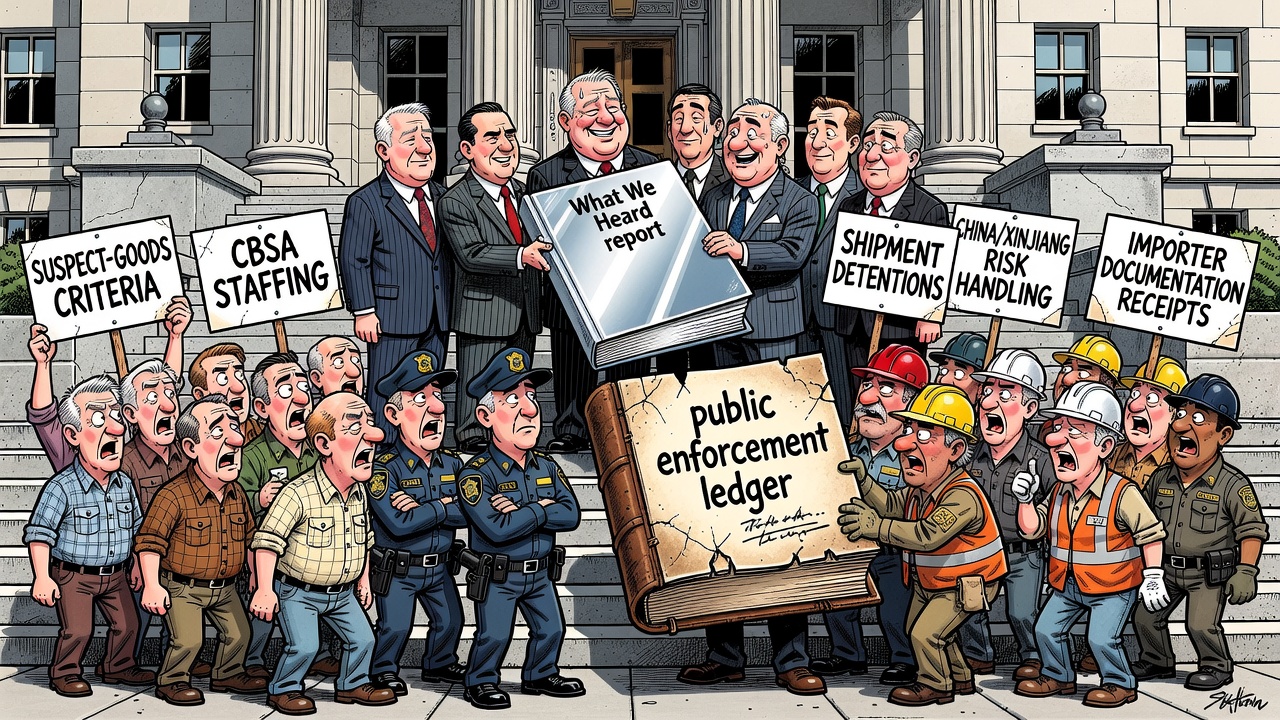
Ottawa has now published the forced-labour consultation. Good. Nobody should pretend that supply-chain exploitation is an easy file, or that border officers can solve it with slogans. But a What We Heard report is not an enforcement plan. If the Carney government wants credit for Bill C-35, Canadians should ask for the ledger that proves the ban will actually bite.
The federal release dated October 8 says ministers released two reports from consultations on Bill C-35 and possible supply-chain due-diligence and civil-liability measures. The release says stakeholders supported strengthening Canada’s ability to keep forced-labour goods out of the market, while asking for a risk-based, transparent and predictable regime with clear business guidance and fair recourse.
The Bill C-35 consultation report gives the practical shape of the problem. The bill was introduced on June 12, 2026. If passed, it would let the foreign affairs minister publish a list of goods for which there are reasonable grounds to suspect forced-labour production, and would let the public safety minister set rules requiring importers of listed goods to give CBSA information showing the goods are not tainted. The consultation gathered input through four stakeholder roundtables and 73 written submissions, closing August 21.
That is a start. It is not the finish line. The report itself records the key accountability questions: what evidence counts, whether listings identify a producer, region or good, how civil society and workers can submit risk information, what importers must provide, and how listings are reviewed or removed. Stakeholders also asked for public reporting on shipments examined, detained, released and prohibited. That is exactly the kind of enforcement receipt taxpayers should see before Ottawa declares victory.
This matters because Canada is not operating in a vacuum. iPolitics reported in June that MPs began reviewing the bill amid U.S. criticism that Canada had lagged in enforcing its import ban. The same report said committee questions quickly turned to Chinese electric vehicles and components, whether they could be caught by a future watch list, and whether forced-labour enforcement could become a CUSMA flashpoint. Officials would not name products or regions at that early stage, which is understandable. But after consultation, continued vagueness becomes a choice.
A conservative accountability standard is simple: do not make honest importers guess, do not let abusive suppliers hide, and do not ask Canadian workers to compete against goods produced by coercion. Publish the criteria for the suspect-goods list. Publish how China, Xinjiang-linked risk, transshipment, batteries, solar inputs, seafood, apparel and other high-risk supply chains will be assessed. Publish CBSA staffing, training, technology and port-of-entry guidance. Publish timelines for importer responses and appeals. Publish aggregate enforcement data on detentions, releases, refusals and repeat offenders.
Bill C-35 may be a useful tool. But a tool locked in a cabinet does not protect workers, consumers or fair Canadian businesses. The test is not whether Ottawa can write another values statement. The test is whether the government can show, in public numbers and clear rules, that forced-labour goods are actually being stopped at Canada’s border.
- Government of Canada: Government of Canada releases What We Heard reports on fighting forced labour
- Global Affairs Canada / CBSA: What We Heard report on Bill C-35 regulatory approach
- iPolitics: Forced labour bill faces first scrutiny in committee before summer break
This article argues for enforcement transparency. It does not claim any specific shipment, importer or product is tainted unless named by public authorities.