Another Vaccine-Mandate Loss: Publish the Accommodation Damages Ledger
The question now is not the old vaccine debate. It is whether Ottawa will disclose how many rights claims its mandate decisions created.
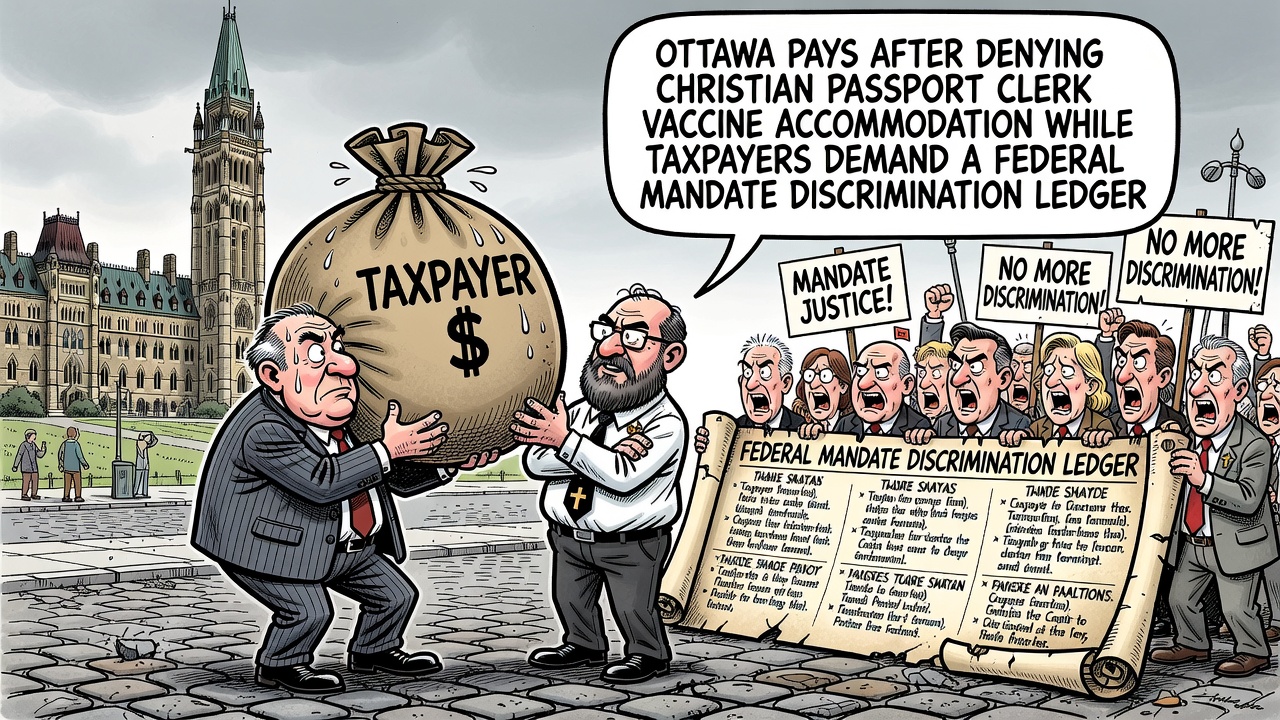
Another federal vaccine-mandate accommodation case has turned into a taxpayer receipt. This time it involves Michelle Tati, a passport clerk with Employment and Social Development Canada, who was placed on unpaid leave after her religious exemption request was rejected.
According to reporting on the Federal Public Sector Labour Relations and Employment Board decision, Tati was on unpaid leave from February 16, 2022 to June 20, 2022, when Ottawa suspended the public-service vaccination mandate. She argued that the department violated her collective agreement and the Canadian Human Rights Act by refusing to accommodate her Christian beliefs. The department argued her objections were personal or secular rather than religious.
Adjudicator Adrian Bieniasiewicz ruled that Tati’s objections were rooted in sincerely held religious beliefs and that the department discriminated against her. The decision reportedly awarded $5,000 in salary and benefits compensation, plus further compensation for lost overtime opportunities to be calculated within 60 days.
Conservatives should keep the argument disciplined. This is not a medical article and it is not a blanket claim that every accommodation request had to be approved. Governments can set workplace rules. But when the state imposes sweeping rules on its own employees, it also has a duty to obey human-rights law, assess conscience claims seriously and correct mistakes openly when tribunals find discrimination.
This ruling matters because it is not isolated. Earlier this year, the same federal labour-board system found discrimination in a Canada Revenue Agency religious-accommodation case. The Board’s own 2024-2025 annual report said it still had a large inventory of vaccination-related grievance files, including religious-accommodation disputes. That means taxpayers are not looking at a single bad memo. They are looking at a mandate enforcement system whose full legal and financial cost remains unclear.
Ottawa demanded proof, affidavits and compliance from employees. Canadians can demand the same precision from Ottawa. How many religious, medical and other accommodation requests did federal departments receive? How many were approved, denied or sent back for more information? How many employees were placed on unpaid leave? How many grievances, settlements, tribunal losses and legal bills followed? Which departments used templates later found defective, and who changed the policy after adverse rulings?
The Liberal government’s pandemic-era decisions cannot be audited by press release. Publish a federal vaccine-accommodation damages ledger by department: requests, approvals, denials, unpaid-leave dates, grievance status, compensation paid, legal costs, overtime awards, policy corrections and manager retraining. If Ottawa acted lawfully in most cases, the ledger will show it. If it did not, taxpayers deserve to know how much the cleanup is costing.
- Federal Public Sector Labour Relations and Employment Board: Tati v. Treasury Board (Department of Employment and Social Development)
- Epoch Times: Report on the Tati labour-board ruling
- Juno News: Ottawa ordered to pay Christian clerk $5K over COVID vaccine ban
- FPSLREB: 2024-2025 Annual Report, vaccination-related grievance inventory
- Government of Canada: Policy on COVID-19 vaccination for the core public administration
This article addresses legal and financial accountability for federal accommodation decisions. It does not make medical claims about COVID-19 vaccines or claim that every accommodation request was wrongly denied.