Passing Grade, Weak Convictions: Canada’s Dirty-Money Ledger
Ottawa can welcome an improved FATF review. Canadians still deserve the conviction, seizure and beneficial-ownership receipts.
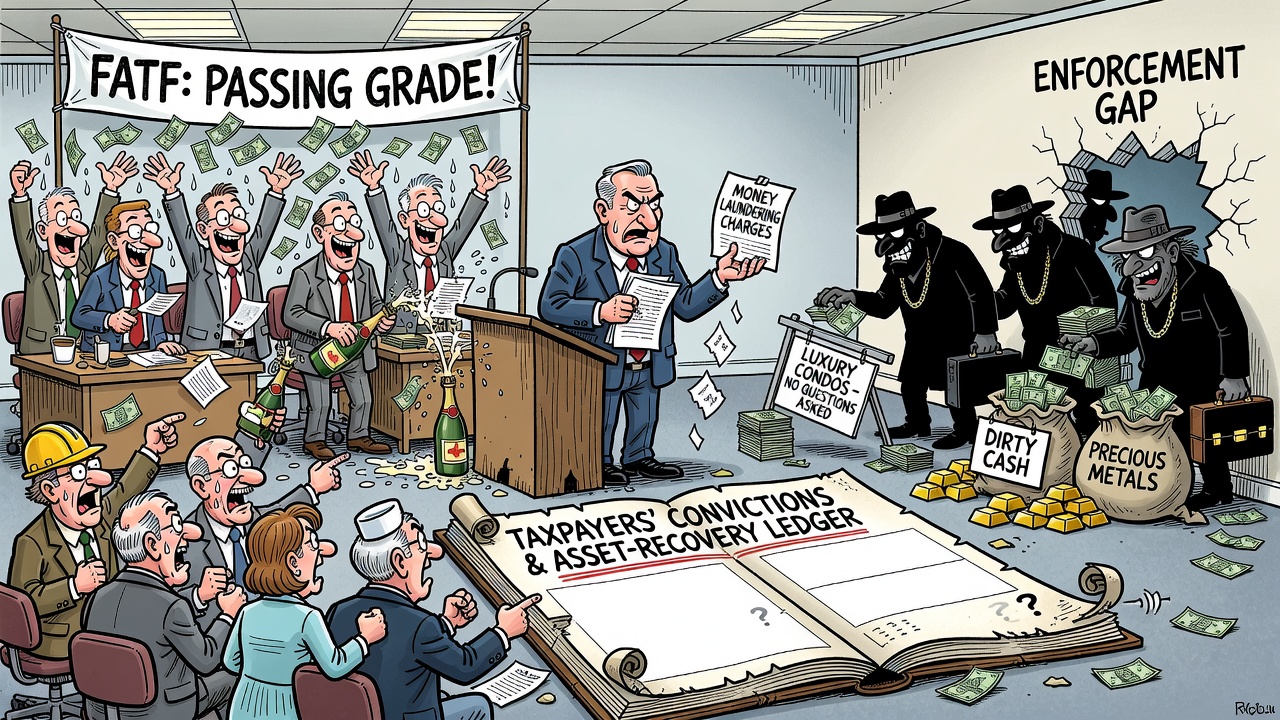
Canada has received better marks from the Financial Action Task Force. That is good news, as far as it goes. The FATF/APG 2026 mutual evaluation says Canada has strengthened its anti-money-laundering and terrorist-financing framework, and the federal finance minister quickly welcomed the result as evidence of “strong progress.”
But a passing grade is not the same thing as a clean street, a safer neighbourhood or a recovered dollar. The accountability test is not whether Ottawa can write legislation, fund agencies or issue confident statements. The test is whether complex money-laundering networks are investigated, prosecuted, convicted and stripped of proceeds.
That is where the report is much less flattering. According to the review summarized in public reporting, 703 assessed cases over five years involved a laundering-proceeds charge. Nearly half produced guilt on either laundering or the underlying predicate offence, but only about 10% of actual money-laundering charges produced guilty decisions. If that is the ledger, Canadians should not be asked to celebrate before they can see the details.
This matters because dirty money is not an abstract compliance file. It distorts housing markets, funds fentanyl supply chains, rewards fraud, empowers transnational gangs and tells honest businesses they are playing by rules criminals can buy their way around. Real estate, precious metals and stones dealers, corporate opacity and uneven provincial implementation of beneficial-ownership tools are not side issues. They are the plumbing.
Finance Minister François-Philippe Champagne points to the proposed Financial Crimes Agency, FINTRAC funding, RCMP resources and anti-extortion and anti-fraud measures. Those may be useful. But Canadians have heard enough announcements. A conservative accountability standard asks for outcomes: charges laid, charges stayed, convictions entered, assets restrained, assets forfeited, professional facilitators disciplined and high-risk sectors inspected.
Ottawa should publish a dirty-money enforcement ledger every year. It should show laundering investigations by province, referrals from FINTRAC, prosecution decisions, withdrawn and stayed counts, guilty pleas, trial convictions, average case duration, forfeiture totals, beneficial-ownership registry gaps and inspection results for the sectors FATF flagged as vulnerable. It should also publish milestones for the Financial Crimes Agency, including staffing, launch dates, mandates and how it will avoid becoming another federal box on an org chart.
The point is not to dismiss progress. It is to measure it honestly. If Canada is improving, the government should be eager to prove that improvement in convictions, seizures and deterrence — not just in international follow-up status.
Dirty money thrives in the gap between official optimism and public receipts. Close the gap. Publish the ledger.
- Financial Action Task Force: Canada’s mutual evaluation report, 2026
- FATF/APG: Anti-money laundering and counter-terrorist financing measures — Canada, 2026 PDF
- Department of Finance Canada: Minister’s statement welcoming the FATF mutual evaluation report
- Department of Finance Canada: Financial-crimes measures and proposed Financial Crimes Agency funding
- The Canada Nation / Globe and Mail republication: Canada urged to improve prosecution of complex financial-crime cases
This article distinguishes Canada’s improved FATF follow-up status from the separate public-interest question of prosecution, conviction, asset-recovery and beneficial-ownership outcomes.