Publish the QCJO Gatekeeping Ledger
A journalism tax-credit label must never become a de facto government press licence.
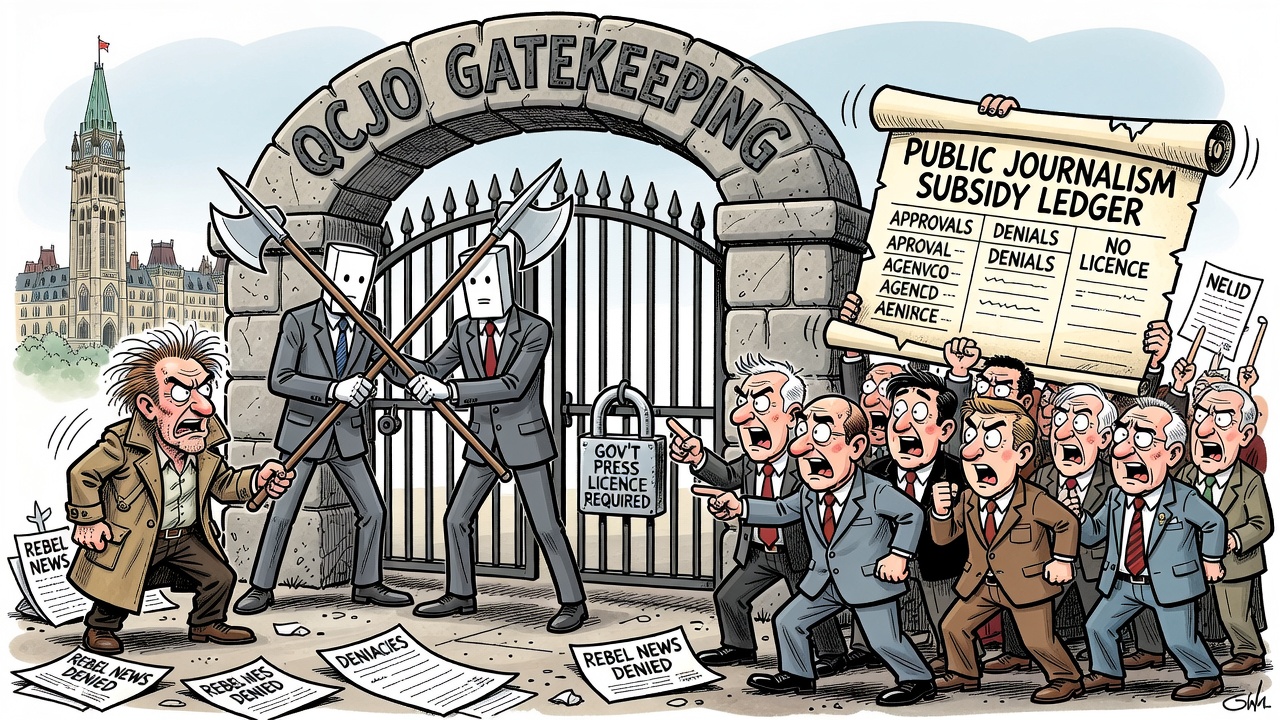
The Federal Court of Appeal has now given Ottawa’s journalism tax-credit gatekeeping a major legal win. In Rebel News Network Ltd. v. Canada (Attorney General), judgment delivered October 7, 2026, the court dismissed Rebel News’s appeal from a Minister of National Revenue decision refusing qualified Canadian journalism organization status.
The case matters beyond one outlet. QCJO status is not just a symbolic badge. The court record links the regime to federal tax benefits created after Budget 2019, including the digital news subscription tax credit and the Canadian journalism labour tax credit. If Ottawa builds a tax-credit system around “qualified” journalism, Canadians deserve to know exactly how that qualification is judged.
The Minister’s decision, as summarized in the appeal record, found Rebel was not engaged in producing original news content for the purposes of the Income Tax Act test. The Court of Appeal did not say Rebel’s politics were right or wrong. It said the Minister’s process was fair and reasonable, and that the decision sufficiently addressed Rebel’s argument that the refusal amounted to censorship or a press-freedom problem.
That may settle the legal appeal. It should not settle the accountability question. Government can have neutral tax rules. It can also quietly create incentives that reward some newsrooms, exclude others and train the whole industry to chase official eligibility. A conservative accountability standard is simple: no public money without public receipts, and no government label that can be mistaken for permission to practice journalism.
The Canada Revenue Agency says an Independent Advisory Board gives non-binding recommendations on whether an organization produces original news content and regularly employs at least two arm’s-length journalists. That description leaves plenty of room for legitimate administration — and plenty of room for public suspicion if the details stay hidden.
Ottawa should publish a QCJO gatekeeping ledger. It should list approvals, denials, reconsiderations and appeals; the high-level reasons for each decision; advisory-board recommendations accepted or rejected; conflict screens for board members; content-sampling rules; subsidy amounts by outlet and year; and timelines from application to final decision. Privacy and commercially sensitive details can be redacted. The criteria, process and money trail should not be.
Rebel News says it lost and will keep fighting. Fine. But taxpayers should not have to rely on one rejected outlet, court summaries or ministerial talking points to understand the system. If Ottawa is confident QCJO is a neutral tax measure, it can prove it with receipts.
- Tax Interpretations court record mirror: Rebel News Network Ltd. v. Canada (Attorney General), 2026 FCA 170
- Canada Revenue Agency: Independent Advisory Board on eligibility for journalism tax measures
- Rebel News: Rebel News statement on losing its CRA/QCJO court case
This article distinguishes the court’s legal ruling from the broader public-interest question of transparency around journalism tax-credit eligibility and subsidies.