Diab’s Singh Gap Needs a Refugee-Rights Ledger
If Ottawa is rewriting asylum rules, Canadians deserve proof the minister and cabinet understand the Charter case at the centre of the file.
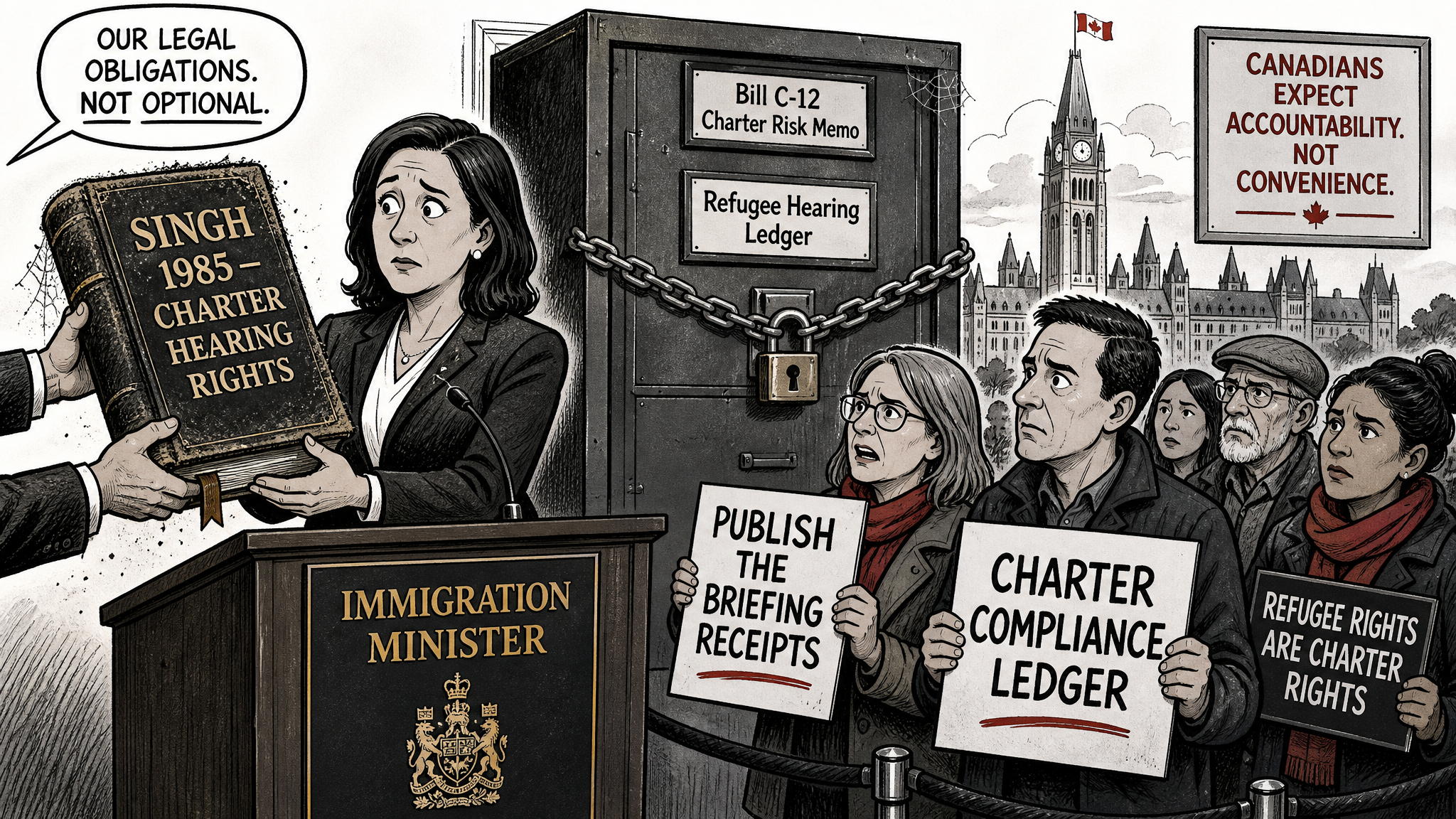
Canada’s immigration minister should not need a search party for the Supreme Court case that anchors the country’s refugee-protection system. Yet CBC/Radio-Canada reported October 7 that Immigration Minister Lena Metlege Diab, pressed repeatedly in a July Radio-Canada interview, appeared unfamiliar with Singh v. Minister of Employment and Immigration, the 1985 ruling that confirmed Charter procedural protections for refugee claimants.
According to CBC, Diab was asked about Singh during an interview for Les murs: le périple des migrants vers le Canada. When the case name was repeated and identified as the Supreme Court’s 1985 decision, she said she would have to check with her team and added, “There are many Singhs and many decisions.” Her office later said she knew the ruling and had not fully understood the questions in French. The Prime Minister said he would keep her in the portfolio.
That defence does not settle the accountability problem. The minister is not a junior spokesperson reading a briefing note for the first time. She is responsible for Immigration, Refugees and Citizenship Canada while the Carney government defends Bill C-12 changes that affect who gets access to Immigration and Refugee Board hearings. CBC reported that one controversial C-12 change sends certain late asylum claims to a pre-removal risk assessment rather than an IRB referral. That is exactly the terrain where Singh, oral hearings, credibility findings and Charter compliance matter.
The legal point should be handled carefully. Immigration Canada’s position, cited by CBC, is that Singh requires an oral hearing when credibility is at stake, not in every case. Critics and refugee-law experts disagree and argue that removing a full hearing violates the Singh framework. Courts will decide the law. Parliament’s job is different: demand the receipts before Canadians are told to trust the same department whose minister could not clearly explain the landmark case on camera.
A conservative accountability standard is simple. If cabinet is narrowing hearing access in the name of backlog control, publish the Singh compliance ledger: the minister’s briefing dates, the plain-language case summary given to her, the Bill C-12 Charter analysis, the departmental legal-risk memo, the scenarios where oral hearings remain guaranteed, the appeal and review pathways, and the names or titles of officials responsible for signing off. Redact legal privilege where necessary, but do not hide the basic chronology.
This is not about theatrics or personal humiliation. It is about competence in a high-stakes portfolio. Refugee law deals with removal, safety, credibility and Canada’s constitutional obligations. Canadians can support faster processing and still insist that reforms be lawful, briefed and publicly defensible. Backlog pressure is not a waiver from the Charter.
If Diab was fully briefed, the ledger should clear that up. If she was not, Canadians deserve to know why a minister responsible for asylum reform entered a public interview without command of the case most central to the file. Either way, Ottawa should stop asking for blind trust and start publishing the paper trail.
- CBC News / Radio-Canada: Immigration minister appears unaware of court ruling that guarantees Charter rights for refugees
- Supreme Court of Canada / Lexum: Singh v. Minister of Employment and Immigration, [1985] 1 SCR 177
- Parliament of Canada: Bill C-12 legislative page
- Immigration and Refugee Board of Canada: About the Immigration and Refugee Board of Canada
This article criticizes ministerial and departmental accountability based on public reporting and court/official records. It does not assert how courts will resolve pending Charter challenges to Bill C-12.