Carney’s U.S. Tail-Risk Talk Needs a Defence Readiness Ledger
No one needs operational war plans on a website. Canadians do need to know what spending, procurement and civil-defence choices are being justified by the prime minister’s threat framing.
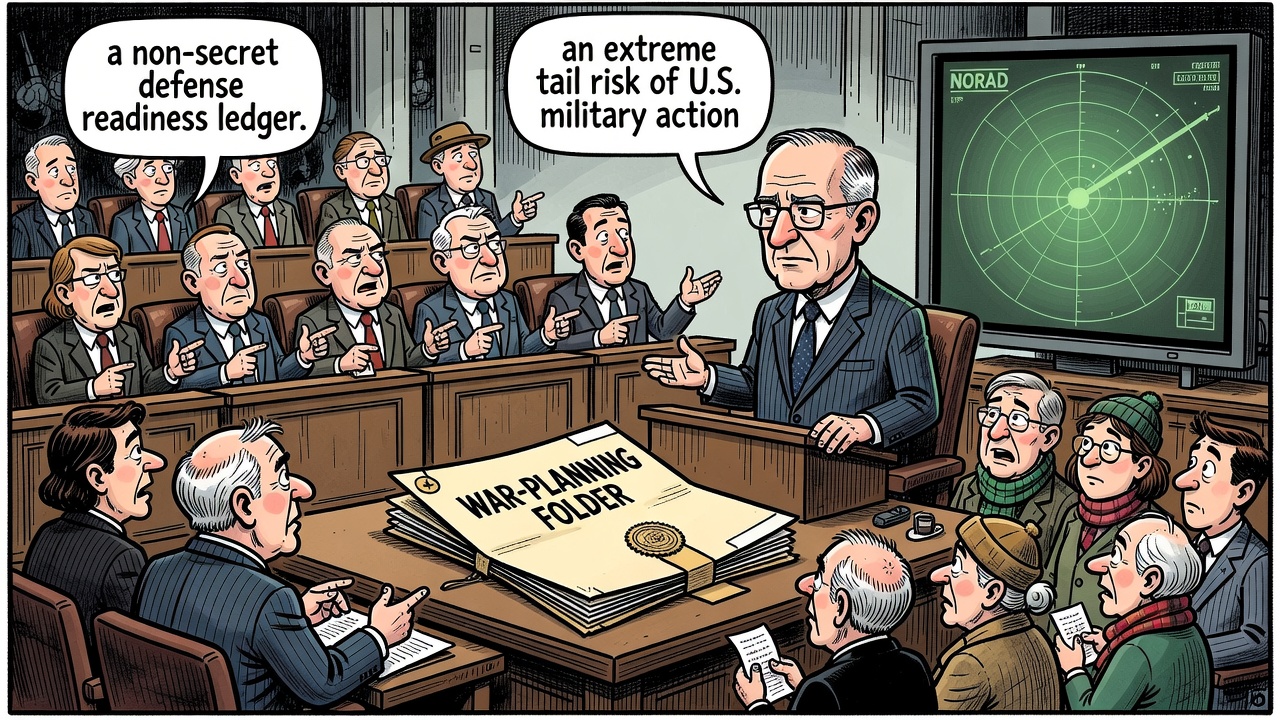
Prime Minister Mark Carney reportedly told The New York Times that his government had prepared for the unlikely possibility that U.S. President Donald Trump could order military action against Canada. The Globe and Mail described Carney’s language as an “extreme tail risk,” not a base case, and reported that he refused to discuss details.
That caveat matters. Responsible governments do plan for remote dangers. No serious conservative should turn contingency planning into panic theatre, or demand public release of operational war plans. But once a prime minister publicly invokes a scenario this grave, especially in foreign media, secrecy cannot be the whole answer at home.
The accountable question is not “is an invasion likely?” It is “what did Ottawa learn from the planning, and what public decisions followed?” Canadians are being asked to accept higher defence spending, new procurement structures, continental-defence promises and emergency-policy tradeoffs. If U.S. risk is part of the justification, Parliament deserves a non-operational ledger.
That ledger should include basic receipts: when Carney made the remarks, which cabinet or national-security committees reviewed the risk, what categories of readiness gaps were identified, and whether any budget line items now rely on that analysis. It should also say what can be reviewed publicly, what can be reviewed in camera by parliamentarians, and what must remain classified for legitimate security reasons.
The Globe also reported earlier this year on Canadian Armed Forces modelling of a hypothetical U.S. invasion, while explaining that such modelling is conceptual rather than an executable plan. That distinction is exactly why a public ledger is possible. Ottawa can disclose categories without disclosing targets, troop movements or classified assumptions.
For example: did the exercise reveal dependency on U.S.-controlled procurement chains, satellite services, munitions, aircraft maintenance or communications infrastructure? Did it change assumptions about NORAD modernization, Arctic surveillance, civil-defence communications or port and rail resilience? Did it affect the case for buying F-35s, building domestic ammunition capacity, or expanding cyber and reserve readiness? Those are political and fiscal choices, not merely military secrets.
Carney’s Liberals cannot use national security as both a headline and a vault. If the prime minister raises a historic threat to show seriousness, he must also show Canadians the democratic receipts behind the seriousness.
Publish the defence-readiness ledger. Redact the operational details. Let Parliament test the spending claims. Anything less turns “extreme tail risk” into another Liberal blank cheque stamped classified.
- The Globe and Mail archive: Carney prepared for risk that Trump might order military action
- Global News video: Preparing for an unlikely U.S. risk: Carney
- Bloomberg: Carney tells NYT he looked at extreme tail risk of U.S. invasion
- Rebel News commentary: Carney remarks and accountability reaction
This article does not claim U.S. military action is likely and does not ask for operational war plans. It argues for safe, non-sensitive public accountability over the policy, procurement and budget consequences of the prime minister’s public risk framing.