Before Any SKS Ban, Publish the Gun-Buyback Cost Ledger
No government should expand a confiscation-and-compensation program first and explain the cost ceiling later.
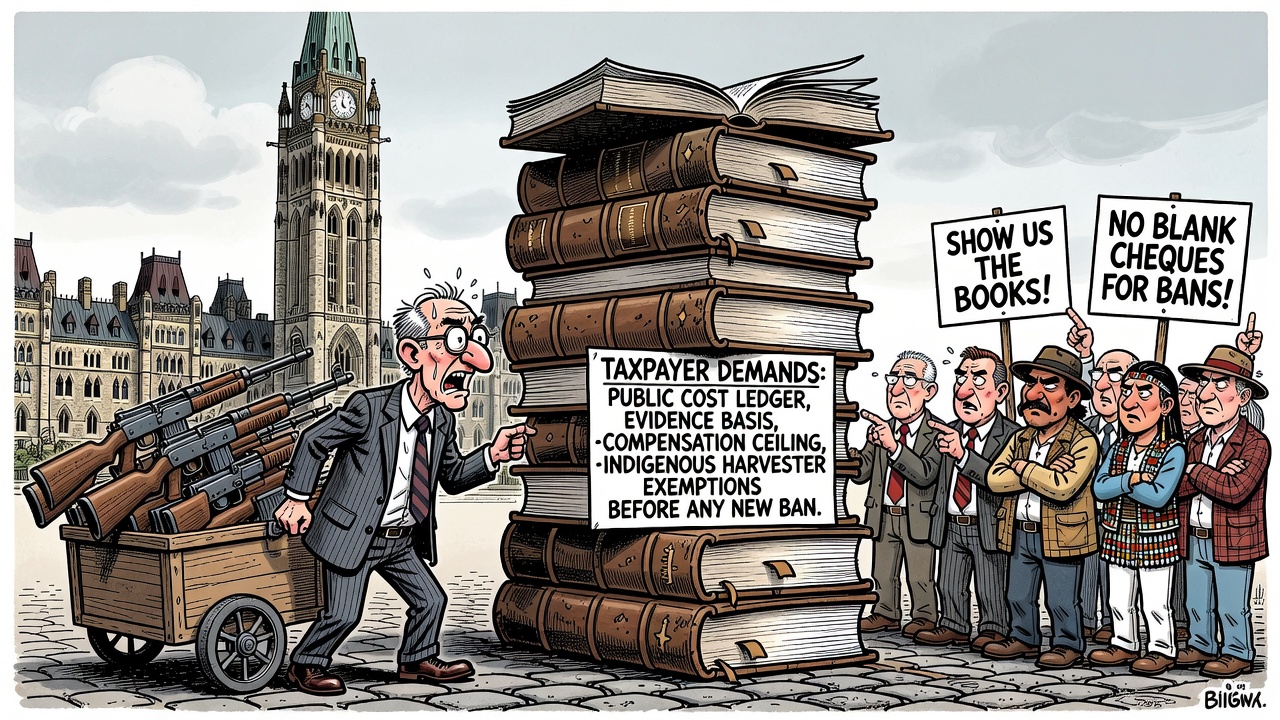
Ottawa has not announced an SKS ban. That fact matters. But so does the question now in front of Public Safety Minister Gary Anandasangaree: if the Carney government is considering adding the SKS to the federal firearms prohibition list, will Canadians see the cost, evidence and implementation plan before the decision is made?
Juno News reported that Canadian Coalition for Firearm Rights CEO Rod Giltaca warned an SKS prohibition could add about $1 billion to the firearms compensation program and affect hundreds of thousands of licensed owners. That is Giltaca’s estimate, not an official government projection. It should not be treated as gospel. It should be treated as the reason Ottawa must publish its own numbers.
Public Safety Canada’s own records already show this is not a small administrative file. In June, the department said more than 142,000 assault-style firearms had been declared, collected or destroyed under the Assault-Style Firearms Compensation Program. Briefing material for Anandasangaree listed the program’s total funding envelope at $742.5 million, including fixed costs such as program design and web-portal development and maintenance. The same note said up to $248.6 million was set aside for compensation and forecast support for about 152,000 firearms, while actual totals would depend on participation and be reported after completion.
That is the conservative accountability problem. A program built around fixed costs, variable uptake and politically charged definitions cannot be expanded on vibes, headlines or selective briefings. If Ottawa believes public safety requires a new SKS prohibition, it should be willing to publish the evidence basis, the affected-firearm estimate, the compensation model, the administrative cost, and the maximum taxpayer exposure before imposing the rule.
The government also owes clarity to lawful owners and Indigenous harvesters. The SKS has long been widely owned in Canada, including by people who use practical, affordable rifles for remote harvesting. If ministers are weighing a ban, Canadians should see the exemption analysis, replacement-access plan, enforcement assumptions and amnesty timeline. “Trust us” is not a policy; it is a blank cheque.
None of this excuses criminal violence. If investigators prove a specific weapon, loophole or failed police process contributed to a massacre, government should respond with evidence-based measures. But the Tumbler Ridge facts still need careful public handling: Juno noted the RCMP had not publicly confirmed which firearm was used, and allegations in related court documents remain untested.
Carney’s Liberals can make their case. First, publish the ledger: the decision memo, RCMP evidence basis, affected-owner count, firearm count, compensation schedule, Indigenous-harvester plan, administration budget, crime-impact rationale, and total program ceiling. If the policy is defensible, the receipts should be too.
- Juno News: SKS ban could add $1 billion to Liberal gun ‘buyback,’ CCFR warns
- Public Safety Canada: Firearms compensation program for businesses closes — Amnesty period extended
- Public Safety Canada briefing material: Minister Anandasangaree’s SECU appearance notes / ASFCP envelope details
This article distinguishes between advocacy estimates and official program records, and argues for a public cost-and-evidence ledger before any expansion of the firearms compensation program.