Quebec’s Chatbot Election Mess Needs a Source Ledger, Not a Speech Blank Cheque
Bad voting information is a democratic problem. So is giving Ottawa vague new power over political speech.
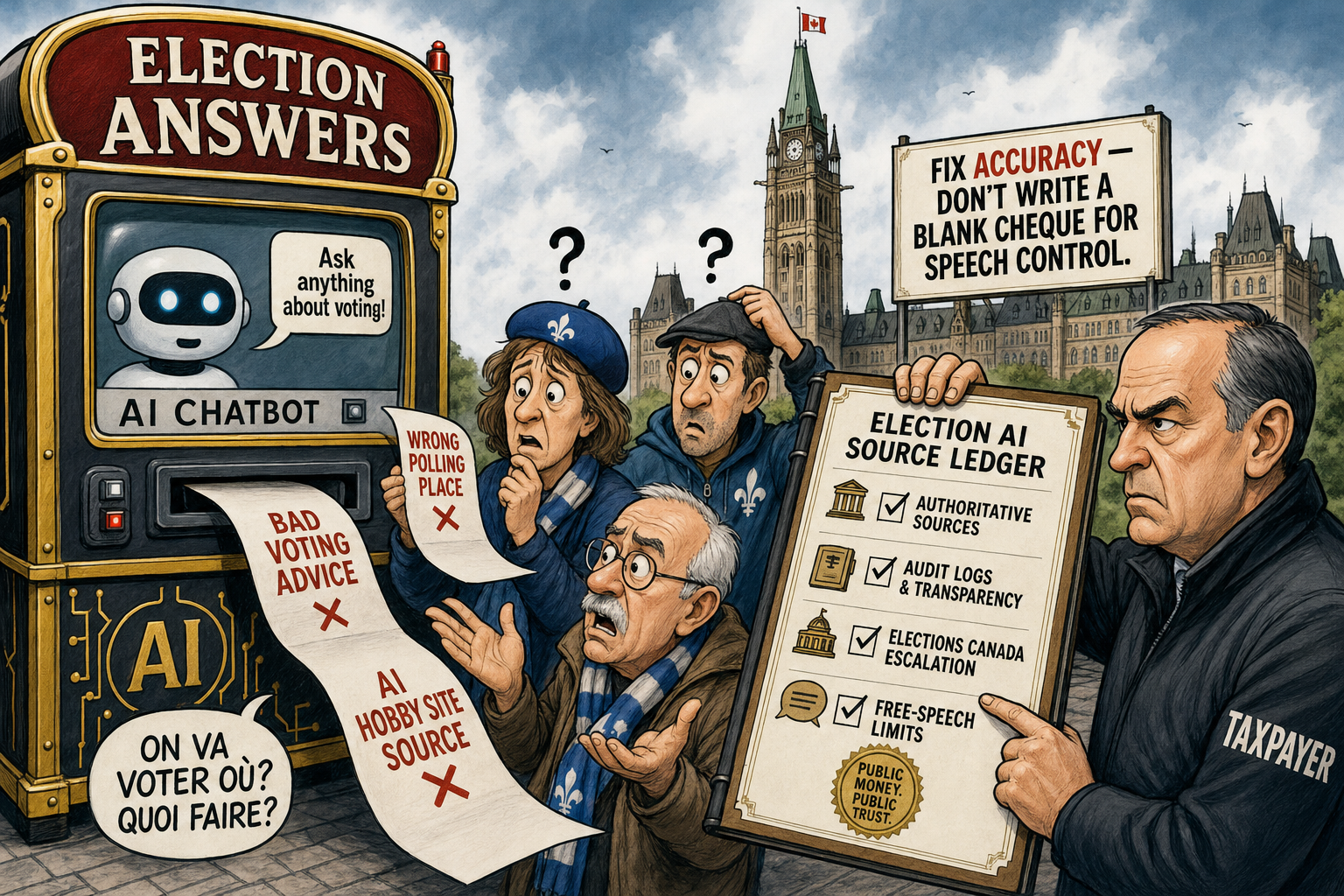
The warning from Parliament should be taken seriously. A House of Commons committee heard on October 8 that many voters looking to AI chatbots for election information received inaccurate answers during Quebec’s recent provincial election. McGill political scientist Aengus Bridgman estimated that about 40 per cent of Quebec voters asked chatbots for election information. Taylor Owen, also of McGill, said researchers found that in the final three weeks of the campaign, 39 per cent of ChatGPT voting advice came from an error-filled hobby website that had been built with AI.
That is not a small glitch. If a voter gets the wrong polling-place information, eligibility rule or voting-process answer, the damage can happen privately and instantly. Nobody sees the false answer in time to correct it. No editor reviews it. No campaign can rebut it. The chatbot becomes a quiet middleman between the voter and the ballot box.
But the answer cannot be a Liberal speech blank cheque.
Bill C-25, the Strong and Free Elections Act, received royal assent in June. The government says it bans sophisticated deepfakes of electoral actors and makes it illegal to knowingly spread false or misleading information about voting activities or the voting process with intent to disrupt an election or affect the result. Those intent-based rules are one thing. A broad new regime that lets Ottawa police accidental AI errors, disputed political claims or ordinary campaign argument would be something very different.
The conservative accountability position is straightforward: protect voters from false process information without turning election integrity into a censorship file. The first fix should be transparency, not speech control.
Start with an Election AI Source Ledger. If major chatbots answer questions about Canadian elections, they should disclose the authoritative sources used for voting-process answers: Elections Canada, provincial election agencies, official candidate lists, official polling-location tools and published election calendars. When a chatbot does not have reliable access to current official information, it should say so clearly and redirect the user to the official source instead of improvising.
Second, require election-query audit logs that protect privacy but allow independent review. Canadians do not need a database of every voter’s questions. They do need aggregate evidence of what systems answered, which sources they relied on, how often they refused, and how quickly obvious errors were corrected.
Third, create a narrow escalation channel to election agencies for wrong process answers: dates, places, eligibility, identification, registration, ballot counting and official results. Keep it there. Do not smuggle in partisan “misinformation” policing under the cover of fixing polling-place mistakes.
Ottawa should not wait for a federal election crisis before demanding receipts. But if the Liberals use Quebec’s chatbot failure as a pretext for open-ended political-speech controls, they will turn a real election-integrity problem into another trust problem of their own making.
- Global News / The Canadian Press: Many Quebec voters got false election information from chatbot, MPs hear
- OECD.AI incident monitor: AI Chatbots Spread False Election Information to Quebec Voters
- Department of Democratic Institutions: Bill C-25 royal assent release
- Justice Laws Website: Strong and Free Elections Act text
- Elections Canada: Bill C-25 key takeaways
This article relies on reported committee testimony and official Bill C-25 materials, and argues for transparent election-information safeguards with narrow speech limits.