PBO’s Debt-Danger Warning Needs a Plain-Language Fiscal Ledger
A debt-danger warning from Parliament’s budget watchdog should force Ottawa to publish spending, interest-cost and defence-risk receipts before Budget Bill C-31 moves.
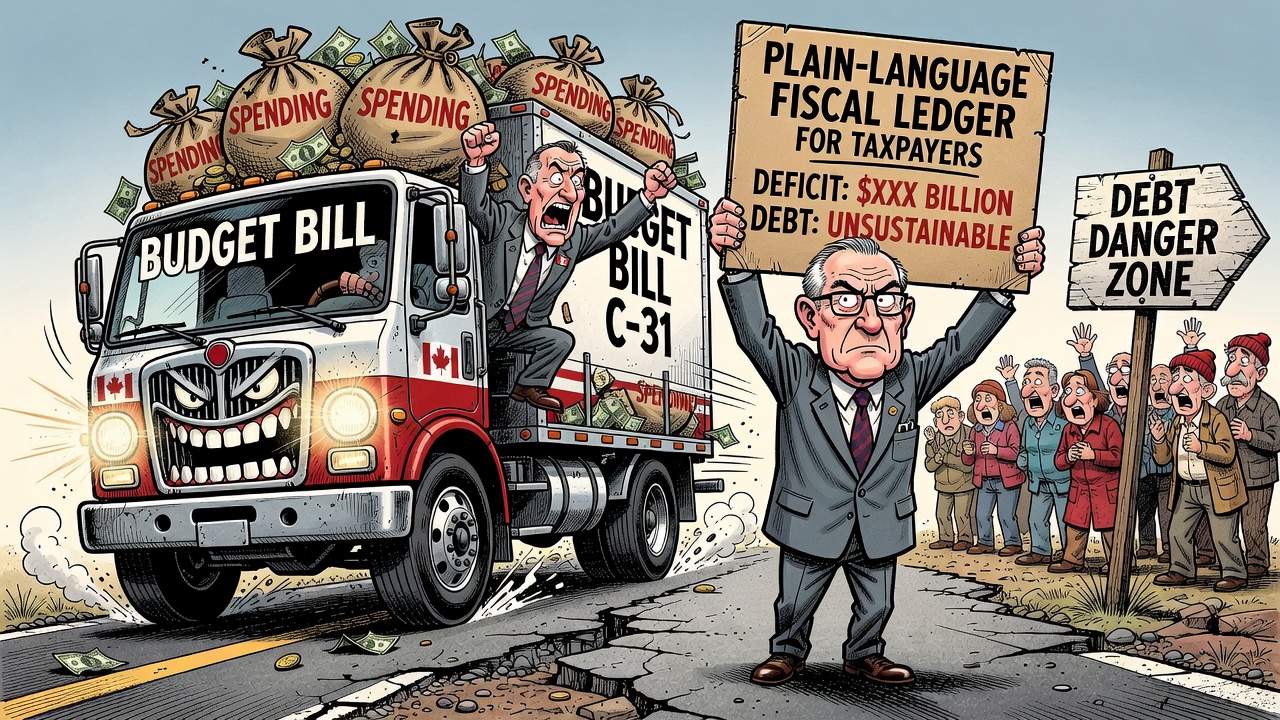
Parliament’s budget watchdog has given Canadians a warning that should not be buried under Liberal “investment” language. Blacklock’s Reporter reported October 9 that Parliamentary Budget Officer Annette Ryan told senators cabinet is heading toward a “danger zone” with continued overspending, and called the idea that deficit spending automatically promotes growth “the opposite of prudence.” Western Standard carried the same warning as a story about rising interest costs.
The setting matters. The Senate National Finance Committee notice shows Ryan and senior PBO officials appeared October 7 on Bill C-31, the second act to implement Budget 2025. That is exactly when MPs and senators should be demanding hard numbers, not accepting another round of branded funds, optimistic multipliers and vague promises of future growth.
The official PBO receipts are already troubling. In its June 2026 Economic and Fiscal Outlook, the PBO said Budget 2025 and the Spring Economic Update added $68.4 billion in net new spending over 2025-26 to 2030-31. It projected the deficit rising to $72.0 billion in 2025-26, persistent deficits averaging 1.8% of GDP, and federal debt-to-GDP increasing from 41.3% in 2025-26 to 42.5% by 2030-31.
Debt is not an abstract accounting word when interest costs crowd out choices. The PBO projected public debt charges per person rising from $1,288 in 2025-26 to $1,885 by 2030-31, with the debt-service ratio climbing to 13.1%. That is money unavailable for tax relief, defence readiness, health transfers, border capacity, housing infrastructure or emergency reserves.
Ottawa’s other fiscal story is just as foggy. In a separate May assessment, the PBO said the Spring Economic Update gave “directional, rather than detailed” updates on major capital priorities. On defence, it warned the longer-term path to the 5% NATO commitment remained unspecified, and estimated core defence cash spending could reach $159 billion in 2035-36 if Canada meets the pledge.
Conservatives do not need to argue that every deficit is identical or that every capital project is waste. The better argument is simpler: a government asking Canadians to trust more borrowing must show the ledger before the bill moves.
That ledger should include every new spending measure by program, the department responsible, start and sunset dates, operating versus capital classification, expected private co-investment, interest-rate sensitivity, per-capita debt charges, Comprehensive Expenditure Review savings by department and FTE impact, and defence-spending scenarios from today through 2035. It should also identify which “temporary” measures are expected to become permanent.
Mark Carney was sold as the banker who would bring discipline. The PBO’s warning suggests Parliament should verify that claim line by line. Before Bill C-31 advances, Ottawa should publish the debt-danger ledger.
- Parliamentary Budget Officer: Economic and Fiscal Outlook — June 2026
- Parliamentary Budget Officer: Assessment of Spring Economic Update: Major Capital Priorities
- Senate of Canada: National Finance Committee meeting notice, October 7, 2026
- Blacklock’s Reporter: October 9 report on PBO debt-danger warning
- Western Standard: Federal budget officer warns Ottawa nearing debt danger zone
This article relies on official PBO publications and the Senate committee notice for budget numbers and appearance details, with Blacklock’s Reporter and Western Standard as contemporaneous reporting on the October 9 warning.