No Charter Statement, No Second Reading for Bill C-34
A bill that restricts social-media access and pushes age checks across the internet needs its Charter receipts before MPs are asked to move it forward.
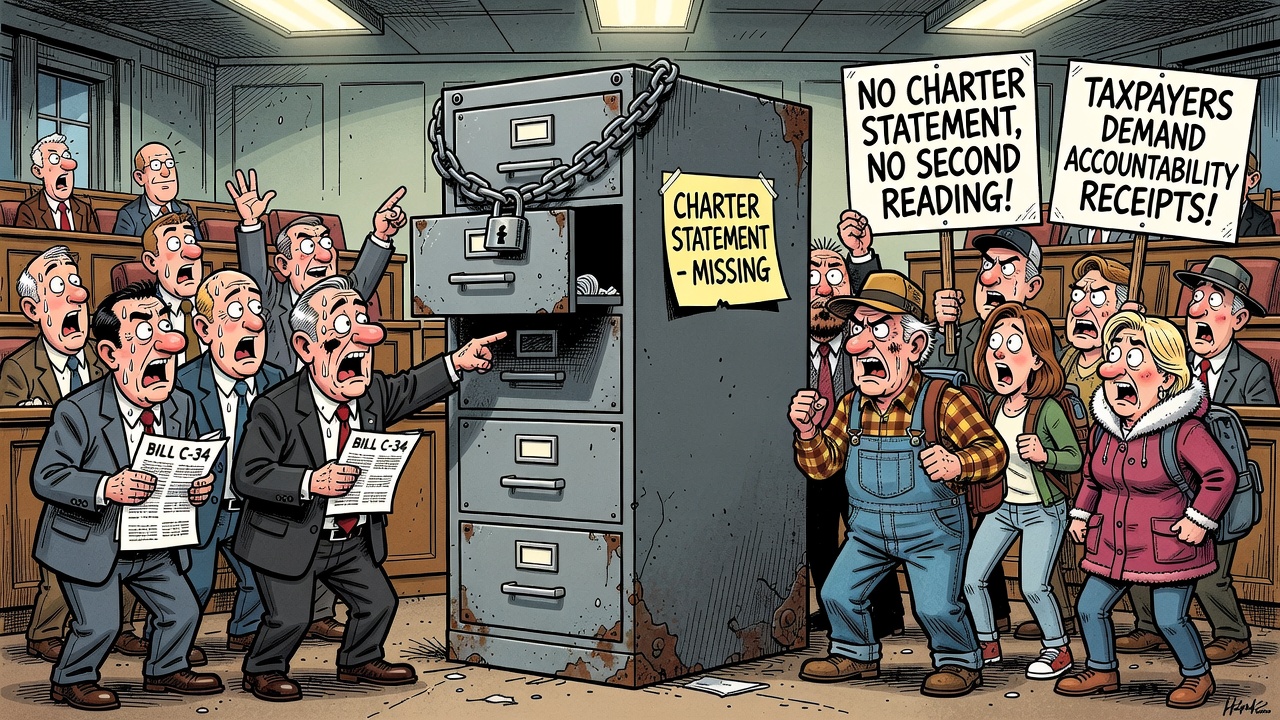
Bill C-34 may be marketed as child protection, but it is also a speech, privacy and identity-check bill. That means Parliament should not be asked to advance it on trust. Before second reading, the Liberal government should table the Charter statement and the privacy assumptions behind its under-16 social-media ban.
University of Ottawa law professor Michael Geist reported on October 9 that, four months after Bill C-34 was introduced, the government still had not released the Charter statement that is supposed to explain a government bill’s potential effects on Charter rights. That is not a minor paperwork issue. It is the public receipt for how Ottawa thinks a rights-limiting law survives constitutional scrutiny.
The government’s own materials say Bill C-34, introduced June 10, 2026, would enact the Digital Safety Act and the Digital Safety Commission of Canada Act. The official highlights say certain regulated social-media services would have to prevent users under 16 from having accounts unless the service receives an exemption from the new Commission. The same package also imposes duties on social-media and chatbot services, including child-protection obligations, risk-mitigation duties, transparency plans, complaint routes and enforcement by a new regulator.
Conservatives can support protecting children online without accepting a blank cheque for Ottawa to redesign internet access. The accountability problem is the mechanism. If platforms must verify or estimate age, millions of Canadians may be pushed into age-assurance systems simply to prove they are old enough to speak, read, organize, campaign, research or participate in lawful online spaces.
Civil-liberties and digital-rights groups have warned about that tradeoff. The Canadian Civil Liberties Association says Bill C-34 raises freedom-of-expression and privacy risks, including incentives for platforms to over-comply. OpenMedia argues the bill has the right goal but the wrong execution, warning that an under-16 restriction can exclude young people from information and community while creating privacy problems for everyone required to prove their age.
None of this proves the government is acting in bad faith. Online child exploitation, bullying, self-harm content, sexual deepfakes and violent extremism are real harms. But real harms do not erase the Charter. They raise the standard for precision. If Ottawa believes a population-wide age-assurance regime is proportionate, minimally impairing and privacy-protective, it should show the analysis now.
The receipt test is simple: publish the Charter statement, the privacy impact analysis, the age-assurance model, the exemption criteria, the Commission start-up timeline, the enforcement sequence, and the evidence comparing an outright under-16 account restriction with narrower safety-by-design rules.
No Charter statement, no second reading. MPs should not debate a rights-limiting internet bill with the government’s constitutional homework still missing from the file.
- Michael Geist: The Missing Charter Statement
- Canadian Heritage: Bill C-34, the Safe Social Media Act
- Canadian Heritage: Highlights from Bill C-34
- Parliament of Canada: Bill C-34 first-reading text
- Canadian Civil Liberties Association: CCLA warning on freedom of expression and privacy risks
- OpenMedia: Right Goal, Wrong Execution
This article does not dispute the reality of online harms to children. It argues that Parliament should see the government’s Charter and privacy analysis before advancing a bill that affects lawful expression, privacy and access to online services.