Pacific Link Briefing Fight Needs a Parliament-First Ledger
Taxpayer-backed megaprojects should not be explained to reporters while MPs wait outside the room.
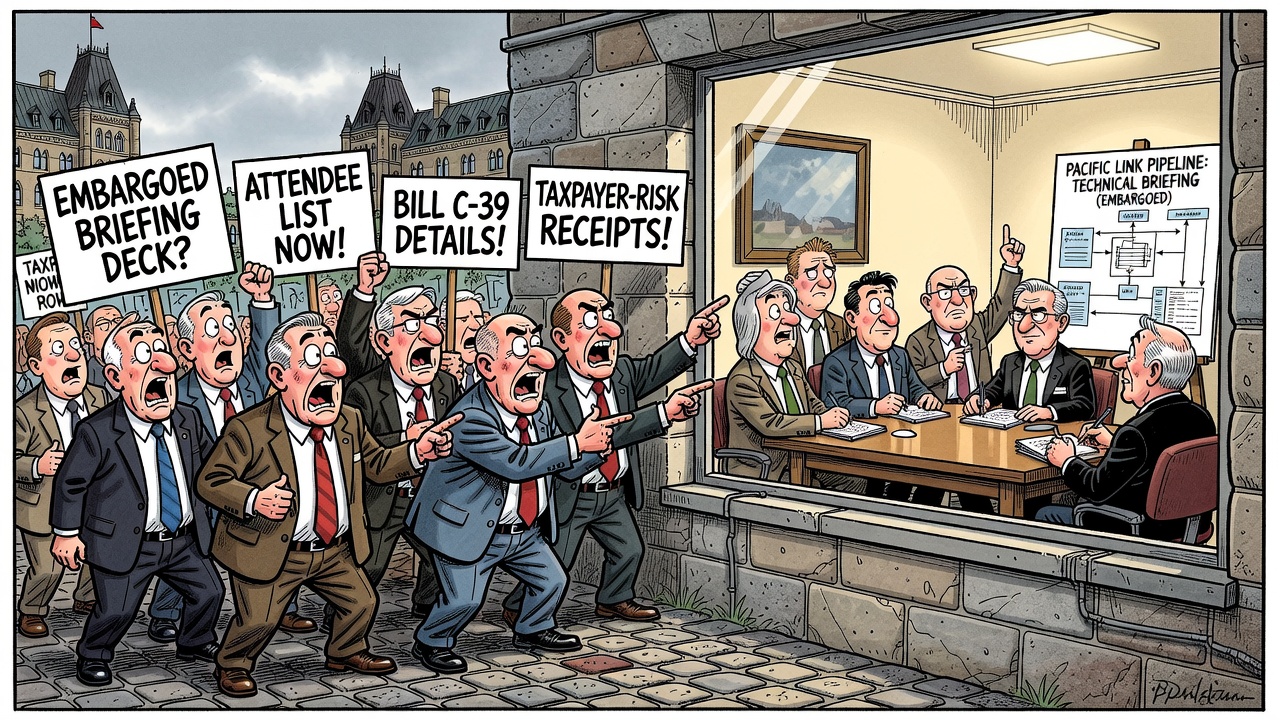
The Pacific Link dispute is not only about whether Canada should build another oil pipeline. It is about whether the Carney government is willing to put Parliament first when it fast-tracks a taxpayer-backed megaproject.
On October 1, the Prime Minister announced that the West Coast Oil Pipeline, now called Pacific Link, had been listed as a project of national interest under the Building Canada Act. The official release said Canada and Alberta would share equal ownership, Indigenous communities would be offered at least a 10 percent stake through loan-guarantee programs, Pembina Pipeline would participate as a private-sector investor and Trans Mountain Corporation would lead development. Ottawa also said the Major Projects Office would work to finalize conditions by September 1, 2027, clearing the way to get shovels in the ground.
Those are not minor details. They describe public ownership, public risk, Indigenous equity financing, regulatory sequencing and the shape of a project expected to move about one million barrels per day from Alberta to a deepwater port near Delta, B.C. Global News reported that a pre-announcement briefing tied the decision to the U.S. trade war and the need to diversify energy markets.
Then came the parliamentary problem. On October 5, Bloc MP Christine Normandin rose on a question of privilege and alleged that government representatives held an embargoed technical briefing for media on October 1, while no equivalent briefing was offered to MPs despite a request. She argued that past Speaker rulings treat unequal disclosure of legislative information as a contempt issue when journalists receive bill-related information that parliamentarians cannot access.
The government may answer that Pacific Link was an announcement, not a bill briefing. Fine — then publish the receipts. The project is being pushed through the same fast-build machinery that Ottawa advertises through Bill C-39 and the Building Canada Strong Act. That bill promises one-year federal reviews, strategic trade corridors and a transformed approvals process. If ministers want Parliament to bless faster approvals, they should not normalize a briefing culture where opposition MPs learn key policy details after reporters do.
This is a conservative accountability test, not an anti-development test. Canada needs infrastructure. Investors need certainty. Workers need projects. But taxpayers also need a government that respects the House of Commons before it writes cheques, issues guarantees or centralizes approval power.
Publish the Pacific Link briefing ledger: the deck, invited outlets, attendees, timestamps, embargo terms, officials present, what was said about Bill C-39 and the Building Canada Act, whether MPs requested the same access, who denied it, and what legal or Speaker-risk advice the government received.
If the briefing was harmless, disclosure will prove it. If MPs were deliberately kept behind the media wall, Canadians should know before this becomes the model for every national-interest project.
- OpenParliament: Christine Normandin on privilege, October 5, 2026
- Prime Minister of Canada: Pacific Link listed as a project of national interest
- Global News: Pacific Link pipeline designated a national-interest project
- APTN News: First Nations offered 10% stake in Pacific Link
- Government of Canada: Building Canada Strong Act / Bill C-39 release
This article takes no position on the final merits of Pacific Link. It argues for Parliament-first disclosure, public-risk transparency and equal access for elected MPs.