Mayors’ WhatsApp Logs Expose Ottawa’s Immigration-Housing Blind Spot
Private municipal alarm should become a public federal capacity ledger.
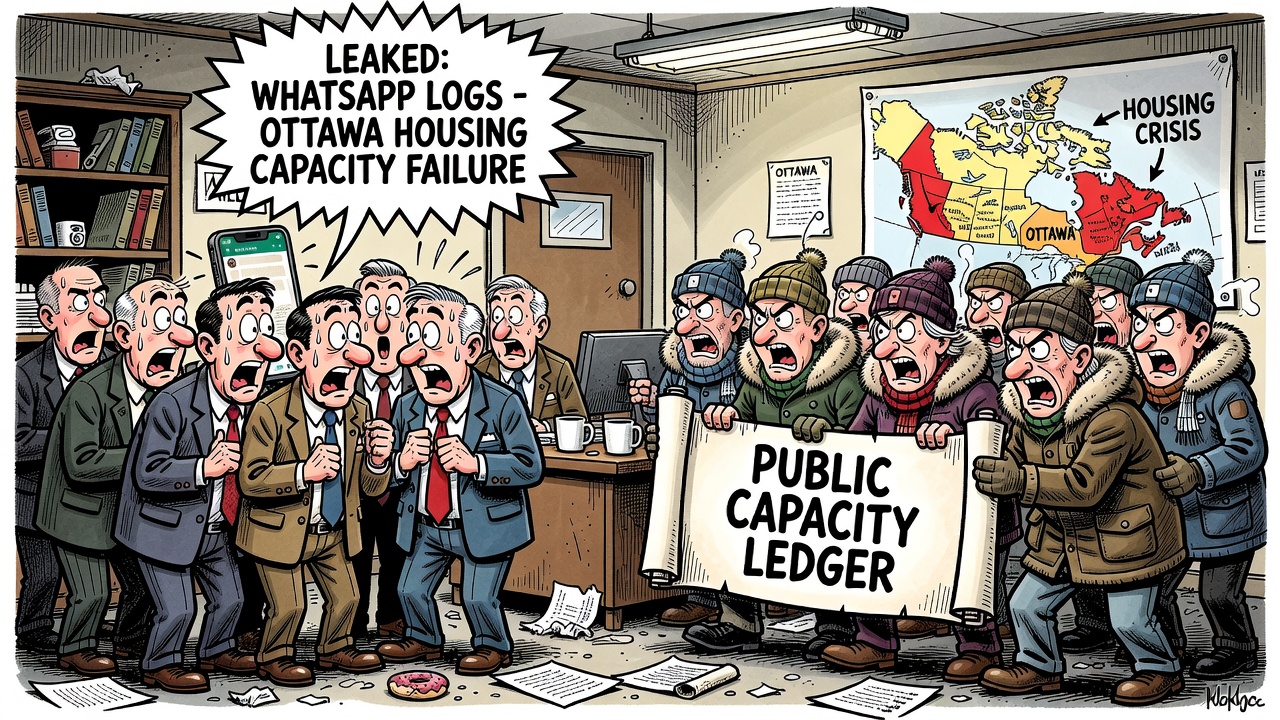
The lesson from the Ontario Big City Mayors WhatsApp disclosure is not that newcomers caused Canada’s housing crisis. The lesson is that Ottawa pushed national intake and asylum pressures into local communities without showing the public a serious capacity plan.
Juno News reported October 5 that disclosed Ontario Big City Mayors messages show municipal leaders discussing homelessness, asylum seekers, refugee intake and immigration-driven pressure on local services. A Toronto Star account, republished by Internationly and discussed publicly online, said the Star fought roughly two years to obtain 101 pages of the group chat. That is exactly the kind of local evidence trail Parliament should have demanded years ago.
The reported messages matter because they cut through federal talking points. Oakville Mayor Rob Burton is reported as arguing in 2024 that Ottawa “broke the housing market” by creating an unsustainable, unpredicted and unprepared-for increase in housing demand. Hamilton Mayor Andrea Horwath reportedly answered with the obvious balancing point: Canada needs immigration, but people need somewhere to live.
That is the defensible accountability frame. Do not blame families who followed Canada’s rules. Blame a federal Liberal government that treated housing, shelters, asylum placements and municipal services as if they could be scaled by press release.
Ottawa’s own evidence undercuts any claim that immigration and housing can be discussed in separate silos. An IRCC and Statistics Canada study released in June 2025 found that, from 2006 to 2021, the rise in new immigrants was associated with 11 percent of the rise in median owner-occupied house values and median rents across municipalities, with stronger associations in larger municipalities. That does not prove immigration is the only driver. It does prove the federal government knew population decisions interact with local housing prices.
The supply side is hardly reassuring. CMHC’s July 2026 housing-starts release said the six-month trend was essentially flat, while actual monthly starts in centres of 10,000 people or more were down 19 percent year over year. Meanwhile, IRCC committee material on the Interim Housing Assistance Program describes federal reimbursement agreements and IRCC-funded hotels as emergency responses to high shelter demand, especially around asylum claimants.
So publish the ledger. Canadians deserve a region-by-region table showing immigration targets, temporary-resident assumptions, asylum placements, shelter capacity, hotel spending, IHAP transfers, housing-start assumptions, completions, municipal consultation records and the warnings Ottawa received from mayors before costs landed on local taxpayers.
If the federal government had that plan, release it. If it did not, admit that communities were left to manage a national policy failure with local budgets.
- Juno News: Feds left municipalities in the dark
- Internationly / Toronto Star republication: We fought 2 years to see the Ontario mayors group chat. Here’s what we found
- IRCC / Statistics Canada: Immigration and housing prices in municipalities across Canada
- CMHC: Housing starts and construction data, July 2026
- IRCC committee material: Interim Housing Assistance Program funding for municipalities
This article supports lawful immigration and focuses on federal planning, shelter capacity, housing supply and transparent municipal cost accountability.