The Foreign-Influence Registry Needs a Compliance Ledger After Only 30 Filings
The registry is live. Now the Liberals need to show whether it is actually being complied with, enforced and validated.
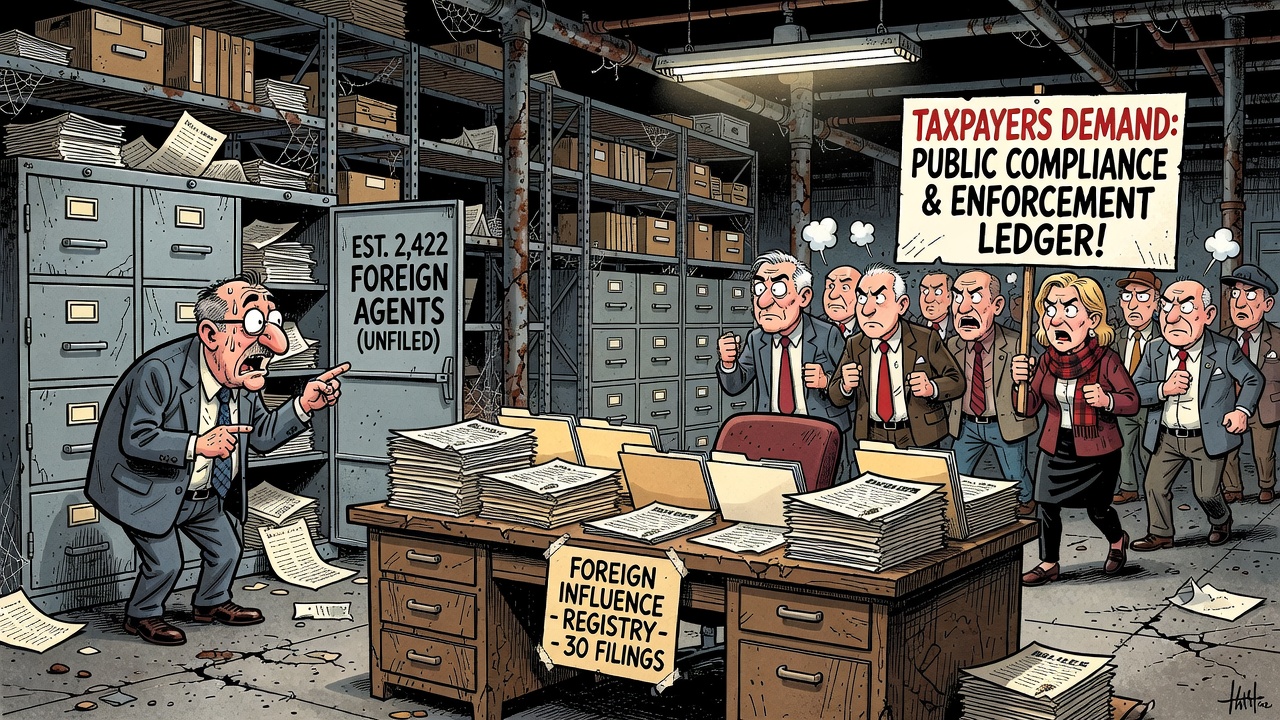
Canada’s foreign-influence registry was sold as a sunlight tool. After the first major deadline, sunlight is exactly what the Liberal government owes Canadians — not another promise that the system will mature quietly behind closed doors.
Global News reported this week that Canada’s new foreign agents database had received only about 30 disclosures or submissions, while Public Safety Canada had previously estimated roughly 2,422 foreign agents could be captured by the new regime. The public registry itself showed only two names as of the October 3 deadline, with additional filings still being vetted by the Office of the Foreign Influence Commissioner.
That gap is the story. It does not prove that every missing person is a spy, a lawbreaker or an enemy of Canada. Some activity is exempt. Some people may be confused. Some filings may be sitting in a validation queue. But when Ottawa estimates thousands of registrable individuals and entities, then the first post-deadline public number is measured in dozens, Parliament should not shrug and wait for next year’s annual report.
The official rules are not obscure. The commissioner’s office says registration started August 4, 2026, and that information is published only after review and validation. Its compliance guidance says a person or entity must register within 14 days of entering an arrangement with a foreign principal, while arrangements already existing before August 4 had to be submitted by October 3. The same guidance says violations can include failing to register on time, failing to update information, or providing false or misleading information.
The accountability test is execution. Public Safety announced the registry as a transparency measure to help Canadians see how foreign influence is exercised, on whose behalf, and how public decision-making may be shaped. Fine. Then Canadians should see the operating dashboard: total submissions received, validated public registrations, rejected or withdrawn filings, average validation time, backlog age, deficiency notices, compliance warnings, investigations opened, penalties assessed, exemptions relied on, and staffing or IT costs.
A conservative national-security standard is not panic. It is measurable enforcement. If the law has teeth — including administrative monetary penalties that can reach $1 million — Canadians should know when those teeth are used, when they are not, and why. If the government is relying first on education and voluntary compliance, publish the outreach plan, target sectors, notices sent, and dates for escalation.
There is also a fairness issue. Legitimate organizations that file on time should not be left looking foolish while non-compliers coast in the shadows. Diaspora communities should not be asked to trust vague assurances after years of warnings about transnational repression and covert pressure. Public officials should not be left guessing who is speaking for a foreign principal when policy, procurement or elections are at stake.
The registry may eventually work. But “eventually” is not a compliance plan. Ottawa should publish a weekly foreign-influence compliance ledger until the gap between the estimate and the public record is explained.
- Global News: Canada’s new foreign agents database has received just 30 registrations
- Office of the Foreign Influence Commissioner: Registry of foreign influence activities
- Office of the Foreign Influence Commissioner: Registration and compliance
- Public Safety Canada: Government of Canada establishes foreign influence registry
- The Hub: Lines that landed: Question Period for October 8
This article distinguishes between low reported registration numbers and proven non-compliance. It does not allege that any unlisted individual or organization has violated the law.