Carney’s Access-to-Information Vanishing Act Needs a Red-Line Ledger
Emails, texts and emergency delays should not disappear behind Ottawa’s definition of an official record.
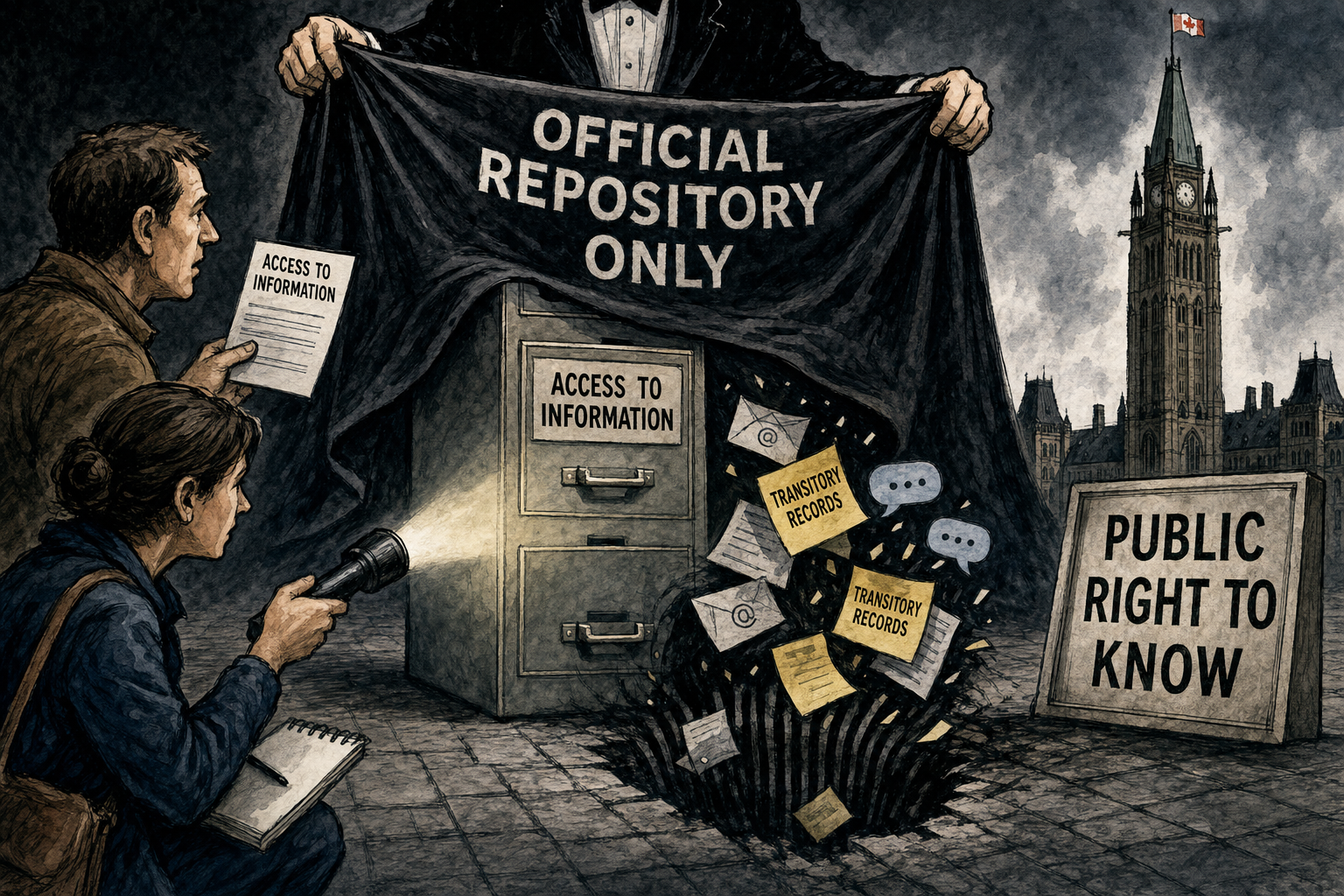
Before the Carney government rewrites Canada’s access-to-information law, it should publish the red-line ledger Canadians need to judge the rewrite for themselves.
World Press Freedom Canada’s Dean Beeby warned this week that Ottawa’s review could push internal emails, texts and other transitory records outside the practical reach of the Access to Information Act. That warning tracks the government’s own March policy paper. Treasury Board said one option is to update the Act’s definition of “record” to mean an “official record” held in official repositories, so ATI searches would retrieve records with “ongoing business value” and “effectively remove transitory records from the scope of the Act.”
That is not a bookkeeping tweak. It is a power shift. Canadians do not file access requests because they want polished talking points. They file them because the real record of government often lives in emails, text chains, drafts, meeting notes and the unvarnished traffic between officials before the public version is scrubbed clean.
The Narwhal reported earlier this year that the federal proposals could shield some emails and text messages from requests, while Treasury Board argued the changes would reduce processing pressure and support faster responses. Faster is not better if the system becomes faster at delivering less. A prompt answer that excludes the material most likely to show who knew what, when and why is not transparency. It is managed disclosure.
There are other pressure points. The same Treasury Board paper discusses allowing time extensions during emergencies such as pandemics, floods or disasters. It also canvasses ways to deal with requesters deemed abusive or vexatious, and policy approaches related to the Information Commissioner’s orders. Some of those ideas may have legitimate administrative arguments. But after years of federal scandal, procurement controversy, censorship fights and missing-record excuses, Ottawa has not earned a blank cheque to narrow the public’s right to know.
A conservative accountability standard is simple: public power requires public receipts. If a minister, department or senior adviser wants emails and texts excluded, Canadians should see the request, the rationale and the risk analysis. If emergency extensions are proposed, Canadians should see the trigger, maximum duration, oversight process and complaint path. If requester blacklisting is on the table, Canadians should see safeguards against using it to silence persistent journalists, researchers or citizens.
Publish the ATI reform red-line ledger: proposed statutory text, the departments lobbying for narrower access, summaries of stakeholder submissions, the Information Commissioner’s objections, examples of records that would be excluded, emergency-extension triggers, vexatious-request criteria and every ministerial briefing note on the change.
If the reform truly strengthens transparency, the ledger will prove it. If it makes inconvenient records vanish, Canadians should know before Parliament votes.
- World Press Freedom Canada: The Carney government’s vanishing act
- Government of Canada / Treasury Board: 2025 review of the Access to Information Act: Policy approaches
- The Narwhal: Federal transparency law changes could shield government emails, text messages
- Centre for Law and Democracy: Second Global Right to Information Stress Test Report
This article argues for disclosure of the reform record before Parliament changes federal access-to-information rules. It does not claim every proposal has been enacted.