Ottawa Needs a Provincial Immigration Capacity Ledger
If provinces live with Ottawa’s intake settings, Carney’s “control” claim needs province-by-province receipts.
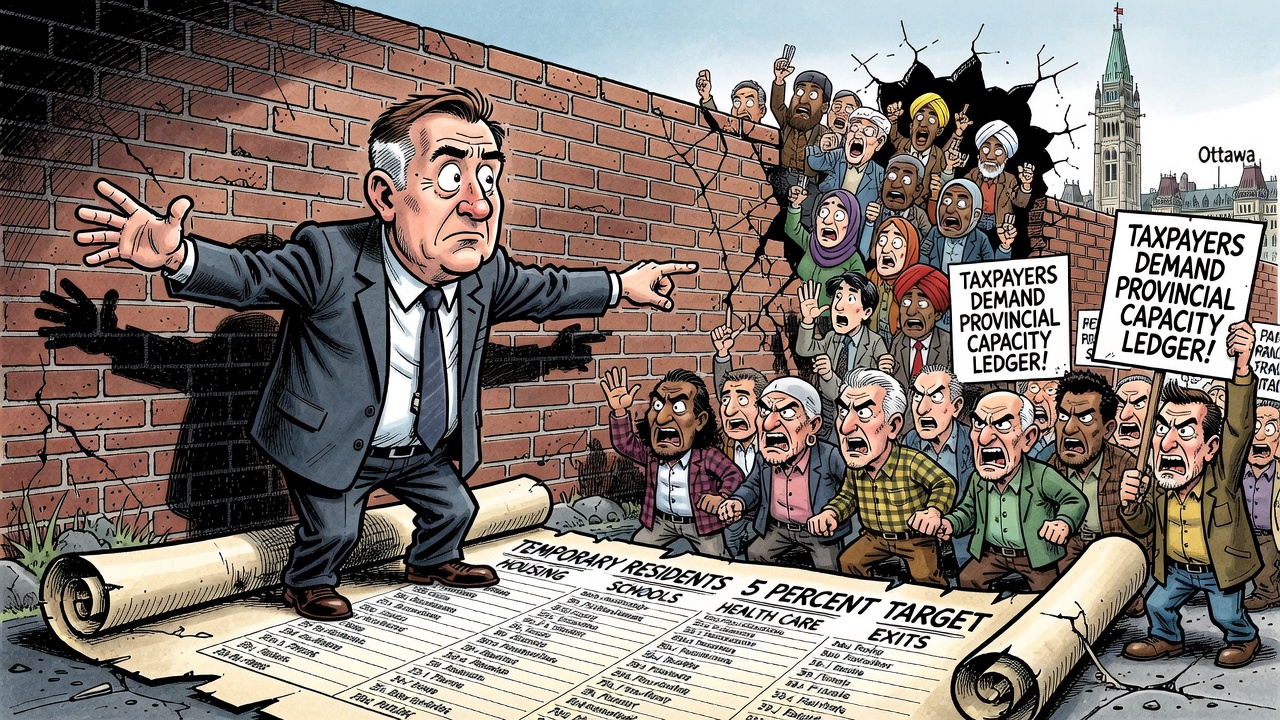
Jason Kenney’s latest immigration warning should be treated as a federal accountability test, not a culture-war permission slip.
The Western Standard reported October 6 that the former Alberta premier favours lower immigration levels and argued Alberta cannot simply seal itself off from Ottawa’s immigration policy. That point matters even for Canadians who disagree with Kenney. Immigration is set nationally, but the pressure lands locally: rents, classrooms, ERs, shelters, transit, job markets and provincial budgets.
Prime Minister Mark Carney says the system is under control. Fine. Then publish the control ledger province by province.
Ottawa’s own 2026–2028 immigration plan says the federal government is committed to reducing Canada’s temporary population to less than five percent of the total population by the end of 2027. Statistics Canada estimated that, as of July 1, 2026, Canada still had 2,779,774 non-permanent residents — 6.7 percent of the population — even after an annual decline of 154,614. The Parliamentary Budget Officer’s demographic analysis also reiterates Ottawa’s sub-five-percent temporary-resident target while noting permanent-resident admissions are planned at 380,000 per year.
Those numbers are national. The capacity problem is provincial. A five-percent target means little if Ottawa will not show where temporary residents are living, where permits are expiring, who has actually left, who is transitioning to permanent residence, and how those changes line up with housing starts, school capacity, health-care access and shelter demand in each province.
This is not an argument against legal immigration. Canada can welcome newcomers, honour lawful pathways and still demand basic competence from the federal government. What Canadians should reject is a Liberal habit of announcing “targets” while leaving provinces to absorb the operational consequences without a transparent dashboard.
The Alberta angle is useful because it forces the practical question. If Edmonton, Calgary, Fort McMurray or smaller communities are expected to absorb federal intake decisions, what exact assumptions did Ottawa use for rentals, doctors, classrooms, language services, wage impacts and infrastructure? If Ontario, Quebec, British Columbia or Manitoba face the same pressures, publish the same table for them too.
Carney should not answer provincial frustration with another slogan about control. He should instruct IRCC to publish monthly provincial data: temporary-resident stock, new arrivals, permit expiries, confirmed exits, overstays, removals, asylum pressure, permanent-resident transitions, housing starts and completions, school and health-system indicators, shelter usage and labour-market effects.
If the system is controlled, the receipts should exist. If the receipts do not exist, the provinces are right to ask whether Ottawa is managing immigration policy — or merely exporting the costs.
- Western Standard: Kenney favours lower immigration levels, says Alberta cannot seal itself off from Ottawa’s policies
- Immigration, Refugees and Citizenship Canada: Supplementary information for the 2026–2028 Immigration Levels Plan
- IRCC committee material: 2026–2028 Immigration Levels Plan, December 4, 2025
- Statistics Canada: Canada’s population estimates, July 1, 2026
- Parliamentary Budget Officer: Demographic implications of the 2026–2028 Immigration Levels Plan
This article supports lawful immigration while arguing that federal intake policy should be matched to transparent provincial housing, service and labour-market capacity.