The $12.4B Grocery Benefit Receipt: Big Spending, Small Cheques, No Grocery Price Fix
Ottawa is selling grocery relief. The watchdog receipt shows a costly GST-credit expansion with modest per-household amounts and no lever that forces food prices down.
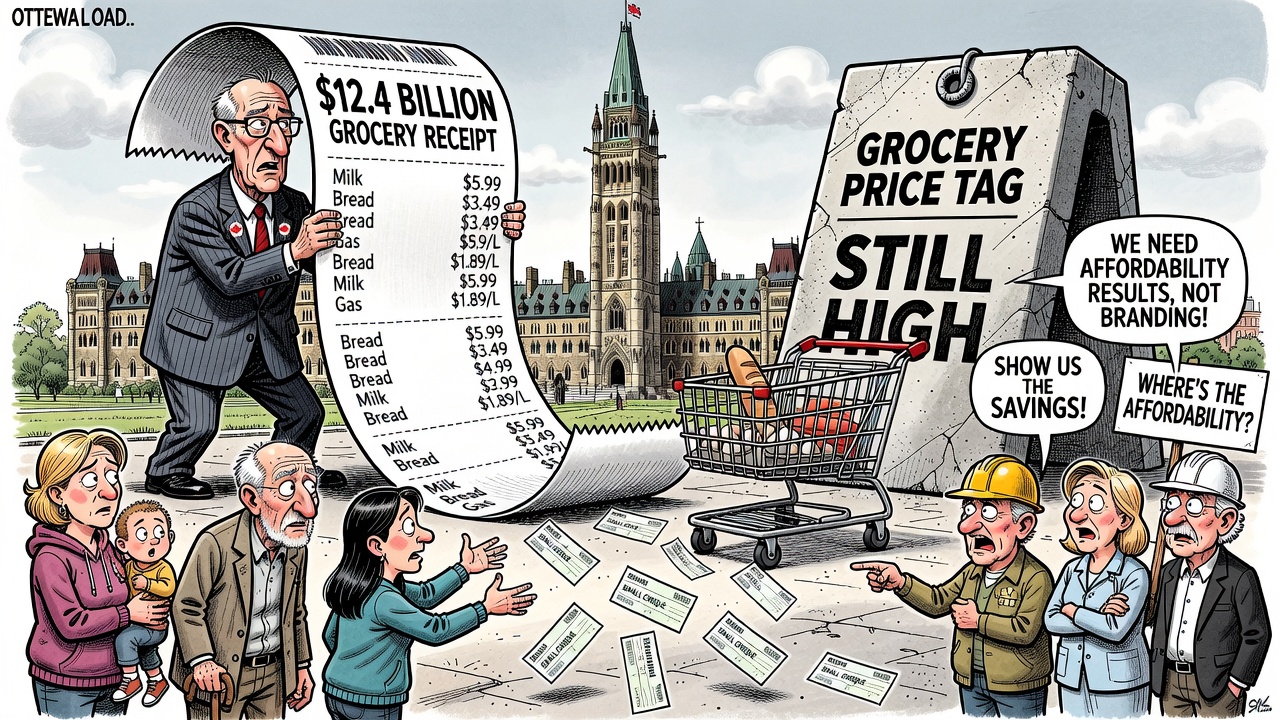
The Carney government’s Canada Groceries and Essentials Benefit is being marketed as affordability help for more than 12 million low- and modest-income Canadians. On the surface, that sounds compassionate. In the ledger, it is also expensive: the Parliamentary Budget Officer estimates Bill C-19’s benefit package will cost $12.4 billion from 2025-26 through 2030-31.
The design matters. According to the PBO, the bill proposes a one-time payment equal to 50% of the annual 2025-26 GST credit, followed by a 25% increase to the annual GST credit for five years starting in July 2026. That is a cash-transfer policy. It may help some households with bills, but it is not a grocery-price policy. It does not expand food supply, reduce transport costs, cut checkout taxes on basic groceries that are already zero-rated, or force competition into the supermarket aisle. A household cannot buy lower prices with Ottawa’s press release; it needs actual market pressure and lower input costs.
The supplementary tables make the political branding look even thinner. For July 2027 to June 2028, the PBO projects 12.606 million recipient tax units: 10.292 million singles and 2.314 million couples. Average added benefits are estimated at $126 for singles and $205 for couples over that benefit year. By July 2030 to June 2031, those averages rise only to $133 and $212.
None of this means families should reject help. Canadians under pressure from rent, interest, taxes and food bills will take what they can get. The accountability problem is that Ottawa keeps confusing relief cheques with affordability reform. A government can borrow billions, send modest payments and still leave the grocery bill structurally unchanged.
Conservatives should be clear about the standard: if cabinet wants praise for grocery affordability, it should publish the full affordability receipt. How much of the $12.4 billion reaches households after administration? How much is financed through borrowing? What is the projected effect on grocery prices, if any? What competition, farming, trucking, energy, carbon-cost and regulatory changes accompany the cheques? And how will Ottawa prove that this was not simply a renamed GST-credit boost wrapped in a grocery slogan?
Real affordability policy should make life less expensive before the cheque arrives. Until the Liberals can show that the Canada Groceries and Essentials Benefit lowers costs instead of merely subsidizing them, Canadians should read it for what the PBO says it is: a multi-billion-dollar transfer with small average top-ups and a very large political price tag.
- Parliamentary Budget Officer: Canada Groceries and Essentials Benefit
- Parliamentary Budget Officer: Legislative costing note and supplementary tables
- Department of Finance Canada: Bill C-19 briefing materials
- Global News: Background on the grocery/GST benefit cost
This article criticizes federal affordability policy design and political messaging. It does not argue that individual low-income recipients should refuse benefits for which they qualify.