Arctic Sovereignty Is Not a Press Release
Internal evaluations say Canadian soldiers were sent north without enough cold-weather basics. That is an Ottawa readiness failure, not a troop failure.
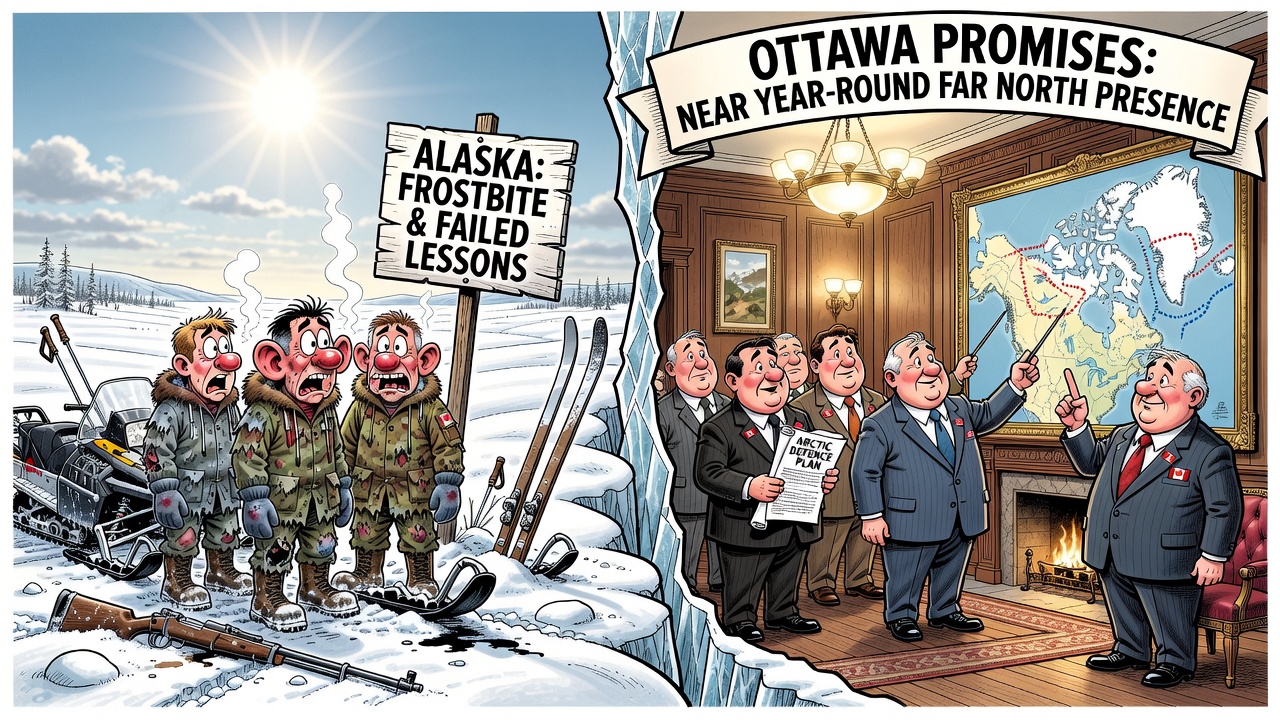
Arctic sovereignty is easy to announce from a podium. It is harder at minus temperatures, in deep snow, when batteries die, stoves fail, communications fade and soldiers are still relearning the basic habits of living and fighting in the cold.
That is the uncomfortable lesson from CBC reporting, carried by Radio Canada International and Eye on the Arctic, on internal Department of National Defence evaluations from a February 2026 Alaska exercise. More than 400 Canadian soldiers from 3rd Battalion, Royal Canadian Regiment trained with a larger U.S. Army brigade near Fairbanks. The evaluations reportedly found Canadian troops were sometimes ill-prepared and ill-equipped for Arctic warfare, with gaps in winter soldiering, medical preparation, equipment, communications and reliance on technology.
Do not blame the soldiers. Blame the system that asks them to carry Ottawa’s slogans into the cold without proving the training, procurement and logistics are ready. One evaluation criticized a lack of preparation to live in Arctic conditions. The same reporting said off-the-shelf civilian equipment, including stoves, lanterns and large tents, created problems, while drone batteries drained quickly and high-latitude communications suffered from limited satellite coverage.
The human cost matters most. CBC reported that as many as 30 soldiers suffered varying levels of frostbite. If Canada is serious about the North, frostbite should be treated as a readiness warning light, not as a footnote in another defence announcement.
This lands directly on the Carney government’s credibility. Ottawa is promising a much larger and more persistent Far North presence, and the Prime Minister’s own office has promoted a plan to increase the Canadian Armed Forces’ Arctic presence to a near year-round posture. National Defence has also showcased recent high-Arctic exercises, including Operation NANOOK-NUNALIVUT activity involving howitzers in Nunavut. Those goals may be necessary. Russia, China, NORAD modernization and northern sovereignty all make Arctic capability more urgent, not less.
But seriousness is measured in receipts. Before Ottawa asks Canadians to applaud another Arctic photo-op, it should publish the readiness ledger: winter-warfare training standards, cold-weather injury rates, equipment failure reports, satellite and communications gaps, procurement timelines, medical lessons learned, and the plan to test every promise in field conditions before politicians brand it as sovereignty.
Conservatives should support a stronger Canadian Arctic posture. They should also insist that troops get what they need before ministers get their headline. A country does not defend its North with press releases. It defends it with trained people, reliable kit, working communications and leaders honest enough to admit when the basics are not yet fixed.
- Radio Canada International / Eye on the Arctic: Cold reality: Canadian troops struggle in Alaska as military relearns Arctic warfare
- Prime Minister of Canada: Prime Minister announces new measures to protect Canada’s Arctic
- National Defence / The Maple Leaf: Operation NANOOK: Howitzers in the High Arctic
This article criticizes federal readiness, procurement and transparency decisions. It does not criticize the soldiers who participated in the Alaska exercise.