Publish the Stelco Steel-Aid Ledger
Ottawa approved Cleveland-Cliffs’ Stelco takeover with binding job commitments. Now layoffs and undisclosed aid offers demand public receipts.
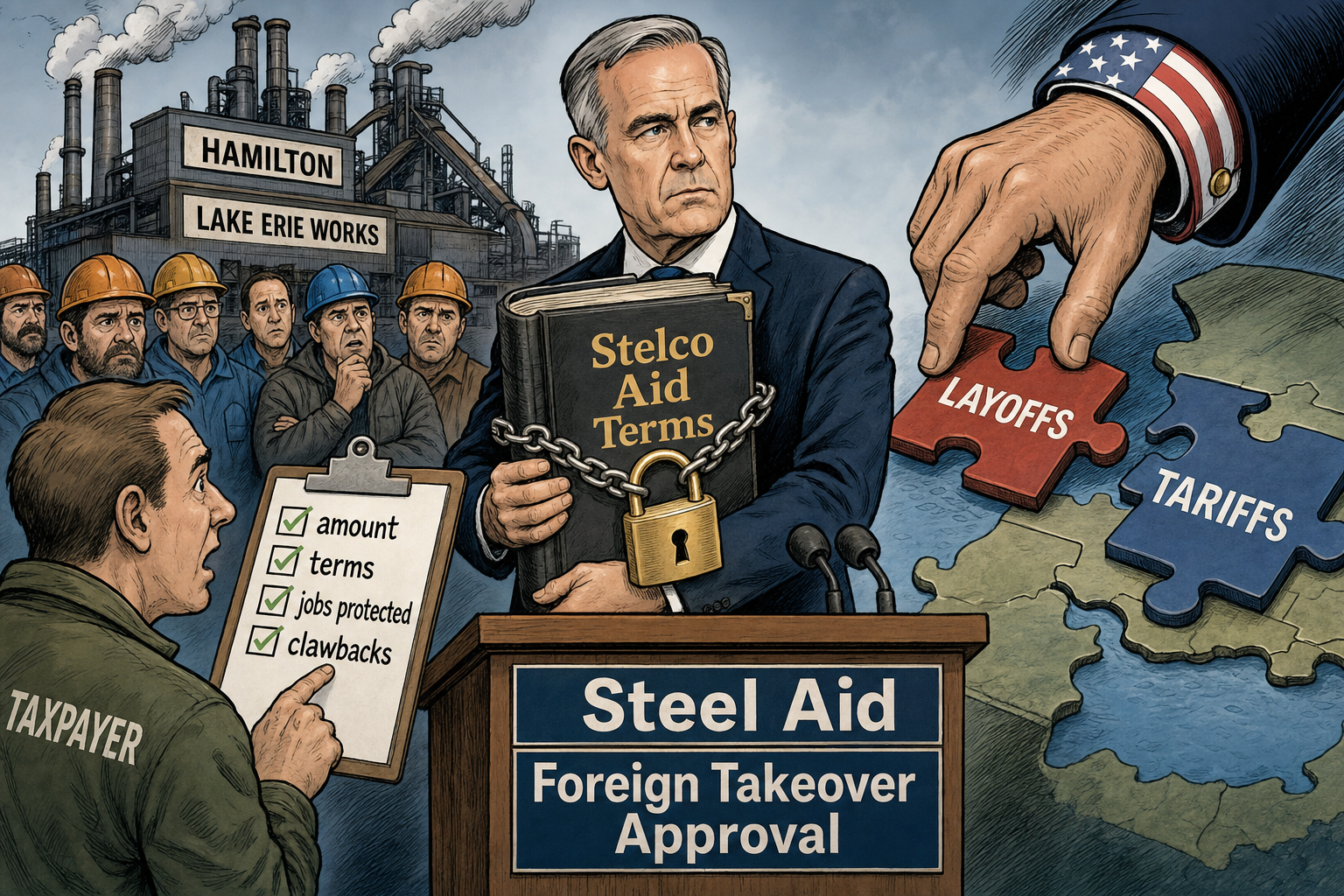
Stelco workers are paying the price for a steel file Ottawa already claimed to have under control. That is why the federal government should publish the Stelco steel-aid ledger now: the amount offered, the terms, the conditions, the jobs it was supposed to protect and the enforcement plan attached to Cleveland-Cliffs’ takeover promises.
The facts are plain enough to require daylight. Associated Press reported that Prime Minister Mark Carney accused Cleveland-Cliffs, the U.S. owner of Stelco, of betraying Canadian workers after the company announced layoffs tied in part to U.S. steel tariffs. Stelco said up to 500 workers could be affected while it indefinitely idles cold-rolled and coated operations at Hamilton Works and shifts production toward Lake Erie Works in Nanticoke. Cleveland-Cliffs said overall steel tonnage would remain unchanged.
Carney also said Ottawa had put federal money on the table to preserve jobs. But the AP report says he did not disclose the amount or the terms. That is not good enough. If public dollars were offered to a foreign-owned steel company, taxpayers deserve to know whether the proposal was a loan, grant, bridge financing, tariff relief, market-access support, retrofitting help or something else entirely.
This is not a simple “save jobs at any cost” argument. Conservatives should be careful with corporate welfare, especially when a multinational buyer took over a strategic Canadian industrial asset less than two years ago. The point is enforcement before subsidy. In October 2024, Ottawa approved Cleveland-Cliffs’ acquisition of Stelco under the Investment Canada Act with binding five-year undertakings. The government’s own statement said those undertakings included maintaining Stelco’s Hamilton head office, continuing to employ at least the same number of unionized workers and the vast majority of non-union employees, honouring collective agreements and pensions, and making capital and research investments.
Now Canadians are told Ottawa may pursue the company to the fullest extent of the law. Fine. Show the file. What employment baseline was written into the approval? How many union and non-union jobs counted? Do transfers to Lake Erie Works satisfy the undertaking? What penalties, clawbacks or divestiture tools are available if commitments were breached? When did ministers know layoffs were likely? What did they offer before layoffs were announced?
Global News added another accountability wrinkle: Cleveland-Cliffs CEO Lourenco Goncalves said no amount of federal money would have avoided the slowdown because there was not enough market for the galvanized product. The report also cited sources describing federal proposals that included short-term bridge financing, longer-term loans, retrofitting and access to new markets. Those are major policy tools. They should not stay hidden behind anonymous briefings and duelling claims.
Canadian steelworkers do not need more podium anger. They need enforceable commitments. Taxpayers do not need secret rescue offers. They need receipts. If Ottawa approved the takeover, negotiated the undertakings, offered aid and is now threatening legal action, the public deserves the whole ledger.
Publish it: the takeover undertakings, aid proposal, repayment terms, worker baseline, legal advice summary, enforcement timeline, lobbying contacts, ministerial sign-offs and any clawback plan. Anything less turns industrial policy into damage-control theatre.
- Associated Press: Canada's Carney criticizes Stelco layoffs blamed on Trump tariffs
- Innovation, Science and Economic Development Canada: Ministerial statement on the Investment Canada Act review of Cleveland-Cliffs acquisition of Stelco
- Global News: ‘No amount of money’ would have avoided Stelco slowdown, job loss: CEO
- Global News: Stelco to lay off 350 workers at Hamilton steel plant: union
This article argues for public disclosure of Ottawa’s takeover-enforcement file and any proposed steel aid. It does not assume a legal breach before the government publishes the undertakings and enforcement record.