Carney’s AI Council Needs an Insider-Appointment Ledger
Artificial intelligence policy will shape procurement, data infrastructure, public services and democracy safeguards. That is exactly why insider appointments need public receipts.
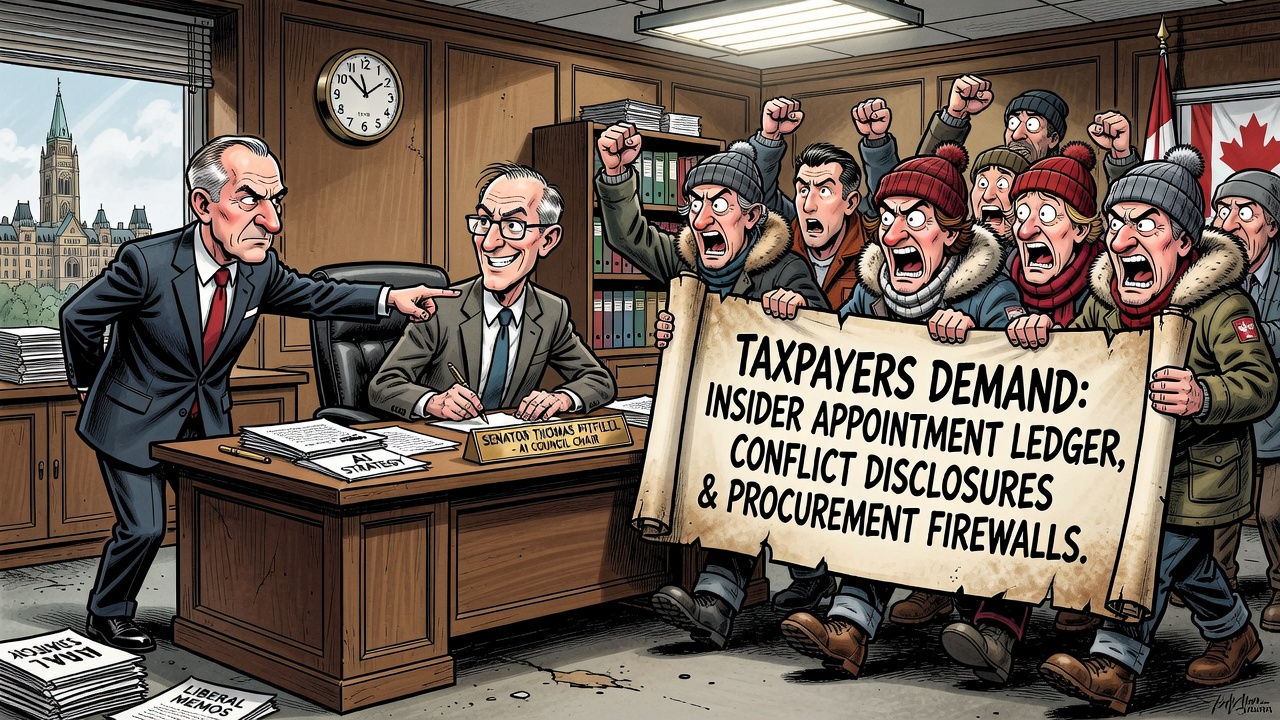
Prime Minister Mark Carney announced a new National Council on Artificial Intelligence on October 2, presenting it as an independent advisory body for the government’s AI for All strategy. The council is supposed to advise on adoption, national champions, sovereign AI infrastructure, AI safety, democracy protection, public-service transformation and broad economic prosperity.
That is serious work. It also sits close to federal purchasing power, data-centre decisions, government technology modernization and the future rules for an industry that wants public money, public data and public legitimacy. So Canadians should look carefully at one name on the list: Senator Thomas Pitfield.
The issue is not whether Pitfield understands technology. The Prime Minister’s Office says he founded Data Sciences, worked in data analytics and campaign strategy, invested in early-stage technology, co-founded Canada 2020, and served as Carney’s principal secretary advising on artificial intelligence, innovation, productivity and the digital economy. Those credentials explain why he would interest an AI council.
But they also explain why transparency matters. In July, Carney named Pitfield to the Senate while also changing the Senate appointment process to remove the non-partisanship criterion. The Canadian Press described Pitfield as Carney’s principal secretary and a longtime Liberal strategist. Now, three months later, that same Carney insider and new senator is being placed on a council advising the government on one of Ottawa’s most consequential economic files.
That does not prove misconduct. It proves the public needs a ledger.
Carney’s announcement says the council will be supported by a small team inside the Privy Council Office, while ministers and departments remain accountable for policy and implementation. Good. Then Ottawa should publish the guardrails that make that line real: who selected members, what criteria were used, whether there was an open nomination process, what conflict disclosures were filed, what recusals apply, and whether any member has direct or indirect exposure to AI procurement, data infrastructure, consulting contracts, venture investments or companies seeking federal support.
The standard should be higher because the council’s mandate is broader than ordinary expert advice. The PMO says the AI strategy targets $200 billion in additional economic growth, 250,000 new AI-related jobs over five years, and AI adoption rising from just over 12% to 60% by 2034. If government wants to steer capital, procurement and regulation toward that agenda, Canadians deserve to know whether advice is being shaped by public interest, private exposure or political proximity.
A conservative accountability approach does not mean rejecting expertise. It means refusing to let expertise become a velvet rope for insiders. Publish agendas. Publish attendance. Publish conflict declarations and recusal logs. Publish contact records with departments, Crown corporations and bidders. Publish which recommendations become policy, which companies benefit, and which ministers sign off.
AI policy should not be built in a black box by people who already know the side doors of government. If this council is truly independent and practical, the appointment ledger will strengthen it. If Ottawa will not publish the receipts, Canadians are entitled to ask what the insiders are being allowed to see first.
- Prime Minister of Canada: Prime Minister Carney launches new National Council on Artificial Intelligence — October 2, 2026
- Prime Minister of Canada: Thomas Pitfield biography — July 7, 2026
- Prime Minister of Canada: Prime Minister Carney modernises Senate appointment process — July 7, 2026
- CityNews / The Canadian Press: Carney names his principal secretary and a Conservative MP to Senate — July 7, 2026
This article does not allege wrongdoing by any council member. It argues that advisory roles touching procurement, sovereign infrastructure and public-sector AI require visible conflict screens and appointment records.