Now That the U.S. Import Ban Is Live, Publish the Tariff-War Ledger
A live import ban, counter-tariffs and billions in aid require public receipts.
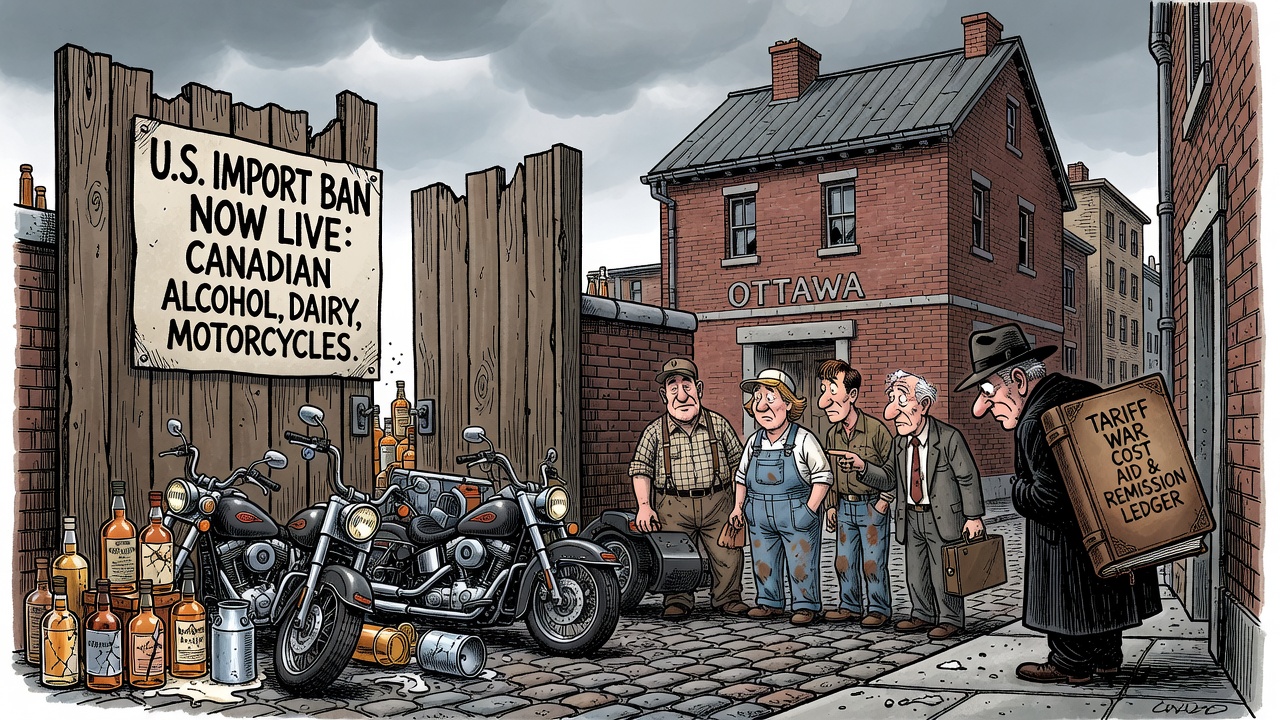
The U.S. import ban is no longer theoretical. The Associated Press reports that Washington’s ban on nearly $1 billion worth of Canadian imports took effect early Tuesday, covering alcoholic beverages, some dairy products and motorcycles. That is a serious escalation in an already-damaging trade fight, and it deserves a serious Canadian response.
But “serious” does not mean asking Canadians to trust Ottawa in the dark. The Carney government has already matched U.S. tariffs with Canadian counter-tariffs on $27.6 billion in U.S. goods. Federal guidance says the September 8 measures apply surtaxes of 15, 25 or 50 per cent on selected U.S.-origin goods. The Canada Gazette says Ottawa adjusted the list after feedback, including removing seafood and fish products to avoid broader economic harm. That admission matters: government knows some retaliation can backfire.
So where is the public ledger? Canadians should not have to wait for lobbyists, access-to-information delays or next year’s public accounts to learn who paid, who was protected and who was left exposed.
Canadians need more than speeches about standing up to Trump. They need product-by-product accounting: which Canadian exporters are hit by the U.S. ban, which regions and plants are exposed, how many jobs are at risk, which contracts are stranded, and what legal or diplomatic path Ottawa is pursuing. If the government has a contingency plan for alcohol producers, dairy processors, motorcycle firms, truckers, ports and suppliers, publish it.
The same standard applies to Ottawa’s retaliation. The government says it is matching Washington dollar for dollar and has announced a $7.5 billion package of supports for workers and businesses, building on nearly $25 billion in earlier tariff-related supports. That is taxpayer money layered on top of border taxes. Parliament should see the expected surtax revenue, the estimated consumer and business pass-through, the remission applications, approvals and denials, and the names of programs responsible for each category of aid.
Conservatives can support defending Canadian sovereignty without endorsing blank-cheque trade management. Retaliation may be justified. Emergency aid may be necessary. But if Ottawa is collecting new tariff revenue, granting exemptions, spending billions and asking families to absorb higher prices, the receipts belong in public.
Carney’s government should table a tariff-war ledger this week: import-ban exposure, counter-tariff revenue, consumer-cost modelling, remission decisions, aid recipients, jobs protected, negotiation milestones and the date of the next parliamentary review. If the policy is working, the ledger will prove it. If it is simply shifting costs from cabinet’s boardroom to household budgets and shop floors, Canadians deserve to know before the next invoice arrives.
- Associated Press: From motorcycles to booze, US ban on $1 billion worth of Canadian imports goes into effect
- Finance Canada: Complete list of U.S. products subject to counter-tariffs
- CBSA: Customs Notice 26-23: United States Surtax Order (2026)
- Canada Gazette: United States Surtax Order (2026)
- Prime Minister of Canada: Prime Minister Carney chairs First Ministers’ Meeting
- Government of Canada: Canada announces targeted countermeasures and substantive support
This article attributes the import ban to U.S. action and argues for Canadian public disclosure around costs, relief and retaliation. It does not allege wrongdoing by affected Canadian exporters.