Release the 2023 PLA Training Approval Record
A strategic-rival military-training decision needs receipts, not word games.
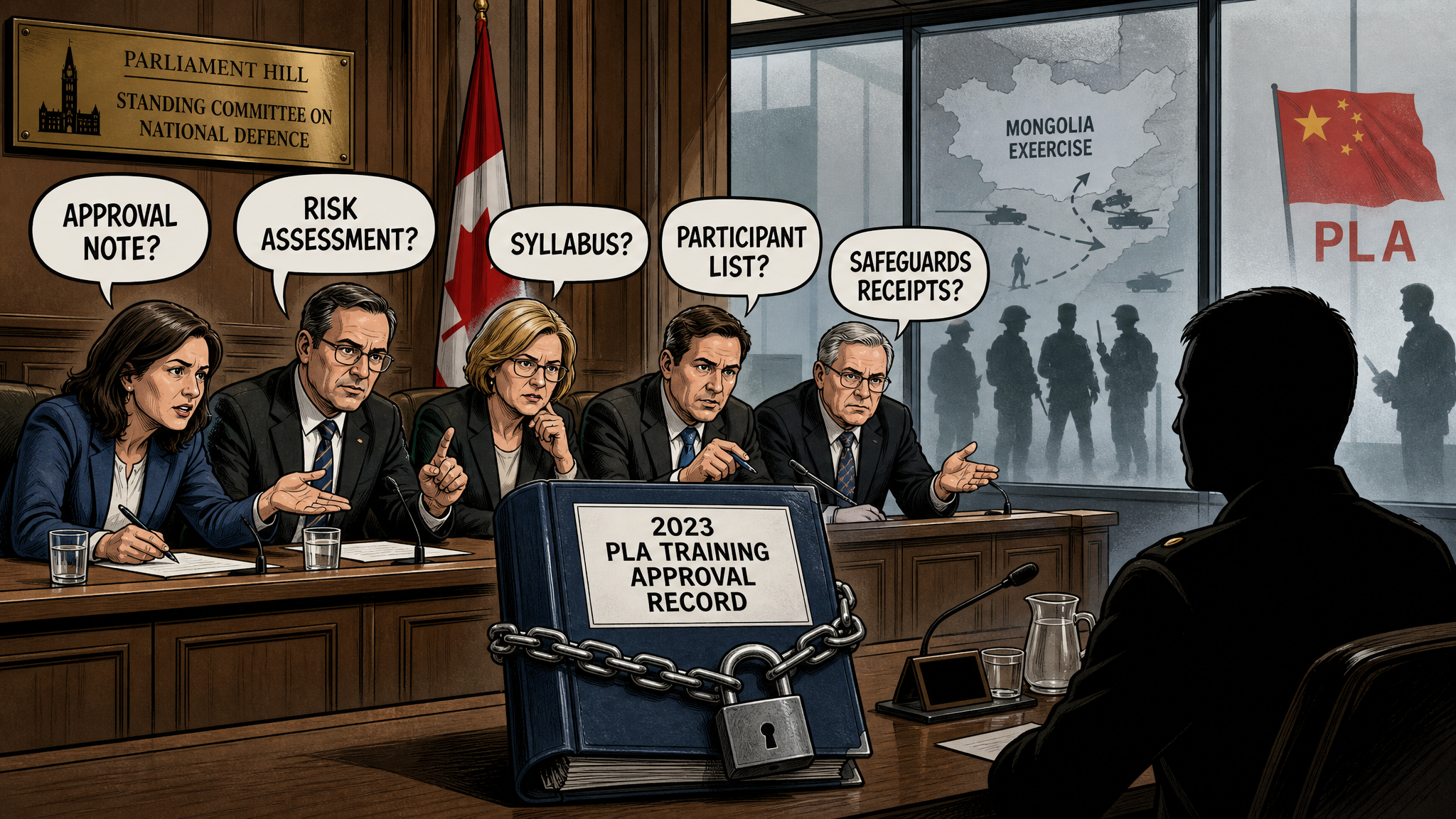
Ottawa should release the record behind the 2023 People’s Liberation Army training controversy. Not a slogan. Not a partisan dodge. The actual approval trail.
Blacklock’s Reporter says newly disclosed Access to Information records show then-defence minister Anita Anand had Canadian Armed Forces experts train members of China’s People’s Liberation Army in 2023. Its public summary says internal records warned officials to be truthful if asked and included the sentence: “We know we will be training and we have Minister approval to do so.” Alberta Radio, summarizing the same ATIP reporting, framed the obvious questions: what was taught, who received it, why it served Canada’s interest, and what safeguards existed.
There is important context, and conservatives should not duck it. A VérifRadar fact check says the 2023 activity was not Canadian troops being sent to China. It says the episode involved Khaan Quest, a long-running multinational peacekeeping exercise in Mongolia, with participants from more than 20 countries. It also reports that National Defence said Canada sent three participants who provided training in command communications and counter-improvised explosive device techniques, as part of training available to participating countries seeking UN certification.
That context narrows the allegation. It does not erase the accountability problem.
Canada’s own public defence briefing said the last bilateral Canadian Armed Forces training with China was in 2018 and that no bilateral military training with China had been conducted or planned since. Canada’s Indo-Pacific Strategy also describes China’s assertive pursuit of economic and security interests, foreign interference and coercive treatment of other countries as having serious implications for Canada and the region. In that environment, “multinational” cannot become a magic word that makes ministerial approval, risk assessment and capability-transfer safeguards disappear.
The question is not whether Canadian officers may ever appear in the same multinational room as Chinese officers. Countries communicate, deconflict and participate in international institutions. The question is whether Canadian military expertise reached PLA personnel after Ottawa had publicly drawn a line around bilateral training — and, if so, what the minister approved, what officials warned, and what Parliament was told.
An accountable government would table the ministerial approval note, the legal and policy authority, the threat and foreign-interference assessment, the participant count, the syllabus, the location and exercise chain of command, the talking-points record, and any red-team analysis of whether command communications or counter-IED instruction could benefit a strategic rival. If the material was genuinely low-sensitivity and peacekeeping-limited, the documents can say that with necessary national-security redactions.
Canadians do not need theatrics. They need a China military-training ledger. If the government’s explanation is solid, release the receipts and let it stand. If the approval was broader, the warnings sharper, or the communications plan designed to blur the truth, Parliament should find out before the next defence “engagement” with Beijing is quietly approved.
- Blacklock’s Reporter: OK’d Chinese Army Training
- Alberta Radio: Records Show Anand Approved Military Training for Chinese PLA Troops
- VérifRadar: Fact check: Canadian Armed Forces specialists were not sent to China in 2023 to train members of the Chinese Army
- National Defence: Key Issues — Canada-China Defence Relations
- Global Affairs Canada: Canada’s Indo-Pacific Strategy
This article argues for disclosure of the approval and safeguards record. It does not allege unlawful conduct by Canadian Forces personnel, exercise participants or public servants, and it notes the reported Mongolia/multinational context.