LNG Canada Phase 2 Needs a Public Receipt Ledger
Build it — but publish the subsidy, permit, emissions and equity receipts.
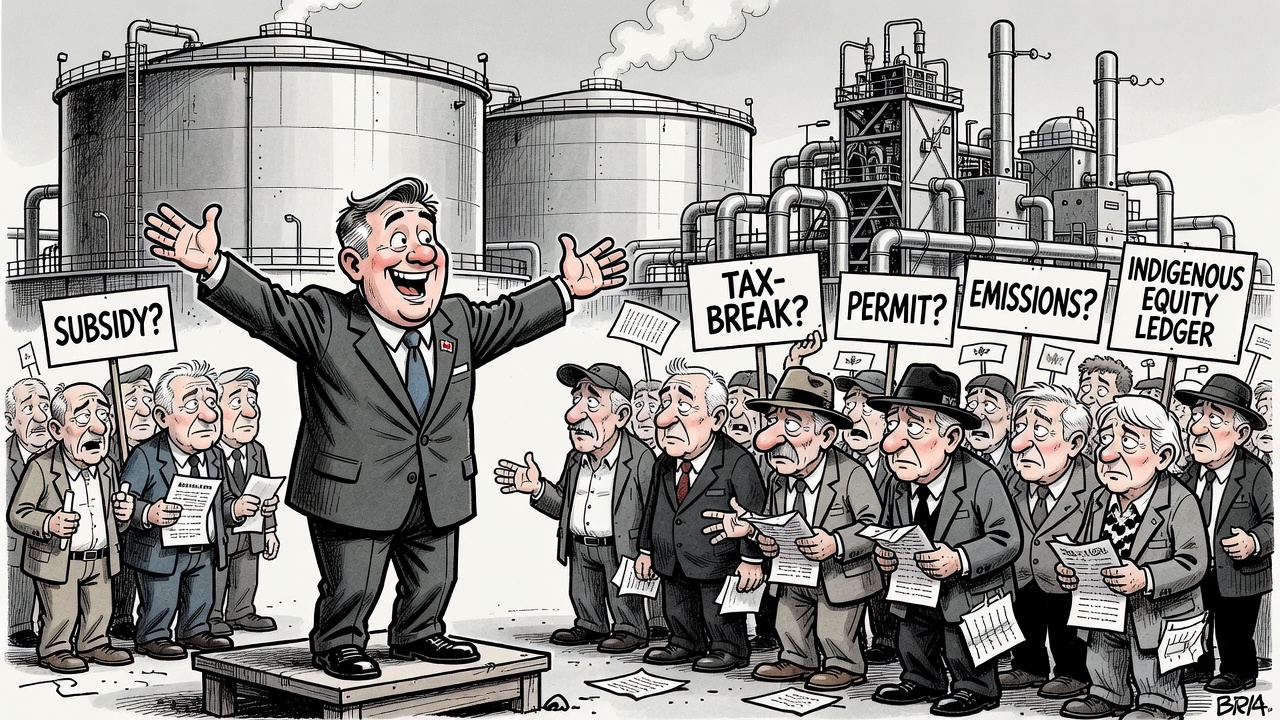
LNG Canada Phase 2 may be exactly the kind of project Canada should be able to build: private capital, export revenue, skilled trades work and a serious attempt to sell Canadian energy to customers beyond the United States. Conservatives should not reflexively sneer at that. The accountability test is simpler: if Ottawa wants to take the victory lap, it must publish the receipts.
On September 29, LNG Canada announced that Shell, PETRONAS, PetroChina, Mitsubishi and KOGAS had made a final investment decision on the Kitimat expansion. The company says Phase 2 will add two LNG trains, doubling capacity from about 14 million tonnes per year to 28 million tonnes. It also says the expansion includes another LNG storage tank, condensate tank, loading berth, utility systems and five new Coastal GasLink compressor stations.
The federal Major Projects Office presents the expansion as a national project expected to attract about $33 billion in private-sector capital. It also says five First Nations — Gitga’at, Gitxaała, Haisla, Kitselas and Kitsumkalum — may invest up to $1 billion for majority ownership of the Phase 2 LNG storage tank. Those are material claims. They deserve more than a podium line.
Here is where the Liberal habit of managed announcements becomes a problem. Ottawa’s own project page points to federal support around the Major Projects Office referral, Budget 2025 LNG competitiveness measures, extended LNG export licences through Bill C-15, and reinstated accelerated capital cost allowances for low-carbon LNG equipment. That does not make the project bad. It does mean taxpayers are entitled to know what federal policy changed, what it is worth, who benefits, and what conditions were attached.
Prime Minister Mark Carney framed the announcement in Vancouver as proof that “Canada is building big again,” while Global News reported his pitch that LNG Canada would provide secure supply to Asia and Europe. Fine. Then publish the public ledger that proves the public interest is bigger than the press conference. How much tax expenditure is embedded in the capital-cost treatment? What federal permitting decisions remain? What did the Major Projects Office accelerate, coordinate or override? What is the rationale for longer export licences? Are there federal guarantees, loan supports, infrastructure costs or backstops anywhere in the chain?
The same scrutiny belongs on emissions and security. If Ottawa says this is low-carbon LNG, show the methane assumptions, upstream emissions, electricity inputs, shipping assumptions and comparison baseline. If the ownership group includes foreign state-linked firms, publish the investment-review guardrails and sensitive-infrastructure safeguards. If Indigenous equity is a central selling point, disclose the financing terms, risk allocation, revenue assumptions and consent record without trampling confidential community negotiations.
Canada can be pro-resource and pro-accountability at the same time. A serious government would welcome that standard. Phase 2 may become a win for workers, First Nations and trade diversification. But Canadians should not have to choose between building projects and seeing the bill. Build it — and publish the ledger.
- Government of Canada Major Projects Office: LNG Canada Phase 2
- LNG Canada / CNW: LNG Canada Announces Phase 2 Final Investment Decision
- Global News: Carney says LNG Canada expansion offers secure supply for Asia, Europe
- Associated Press: LNG Canada / Canadian Press coverage
This article supports major-project development while arguing that federal supports, conditions, environmental assumptions and public costs should be disclosed in a defensible public ledger.