Before the U.S. Import Ban Hits, Publish the Trade-Damage Ledger
Canadian exporters should not learn Ottawa’s trade plan after the border closes.
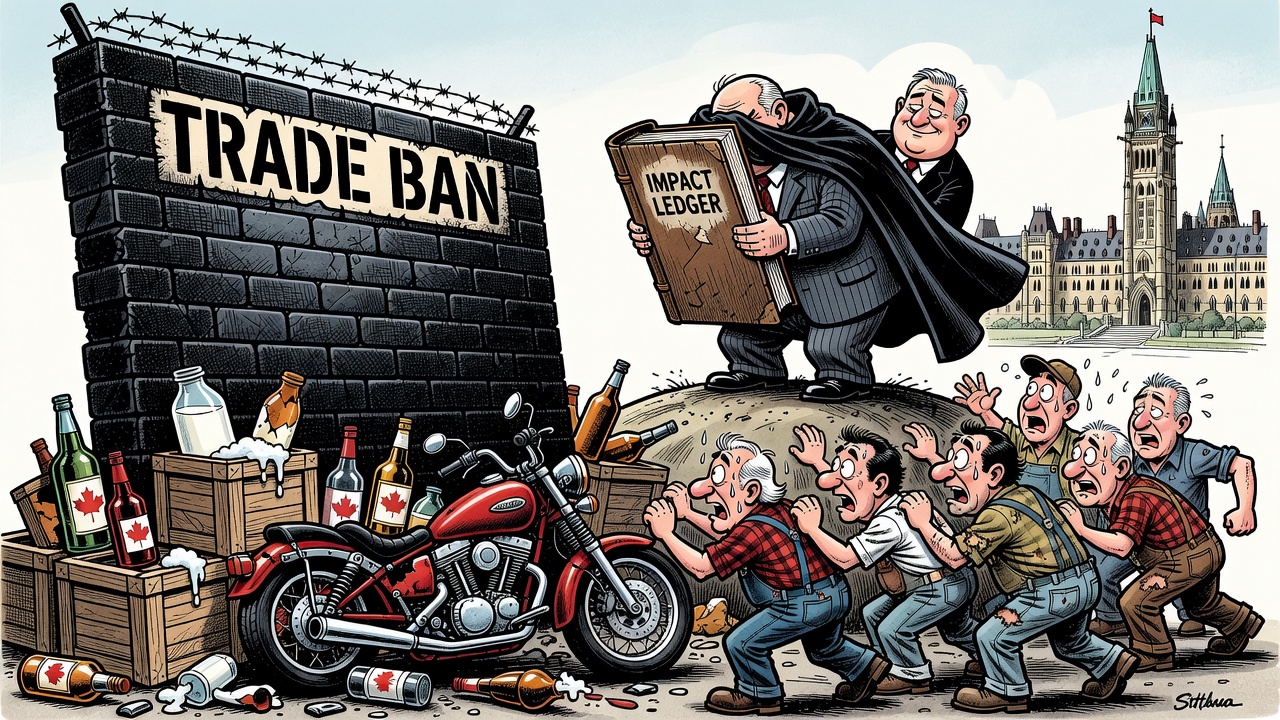
A U.S. import ban aimed at Canadian goods is no longer a negotiating rumour. It is an overnight accountability test for Mark Carney’s government.
Global News reported Monday afternoon that bans on Canadian-made alcohol, some dairy products and Canadian-made motorcycles are set to take effect Tuesday, September 29. The U.S. Federal Register proclamation confirms that certain Canadian alcoholic beverages are to be excluded from importation beginning at 12:01 a.m. eastern time on September 29, 2026. For affected exporters, that is not a talking point. It is a shipment, a contract, a shift, a payroll and a customer relationship suddenly put at risk.
Ottawa can blame Donald Trump for the American decision. Canadians should be clear about that. But blaming Washington does not answer the domestic question: what exactly has the Carney government done to prepare the firms and workers caught in the crossfire?
The public record is too thin. Global reports that Canada-U.S. trade negotiations have been mostly paused since August, when Carney said Canada walked away from a bad deal. Maybe walking away was justified. Sometimes a bad deal should be rejected. But responsible government explains the cost of that choice, the fallback plan, the sectors exposed, the relief criteria, the diplomatic timetable and the red lines Ottawa refused to cross.
That is the conservative accountability standard: defend Canadian interests, but show the ledger. If the government rejected U.S. demands on dairy, alcohol access, motorcycles, supply management, rules of origin or some other concession, Canadians deserve the written summary. If the Americans are escalating without a serious offer on the table, say so plainly and table the chronology. If exporters are about to lose orders, tell them what support exists before the invoices fail.
Carney’s team cannot run a trade policy built on press conferences and retrospective sympathy. A worker in a bottling plant, a dairy processor with a cross-border contract, or a motorcycle parts supplier does not need Ottawa to discover the problem after the ban starts. They need practical answers tonight: which products are covered, which customs codes apply, which shipments in transit are affected, what legal challenge is being prepared, and whether Ottawa will retaliate, negotiate, compensate or wait.
The government should publish a trade-damage ledger before the ban takes effect: affected tariff lines, companies and regions; estimated jobs and sales at risk; the negotiation timeline since August; the written reason Canada walked away; contingency support rules; retaliatory options; consumer-cost modelling; and the minister responsible for daily updates.
Standing up to Washington can be necessary. Standing up for Canadians requires receipts.
- Global News: Trump’s import ban on Canadian alcohol, dairy and motorcycles set to begin
- U.S. Federal Register: Temporary Suspension on the Importation of Certain Products of Canada
This article criticizes Ottawa’s lack of public contingency detail. It attributes the U.S. import restrictions to U.S. action and does not allege wrongdoing by any Canadian exporter.