Global Affairs Needs a Security-Culture Fix Ledger
The foreign ministry’s own misconduct report is a warning sign. Canadians need proof that the controls have changed.
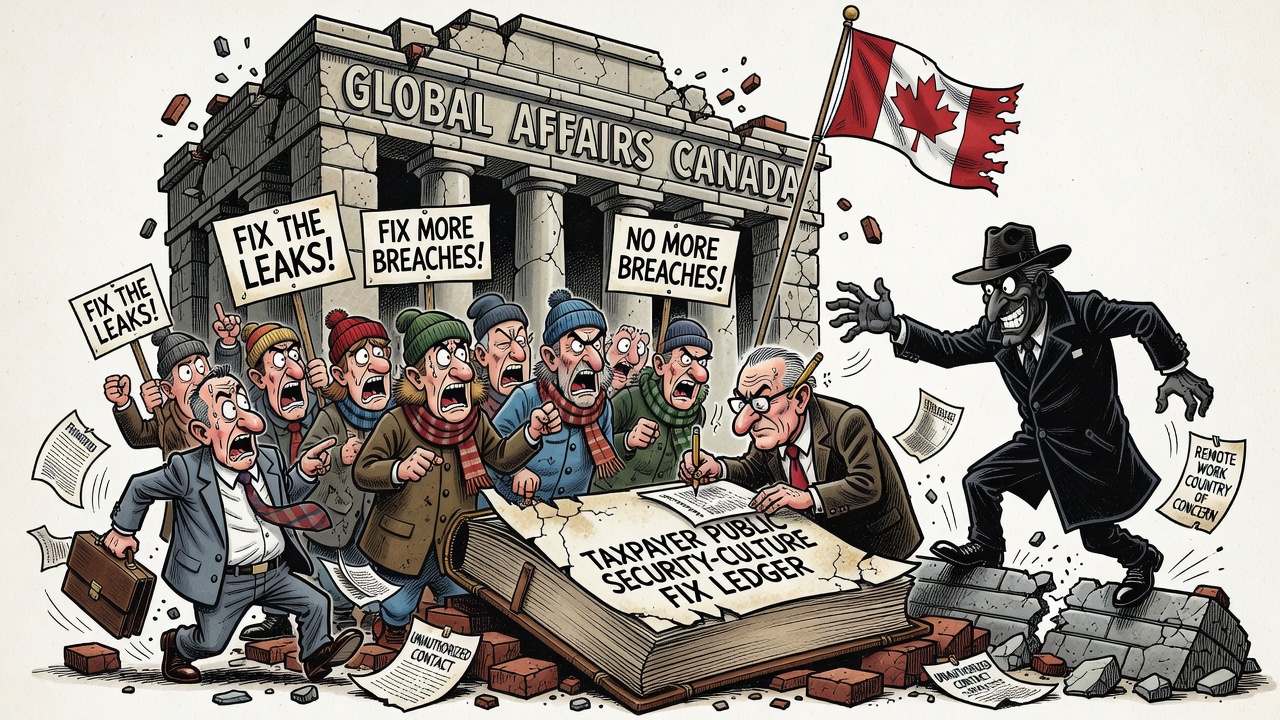
Global Affairs Canada has published the kind of report that should make Parliament stop treating ethics and security as paperwork. The department’s fourth annual misconduct and wrongdoing report covers April 1, 2025 to March 31, 2026. It records 227 complaints or allegations, 108 investigations launched, and 92 founded cases that led to administrative or disciplinary measures.
The raw totals matter because this is not an ordinary department. Global Affairs operates Canada’s diplomatic network: more than 13,000 employees, 180 missions, and a platform used abroad by other federal departments, Crown corporations, provinces, foreign governments and an international organization. When culture and controls fail there, the risk is not just internal embarrassment. It can touch citizens, allies, classified information and Canada’s credibility overseas.
The outcomes table is blunt. Global Affairs lists 25 terminations, 19 written reprimands, 15 temporary suspensions, seven training or coaching outcomes, four verbal reprimands and 15 other outcomes. Its category table says personnel-security violations included terminations for theft, unauthorized contact with foreign government officials, and working remotely from a “country of concern” without authorization. Other founded cases involved unauthorized access to departmental assets or files.
The report also describes Network Acceptable Use Policy enforcement. It says there were no founded NAUP violation cases in the year, but five new investigations were opened and 39 infractions were issued under the infraction program. It says those matters can involve unauthorized system use, IT forensic investigations and information-security practices. That is exactly the point: Canadians do not need names or private personnel files, but they do need a public assurance that sensitive systems are being defended with more than internal memos.
A conservative accountability standard is simple: no panic, no cover-up, no selective outrage. If a clerk falsifies a timesheet, deal with it. If an official has unauthorized contact with foreign government officials, works from a country of concern, accesses files without authorization, or mishandles departmental assets, Parliament should see the control response in anonymized form.
The Carney government inherited many federal culture problems, but it owns the fix now. Publishing an annual misconduct report is useful. Publishing a security-culture fix ledger would be better: how many clearances were reviewed, suspended or revoked; whether police or security referrals occurred; how unauthorized foreign-official contacts were detected; what categories of files were accessed or downloaded; whether allies or citizens were affected; what training, access controls and monitoring changes were completed; and what remains overdue.
That can be done without exposing individuals, sources or operations. It would simply show Canadians that consequences were matched by corrected controls.
Global Affairs represents Canada to the world. If Ottawa wants Canadians to trust that mission, it should publish the receipts for reform. A misconduct report tells us what went wrong. A public fix ledger would show whether anyone in government learned from it.
- Global Affairs Canada: Addressing Misconduct and Wrongdoing at Global Affairs Canada: Fourth annual report
- Government of Canada Publications: Catalogue record for the annual report series
- Rebel News / Blacklock’s-reported lead: Global Affairs fired 25 employees amid security breaches, suspected criminal activity
This article relies primarily on Global Affairs Canada’s own annual report. It does not identify individual employees or allege misconduct beyond the published record.