SDTC’s $34M No-Clawback Decision Needs a Public Repayment Ledger
No clawback without receipts. If Ottawa accepts a decision not to recover public money from ineligible projects, Canadians deserve the ledger behind that call.
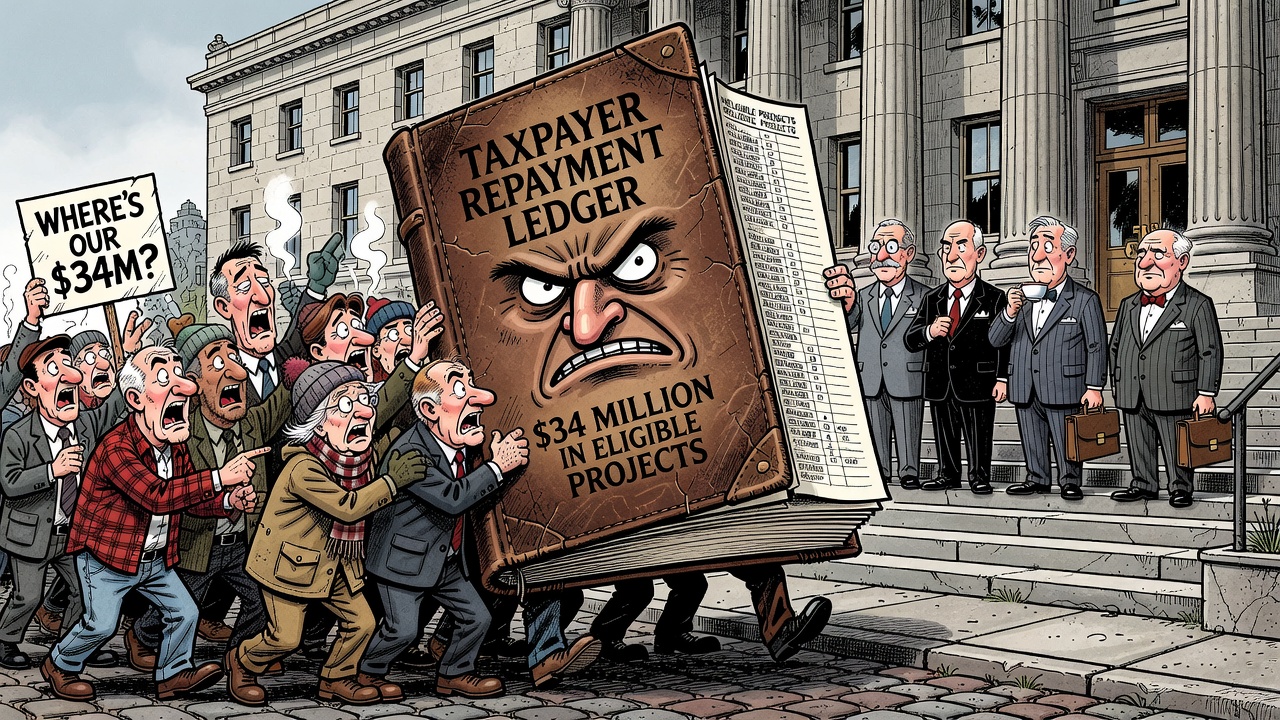
Sustainable Development Technology Canada is not just another Ottawa acronym. It was entirely funded by public money, and the Auditor General found serious lapses in how that money was governed. That makes the latest reported no-clawback decision a public-trust test.
Rebel News reports that SDTC will not try to recover approximately $34 million paid to five projects later found ineligible under SDTC’s agreement with the Crown. The report cites a written parliamentary response signed by Industry Minister Mélanie Joly, saying 173 projects were reviewed with help from three independent third parties. According to that response, SDTC’s board decided against repayment after legal consultation, citing good-faith negotiations and performance by recipients, low prospects of successful recovery, and no clear public-interest benefit.
Maybe some of that reasoning is defensible. A conservative accountability standard does not say government should launch hopeless lawsuits just to look tough. It says taxpayers should not be asked to accept “trust us” after the Auditor General already found that SDTC awarded $59 million to 10 ineligible projects among the 58 projects examined, and that conflict-of-interest policies were not followed in 90 cases tied to nearly $76 million in approved funding.
That history changes the burden of proof. The Auditor General’s June 2024 report found “significant lapses” in governance and stewardship. It also said Innovation, Science and Economic Development Canada did not sufficiently monitor compliance with contribution agreements. When the same system then decides not to pursue repayment on roughly $34 million, the answer cannot be a vague assurance that lawyers were consulted.
Ottawa should publish a non-sensitive repayment ledger: each ineligible project, the amount approved and paid, the eligibility failure, the dates ISED identified the breach, the legal recovery analysis in summary form, the estimated recovery cost, the board vote, recusals, ministerial correspondence, and the final reason for no clawback. If commercial details must be protected, redact narrow details and publish the structure. If solicitor-client privilege applies, provide a privilege-respecting summary of the factors weighed.
The principle is simple: public money requires public accounting. If a recipient negotiated in good faith and delivered useful work, say so with dates, deliverables and contract terms. If recovery would cost more than it could return, show the math. If Ottawa accepted the board’s approach, show who accepted it and when.
Canadians were promised green innovation. They should not be left with a green fund where ineligible payments disappear into a closed-door legal memo.
- Rebel News: Green Slush Fund won’t seek return of $34 million paid to ineligible projects
- Office of the Auditor General of Canada: Significant lapses in governance and stewardship of public funds at SDTC
- Office of the Auditor General of Canada: Report 6—Sustainable Development Technology Canada
This article argues for disclosure of the repayment analysis. It does not allege that every recipient acted improperly; it argues that taxpayers deserve the non-sensitive receipts behind a no-recovery decision.