The Free-Vote Demotion Ledger Starts With Sean Casey
A government that calls Parliament independent should not hide the paperwork when an MP says one vote cost him his post.
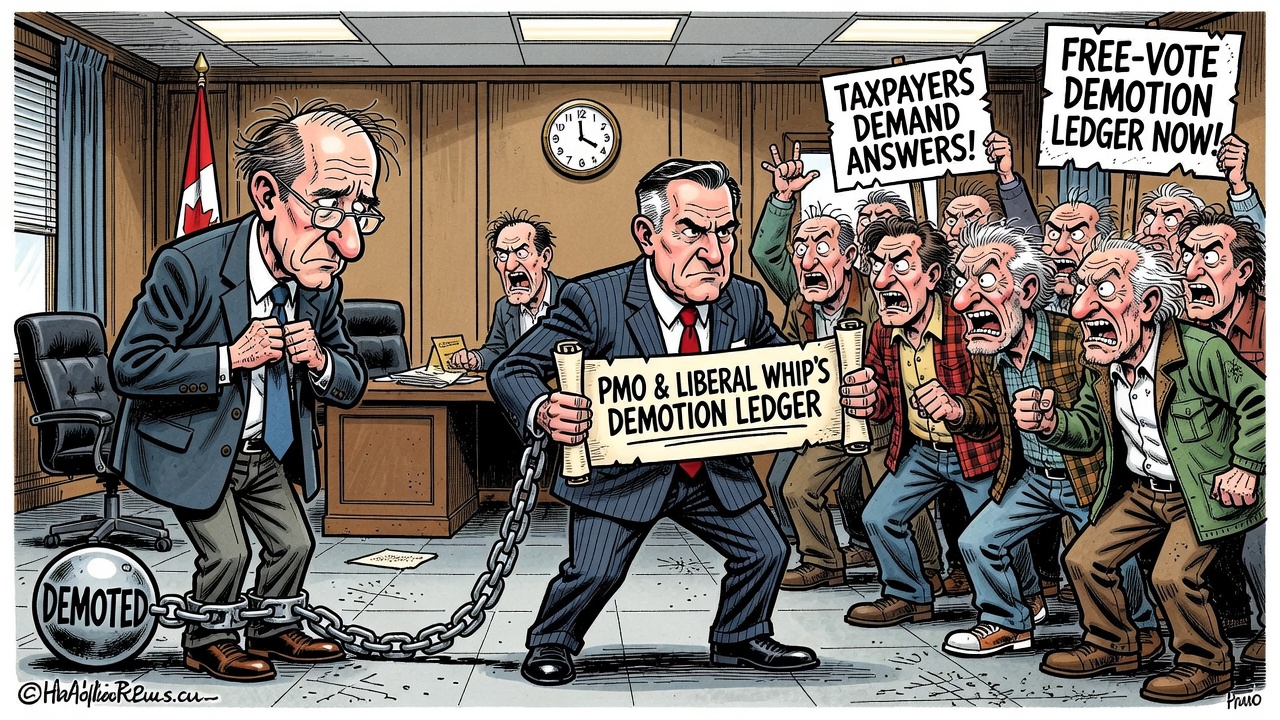
Charlottetown Liberal MP Sean Casey says he was removed as parliamentary secretary to the minister of veterans affairs because he supported Bill C-233, an NDP private member’s bill aimed at arms-export controls. That allegation is bigger than one job title. It is a test of whether the Carney government treats MPs as legislators or as message-track assets.
CBC reported that Casey says the Liberal whip warned him in March that backing Jenny Kwan’s bill would cost him the parliamentary-secretary role. He voted yes anyway. Official House records show Bill C-233 was defeated at second reading on March 11, 2026, by 22 yeas to 295 nays. The PMO’s September 25 release then announced that Sophie Chatel becomes parliamentary secretary to the Minister of Veterans Affairs and Associate Minister of National Defence, without explaining Casey’s removal.
The question is not whether a prime minister has the legal power to appoint or remove parliamentary secretaries. Of course he does. The question is whether a government can describe a vote as independent in public while treating it as career-ending in private. If the bill was whipped, say so. If it was a free vote, explain why the one parliamentary secretary who supported it lost his role. If the removal was about performance, workload, regional balance or another file, publish the contemporaneous reason.
Conservatives should be especially clear about the standard here: cabinet solidarity is one thing; private members’ votes by ordinary MPs are another. Parliamentary secretaries sit in the grey zone, close enough to government to be disciplined, but still elected by constituents to exercise judgment. That grey zone is exactly why the receipts matter.
Ottawa should publish a free-vote demotion ledger. It should include the whip instruction, whether Bill C-233 was categorized as whipped or free, the date Casey was warned, the PMO timeline for replacing him, any written rationale for the move, and a list of government MPs who supported opposition or private-member bills without penalty. If there are national-security or personnel details, redact them narrowly. Do not redact the rule.
This is also about foreign-policy accountability. Canadians can disagree on Bill C-233 and still agree that arms-export law should be debated openly, not managed through private threats. A government confident in its position should defeat a bill with arguments, not punish dissent and then pretend nothing happened.
Democracy needs more than recorded votes. It needs voters to know whether those votes were free, whipped, or quietly priced.
- CBC News via Internationly: Liberal MP says he was demoted for supporting NDP bill targeting arms export controls
- Prime Minister of Canada: Prime Minister Carney announces changes to the parliamentary secretary team
- Parliament of Canada: Bill C-233, An Act to amend the Export and Import Permits Act
- House of Commons: Vote No. 85 on Bill C-233, March 11, 2026
This article treats Casey’s demotion account as an allegation reported by CBC and argues for disclosure of the government’s records. It does not assume the PMO’s full rationale is known until the documents are released.