Barton’s 46-Day Appointment Gap Needs an OIC Disclosure Ledger
A major federal investment appointment should not be a scavenger hunt through cabinet paperwork.
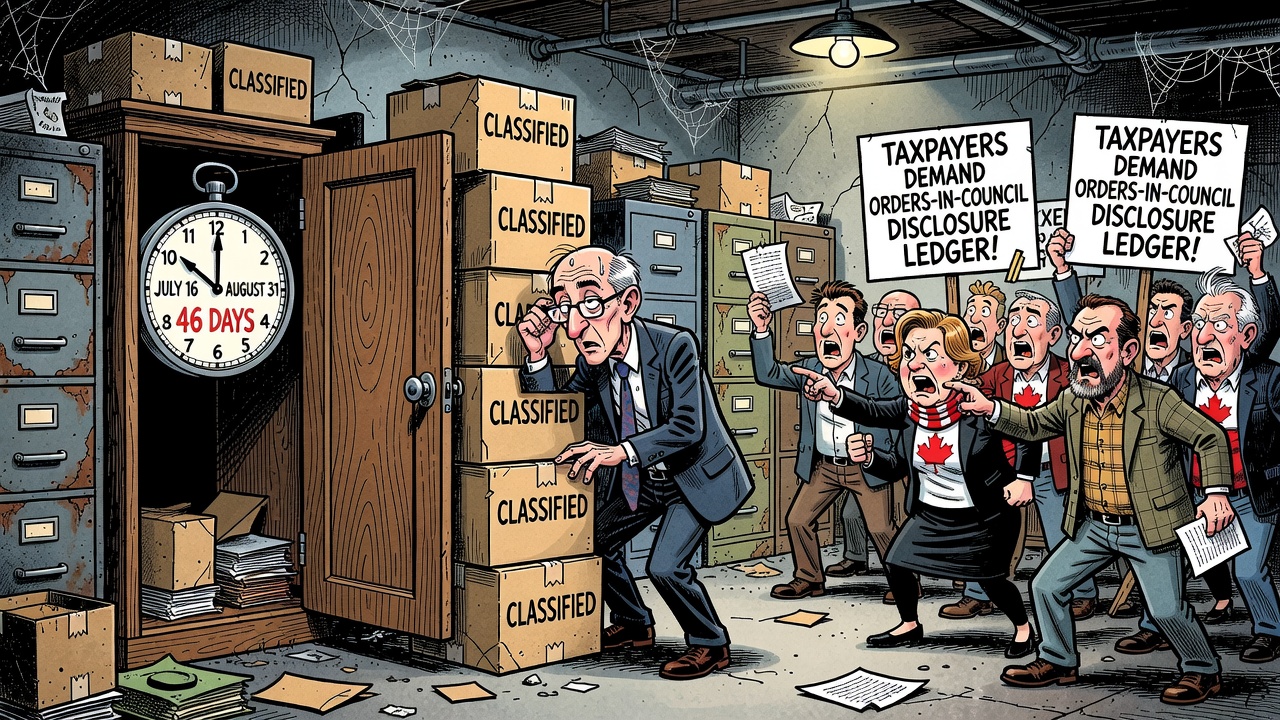
Dominic Barton’s appointment as part-time chair of Invest in Canada is defensible only if Canadians can see the timeline. Right now, the timeline is the problem.
The official Order in Council appoints Barton of London, United Kingdom, as chairperson of the Invest in Canada Hub board for a three-year term under the Invest in Canada Act. The Prime Minister’s Office announced Barton’s appointment on August 31, saying he would help lead the agency’s more ambitious push to attract foreign direct investment. But The Receipts reports that the order itself was made July 16 — forty-six days earlier — and that the order carried no delayed effective-date clause.
That gap matters. Invest in Canada is not a ceremonial table. It is the federal agency meant to guide major investors toward Canadian projects, now aligned with the Major Projects Office and Carney’s promise to catalyse enormous new investment flows. If the chair existed in law before the public was told, Canadians deserve to know who knew, when the agency treated the appointment as active, and whether any board or investor-facing business occurred during the quiet period.
This is not an argument that Barton broke a rule. It is an argument that Ottawa’s disclosure practice is not good enough for offices tied to public assets, private capital and government-backed project pipelines. Conservatives should be precise here: the issue is not résumé envy. Barton’s McKinsey, Rio Tinto, LeapFrog, China-ambassador and Trudeau economic-council history makes transparency more important, not optional.
The basic fix is an Orders-in-Council appointment ledger. For every senior economic appointment, Ottawa should publish the order number, approval date, public posting timestamp, announcement date, effective date, conflict-screen start date, transition authority and any board actions taken before announcement. If there was an administrative delay, publish the reason and the corrective control. If there was no delay in legal effect, say so plainly.
The PMO release praised Barton and Gurinder Grewal as the leadership team that will bring global capital to Canadian energy, critical minerals, artificial intelligence and infrastructure. Fine. Then the public should get adult-level receipts. When a government asks citizens to trust insider finance appointments, it should not ask them to accept a six-week blackout between legal action and public notice.
Sunlight would protect the agency as much as the taxpayer. A timestamped ledger would separate normal appointment mechanics from real secrecy concerns, prevent rumours from filling the vacuum, and tell investors that Canadian governance is clean enough to inspect.
Publish the Barton OIC disclosure record. Publish the conflict-screen start date. Publish any board actions between July 16 and August 31. If everything was proper, the ledger should be easy.
- Privy Council Office: Order in Council appointing Dominic Barton chairperson of Invest in Canada Hub
- Prime Minister’s Office: August 31 announcement of Barton and Gurinder Grewal appointments
- The Receipts: Report on the July 16 order and 46-day announcement gap
- Global News: Context on Barton’s Invest in Canada role and background
This article relies on the official appointment text, the PMO announcement and published reporting on the timing gap. It does not allege an ethics breach; it argues for a public disclosure ledger.