Half of Workers Spend Their Paycheque. Publish the Affordability Ledger.
The payroll-survey receipt is brutal: half of employed Canadians spend all or more of their net pay. Publish the affordability ledger.
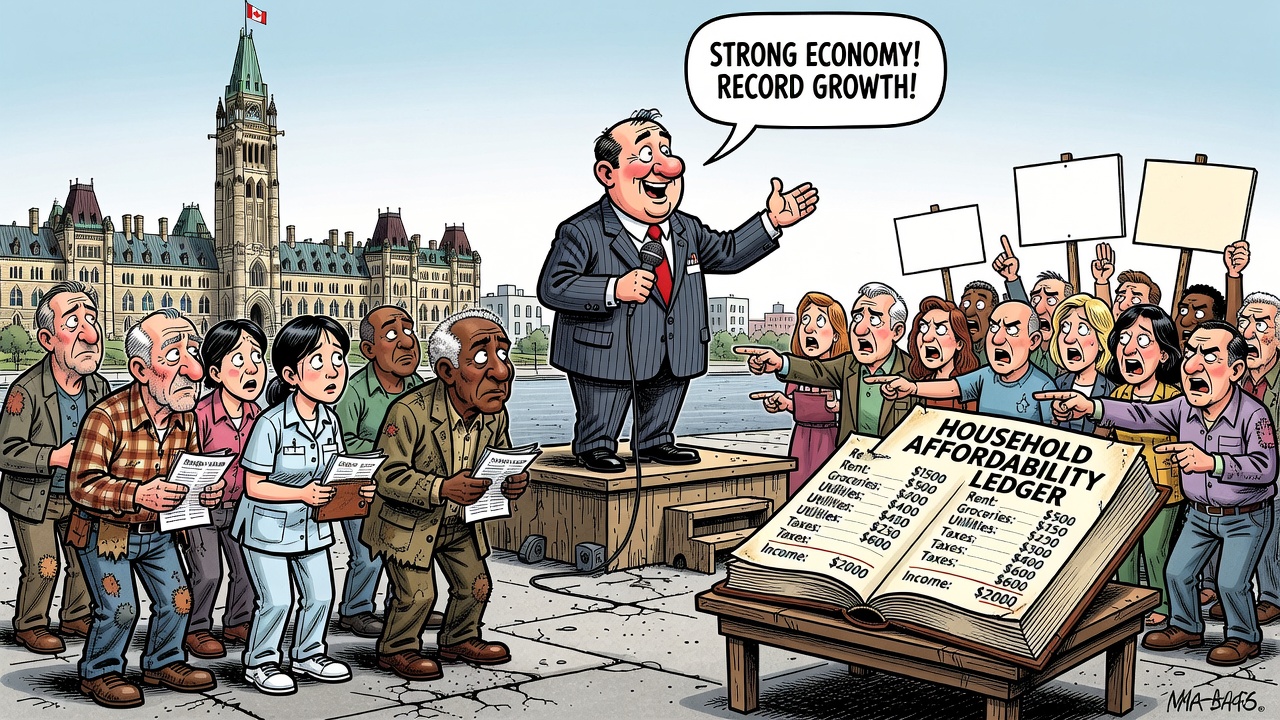
The National Payroll Institute’s 2026 survey is the kind of receipt Ottawa cannot spin away with podium slogans. The Institute says half of employed Canadians now spend all or more than their net pay, up from 41% last year. It also says 44% of working Canadians are financially stressed. That is not a strong-economy victory lap for families trying to stretch one paycheque across groceries, rent, mortgage payments, utilities, debt and taxes.
Yahoo Finance’s report on the same survey adds another brutal household detail: 28% of working Canadians are living paycheque to paycheque and would struggle if their pay were delayed by one week. In plain English, millions of workers are not asking for luxury. They are asking for the next deposit to arrive on time so the lights stay on and the account does not tip into overdraft.
This is where Conservative accountability should be practical, not performative. If Prime Minister Mark Carney’s government wants to claim Canada is economically sound, it should publish the household ledger that proves it. Show wage growth after inflation. Show payroll deductions. Show rent and mortgage costs by region. Show food and energy costs. Show household debt-service pressure. Show how federal taxes, regulations, deficits and interest costs flow through the family budget.
The government will point to macro numbers. Those matter, but they are not enough. GDP does not buy groceries. Investment-summit talking points do not pay a variable-rate mortgage. A national average can hide the worker in Brampton, Surrey, Calgary or Halifax who earns a paycheque on Friday and has most of it gone by Monday.
The fiscal context matters too. Ottawa cannot keep treating affordability as a communications problem while federal spending, borrowing and debt-service costs crowd the same economy families live in. Every dollar government borrows must eventually be serviced by taxpayers, and every policy that raises the cost of building, hiring, shipping or producing lands somewhere in consumer prices or wages.
None of this means every household pressure was created in Ottawa. Global shocks, provincial policy, interest rates and personal circumstances all matter. But federal leaders asked for power, taxes and trust. They therefore owe Canadians a transparent affordability scorecard, not selective optimism.
The test is simple: publish a monthly paycheque-to-paycheque ledger showing after-tax wages, shelter costs, food, energy, debt payments, payroll taxes and federal policy impacts by income band and region. If the economy is as strong as Ottawa says, the receipts should show it. If not, Canadians deserve honesty before another round of speeches.
- National Payroll Institute via Newswire: Canadians are on a financial crash course
- Yahoo Finance Canada: Nearly a third of working Canadians living paycheque to paycheque
- iPolitics: Question Period in Brief — Wednesday, September 23, 2026
- National Payroll Institute: Research and data
This article relies on survey and reported parliamentary-accountability material. It argues for aggregate transparency and does not claim that one policy or one level of government caused every household financial pressure.