Carney’s Diesel Deflection Needs a Fuel-Cost Ledger
When the Prime Minister tells Canadians to look at provincial diesel taxes, Ottawa should publish its own full cost stack first.
Diesel prices took over Question Period on September 24 because diesel is not a niche cost. It is the price inside groceries, construction materials, farm harvests, freight invoices and small-business margins. When diesel spikes, families do not just pay at the pump. They pay again at the checkout.
The Hub’s daily Question Period roundup recorded Conservative Leader Pierre Poilievre pressing Mark Carney over diesel prices, including the opposition claim that Canadians are paying far more than world and U.S. benchmarks. That benchmark claim should be independently tested before anyone treats it as settled fact. But Carney’s answer deserves scrutiny on its own terms: he responded by pointing the House to provincial diesel taxes and saying provinces put taxes on diesel.
That is true as far as it goes. Finance Canada’s April fuel-tax backgrounder says provincial governments also collect gasoline and diesel taxes. But it is not an answer to the federal accountability question. Ottawa still controls federal excise taxes, federal regulations, federal climate policy choices, federal refinery and infrastructure approvals, and the way national relief is designed.
The government’s own numbers show why the deflection is too easy. Finance Canada says Bill C-38 would extend the temporary suspension of the federal fuel excise tax until January 31, 2027, before partially restoring it through March. It also says the full federal rate is 10 cents per litre on gasoline and 4 cents per litre on diesel fuel and aviation fuel. In other words, Ottawa’s headline affordability measure saves a typical driver more on gasoline than it can save a farmer, trucker or contractor on diesel.
That does not mean the federal tax holiday is worthless. It means it is incomplete. Finance Canada says the extension is expected to add $2.9 billion in relief and bring total estimated fuel-tax relief to $5.3 billion in 2026-27. If Ottawa is spending billions and still facing a diesel revolt in Question Period, taxpayers deserve to know what problem the money is actually solving — and what costs it is not solving.
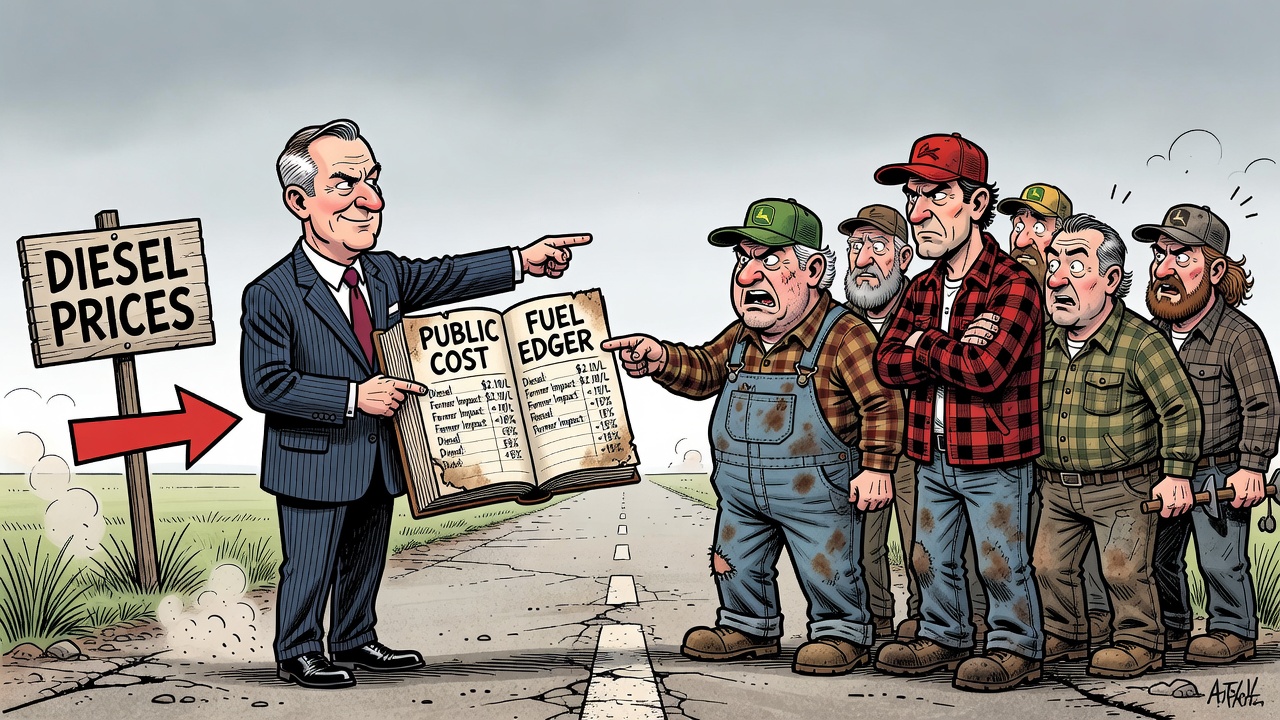
A conservative accountability test would be simple: publish the diesel ledger. Show the federal excise component, provincial tax component, carbon-policy and clean-fuel compliance estimates, refinery margin assumptions, wholesale-to-retail spread, regional supply constraints, trucking exposure, farm-season exposure and the expected pass-through to food prices. Then update it weekly while relief legislation is before Parliament.
Carney cannot build credibility by treating every affordability complaint as someone else’s jurisdiction. Provinces should explain their taxes. Ottawa should explain its taxes, regulations, approvals and relief design. The public does not need another round of federal-provincial blame-shifting. It needs the receipts for every cent between the refinery gate and the family grocery bill.
- The Hub: Lines that landed: Question Period for September 24
- CPAC: September 24, 2026 — Question Period
- Finance Canada: Bill C-38 fuel excise tax relief extension
- Finance Canada: Temporarily suspending the federal fuel excise tax
This article argues for fuel-price transparency and public cost accounting. It treats opposition price comparisons as claims unless independently verified.