Ottawa Cut the CAP Accord. Now Publish the Indigenous Procurement Ledger.
Ending an accord is not accountability. Publish the procurement, funding, verification and recovery receipts.
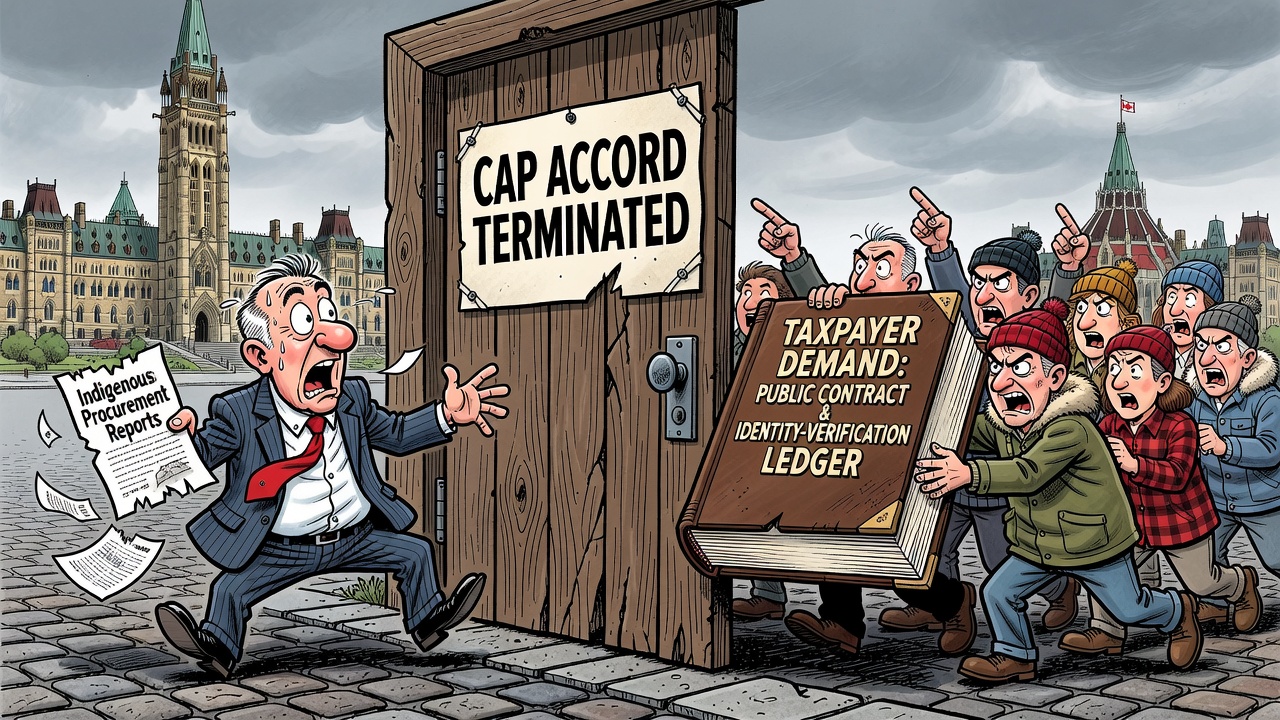
Ottawa has ended its 2018 political accord with the Congress of Aboriginal Peoples, according to Global News. CAP says the decision was made unilaterally and has vowed to challenge it. That dispute can play out through the proper channels. But taxpayers, legitimate First Nations, Métis and Inuit suppliers, and off-reserve Indigenous people deserve something more basic: the public ledger showing what Ottawa knew, when it knew it, and how much money moved while the system was under strain.
CAP’s own description of the 2018 accord says it set shared objectives, policy priorities, implementation processes and resources or funding between CAP and the federal government. That makes the end of the accord a public-money issue, not merely an internal relationship-management decision. If Ottawa is now walking away, ministers should table the funding history, deliverables, audits, renewal memos and risk assessments that supported the relationship from 2018 to 2026.
The procurement side is even more serious. Global News reported that CAP membership had been enough for some companies to access federal contracting opportunities through Indigenous procurement rules, and that prior reporting found weak federal control over whether qualifying businesses were actually majority Indigenous owned and operated. Those allegations must not be used to smear legitimate Indigenous entrepreneurs. They should be used to protect them from a system that allowed uncertainty, gatekeeping and possible pass-through arrangements to undermine economic reconciliation.
The warning lights were already flashing. In March, the Procurement Ombud reviewed contracts awarded under the Procurement Strategy for Indigenous Business and identified major problems with guidance, oversight and accountability. The office said departments were working from fragmented or outdated guidance, weak audit practices and reporting that could overstate progress toward the five-per-cent Indigenous procurement target. It also noted that Indigenous suppliers had unequal access to recourse because PSIB set-asides fall outside ordinary trade-agreement complaint systems.
That is the core accountability failure. Ottawa set a target, celebrated reconciliation through procurement, then built a system that even its own watchdog said could not reliably prove the benefits reached the intended Indigenous communities. Cutting one accord after years of questions is not enough. The Carney government should publish a contract-by-contract review of CAP-linked eligibility, Indigenous Business Directory verification, departmental approvals, prime-contractor and subcontractor flows, completed work, funds recovered and files referred for enforcement where warranted.
Conservative accountability does not mean abandoning Indigenous procurement. It means making sure the dollars reach real Indigenous businesses and communities instead of consultants, fronts or politically convenient organizations. If Ottawa wants trust, it should stop hiding behind process language and produce the receipts: who qualified, who checked, who got paid, who performed the work, who benefited, and what safeguards now protect the next contract.
- Global News: Ottawa ends ‘political accord’ with controversial Indigenous group
- Congress of Aboriginal Peoples: Canada-CAP Political Accord
- Office of the Procurement Ombud: Procurement Practice Review of Contracts Awarded to Indigenous Businesses
- Government of Canada / Office of the Procurement Ombud: Procurement Ombud Calls for Stronger Indigenous Procurement Policy to Advance Economic Reconciliation
This article argues for public procurement transparency and safeguards. It does not allege wrongdoing by any unnamed supplier and distinguishes legitimate Indigenous businesses from questionable eligibility, verification and pass-through concerns.