CBSA Removed 111 Extortion-Linked Foreign Nationals. Publish the Pipeline Ledger.
Removals are welcome. Now publish the screening, status, removal-delay and re-entry-prevention receipts.
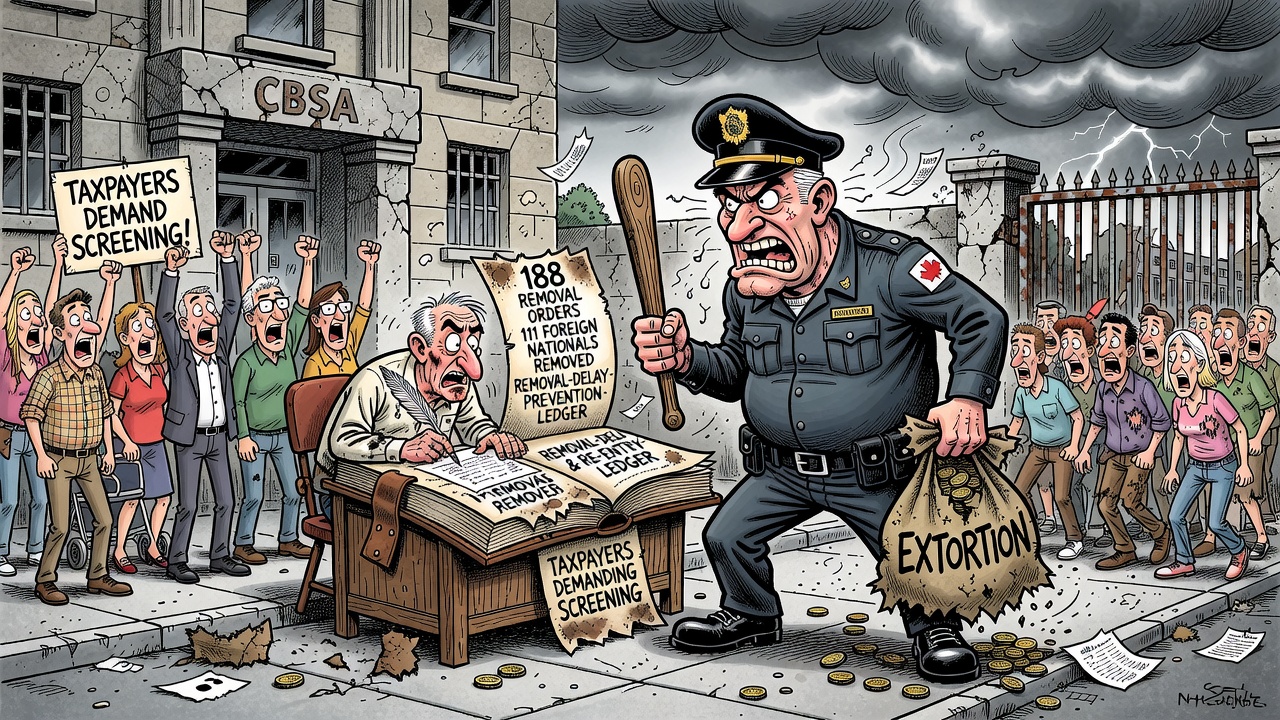
The Canada Border Services Agency says its extortion-network effort has now produced 188 removal orders and 111 removals from Canada as of September 3. That is real enforcement, and communities targeted by threats, shootings and intimidation deserve to see dangerous people removed after due process. But a press release is not the same thing as a public-safety ledger.
CBSA says the initiative began with dedicated resources in the Pacific and Prairie regions in August 2025 and expanded to the Greater Toronto Area in November 2025. The regional numbers show why Parliament should be watching the file closely: 91 orders and 58 removals in the Pacific region, 47 orders and 30 removals in the Prairies, and 50 orders and 23 removals in the GTA.
Those figures are useful, but they raise the obvious accountability questions. How many cases remain active? How long did it take from first police or CBSA flag to inadmissibility finding? What immigration stream or status applied at entry or at the time of enforcement, where disclosure is lawful? How many people were detained, released on conditions, under appeal, awaiting travel documents, or blocked by another legal impediment?
The public also needs the front-end screening receipt. If foreign nationals are later found inadmissible for serious criminality, organized-crime activity or links to extortion-related violence, Ottawa should be able to explain whether the problem was missed intelligence, weak visa screening, failed information sharing, post-arrival radicalization into criminal networks, or a delay in acting on known risk. Each answer points to a different fix.
CBSA named four recent cases, including foreign nationals linked to an extortion-related shooting, forcible confinement, firearms-related activity, and organizations engaged in a pattern of criminal activity. Those examples should not be used to smear law-abiding immigrants. They should be used to protect them. Many victims of these networks are immigrant families, small-business owners and diaspora communities who need government to separate criminals from the communities they prey on.
The re-entry question matters just as much as the removal count. Once someone is removed on organized-crime, serious-criminality or related inadmissibility grounds, what watch-list, biometric, document-fraud and partner-country controls prevent the person from returning under a new identity or through a different route? Canadians should not have to trust that the back door is locked.
Conservative accountability is simple here: enforce the law, protect due process, defend victims and publish aggregate receipts. The Carney government should table a monthly extortion-removals pipeline by region: referrals, investigations, inadmissibility reports, detention decisions, IRB outcomes, removal orders, removals completed, reasons for delay, screening lessons learned and re-entry-prevention controls. Good removals are welcome. Proving the pipeline is fixed is the real test.
- Canada Border Services Agency: CBSA efforts to disrupt extortion networks led to over 100 removals
- Canadian Press via CityNews: Border authorities have deported 111 due to extortion violence since last August
- Public Safety Canada: Government announces new measures to help protect Canadians and businesses against extortion
- Juno News: Canada border officers deport 111 alleged extortion gang members
This article relies on official and reported enforcement figures. It does not allege wrongdoing by any unnamed person and argues for aggregate transparency while preserving due process, privacy and operational security.