Bill C-39 Is No Longer a Slogan. Publish the Building Canada Strong Power Ledger.
If Ottawa wants a one-year project clock, Canadians deserve to see exactly which powers are being moved, narrowed, paused or handed to cabinet.
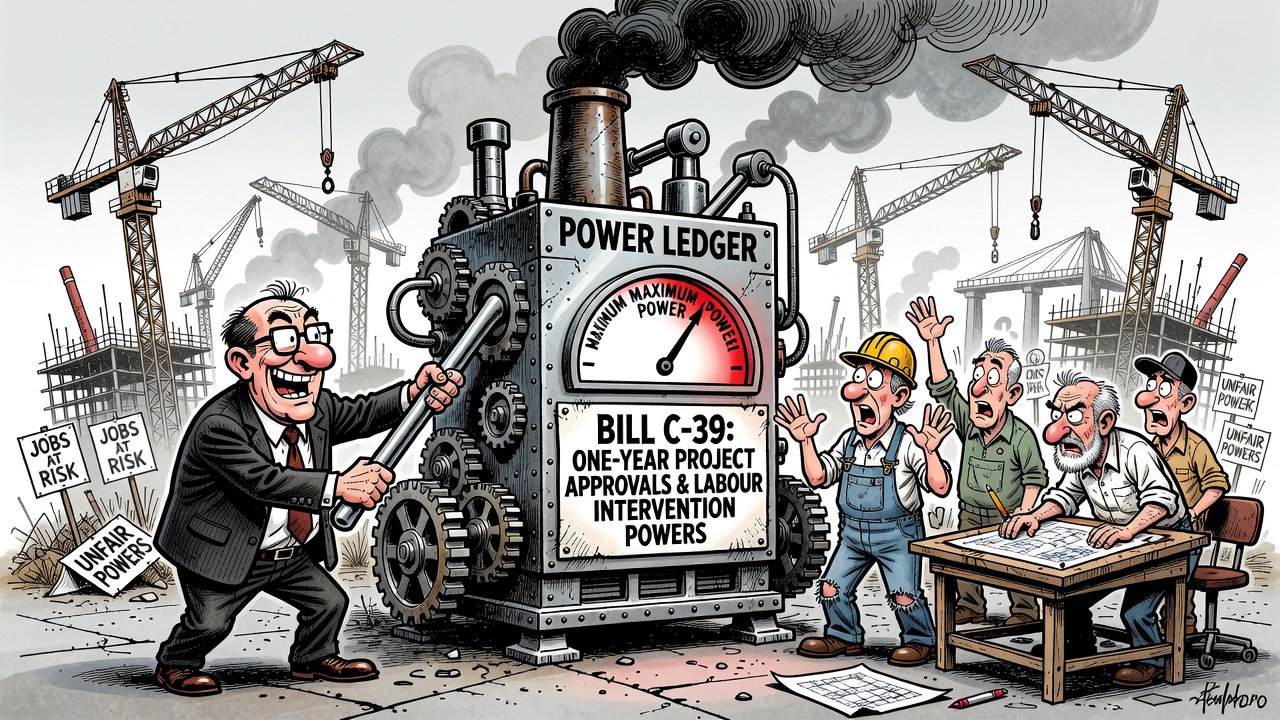
Bill C-39 has moved from pre-session sales pitch to tabled legislation. The government says the Building Canada Strong Act is meant to speed reviews, build trade corridors, modernize ports and support workers. That is a serious package, not a bumper sticker, and it should now be judged by the authorities it creates — not by the adjective “strong.”
The headline promise is a federal review-and-decision target within one year after a proponent submits a comprehensive application. Faster decisions can be defensible. Conservatives should want a country that can build mines, ports, pipelines, transmission and trade infrastructure again. But speed only becomes reform if the rules are knowable, the timelines are auditable, and ministers cannot quietly turn “coordination” into discretion without receipts.
That is why Parliament should demand a Building Canada Strong power ledger before second reading. The ledger should identify who can designate a project or region, what evidence is required, which permits can run concurrently, what stops or pauses the one-year clock, and which decisions remain with independent regulators instead of cabinet. If Indigenous consultation, environmental review, fisheries protection, navigable-waters decisions or energy regulation are being compressed, Canadians should see the exact legal switch being pulled.
The Canada Energy Regulator has already told stakeholders that the bill includes proposed new CER authorities and points to a Cabinet Directive on Getting Projects Built in Canada. That makes the ledger more urgent, not less. A cabinet directive can shape how departments behave long before the public understands the practical boundaries. Ottawa should publish the directive, implementation plan, regulator guidance and every dashboard metric it intends to use.
The labour side needs equal sunlight. Reports and government materials describe Canada Labour Code changes, 100 new health-and-safety officers and 26 additional Canada Industrial Relations Board staff to address complaint backlogs. More inspectors may be welcome. But if the same bill also changes strike-intervention or dispute-resolution power in federally regulated sectors, workers, employers and voters deserve plain-English thresholds before a port, rail or telecom crisis gives ministers a reason to test them.
The accountable position is simple: build faster, but publish the controls. A one-year clock should not become a black box. A transportation project office should not become a lobbyist concierge. Strategic corridors should not become pre-cleared political geography. And labour-code modernization should not become a stealth expansion of ministerial override power.
If the Carney Liberals believe Bill C-39 is clean, they can prove it by releasing the clause-by-clause power ledger now. Name every new authority, every excluded day, every cabinet trigger, every consultation safeguard, every conflict screen and every public reporting deadline. Then MPs can vote on the actual machinery — not just the slogan printed on the box.
- Government of Canada: Government introduces legislation to transform how Canada builds
- Canada Energy Regulator: Letter from the CEO on major projects built in Canada
- Government of Canada: Technical briefing on Part 1 of the Building Canada Strong Act
- Global News: Building Canada Strong Act coverage
- CityNews / Canadian Press: Liberals expected to shake up labour code with new economic bill
This article argues for public disclosure of Bill C-39 implementation details; it does not claim Parliament has passed the bill or that courts have ruled on any provision.