Bill C-39 Is Here. Now Publish the One-Year Approval Ledger.
One project, one review, one year sounds tidy. It is also exactly the kind of slogan that can hide enormous cabinet discretion unless Ottawa publishes the ledger in real time.
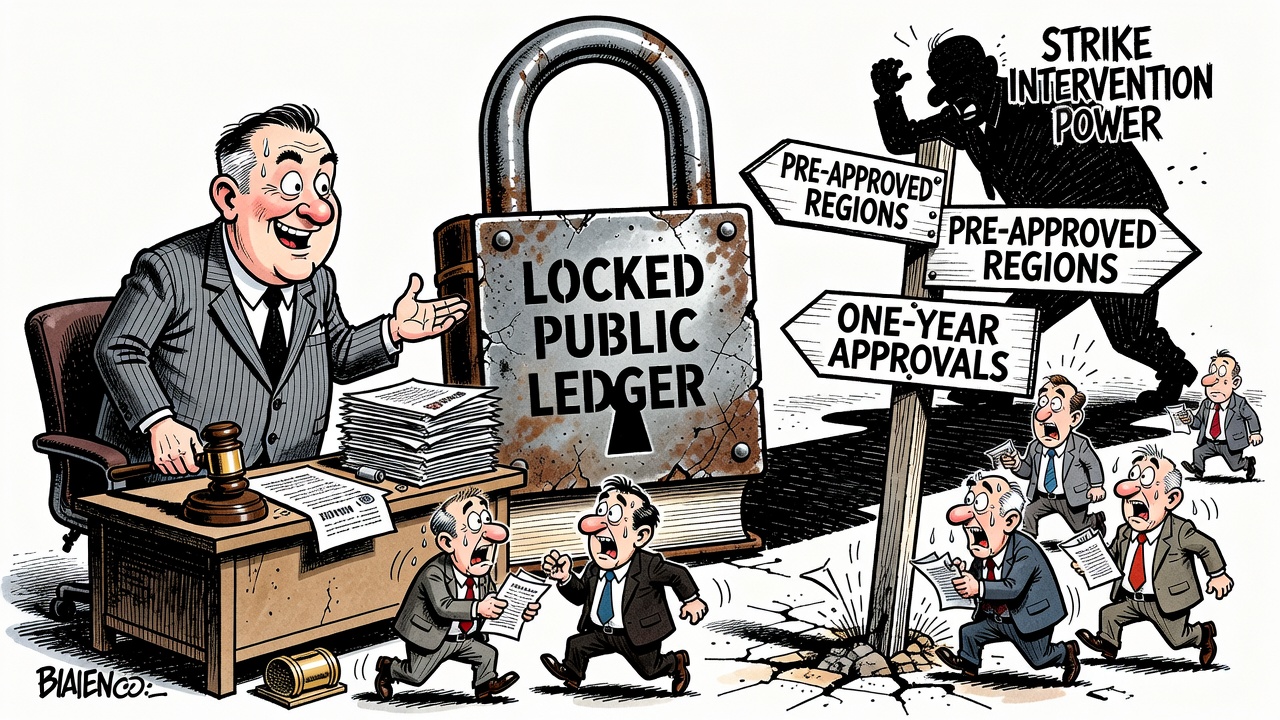
The Carney government has now introduced Bill C-39, the Building Canada Strong Act. Ottawa says the bill is meant to transform how Canada builds by speeding federal reviews, using a single federal project assessor, and targeting one-year decisions for projects in the national interest. Faster approvals can be a legitimate conservative goal. Canada has lost too many years to duplication, uncertainty and bureaucratic veto points.
But speed is not accountability. The official materials say the bill would create a one-window approach and make major project decisions within one year of substantive engagement. They also describe “Regions of National Interest,” where future project categories could be treated as pre-approved once a regional assessment has set conditions and mitigation measures. That is not a small administrative tweak. It is a new permission structure for cabinet, regulators and investors.
If the government wants Parliament to trust that structure, it should publish the dashboard before second reading. Canadians should be able to see every project’s clock start date, responsible assessor, statutory authority, consultation milestones, Indigenous engagement record, environmental conditions, conflict screens, ministerial decisions and missed deadlines. A one-year deadline without a public clock is just a promise. A pre-approved region without a public evidence file is just a shortcut.
The same bill package also reaches into labour. Ottawa says it would clarify Section 107 powers by setting a process after a work stoppage begins: a special mediator report, a national-impact assessment, and possible ministerial direction to the Canada Industrial Relations Board to resume operations, extend agreements or impose binding dispute resolution. The Canadian Press reported that the national-interest test is being put into the labour-code changes as a condition for ending strikes.
That deserves the same receipt test. Ports, railways, airlines and federal sectors matter to the economy. So do collective-bargaining rights and predictable rules. If cabinet can invoke national-impact findings to move workers back or force arbitration, Canadians should see the threshold, evidence, Charter analysis, employer lobbying contacts, union submissions and Cabinet record after each use.
Conservatives can support building without endorsing a black box. The principle should be simple: yes to faster decisions, no to secret discretion. Publish the Bill C-39 ledger now — project by project, region by region, strike intervention by strike intervention — before Ottawa asks MPs to hand cabinet another machine that runs on trust.
- Government of Canada: Bill C-39 / Building Canada Strong Act announcement
- Government of Canada: Cabinet Directive on Getting Projects Built in Canada
- Global News / Canadian Press: Building Canada Strong Act report
- iNFOnews / Canadian Press: Labour-law national-interest condition report
This article supports faster project decisions while arguing that Bill C-39’s new approval and labour-intervention powers require public, project-level receipts.