Before Ottawa Makes Airport Biometrics Mandatory, Publish the Cabinet Order
Airport security is serious. That is why a domestic-flight biometric mandate must not arrive through bureaucratic drift, vendor pilots and cabinet secrecy.
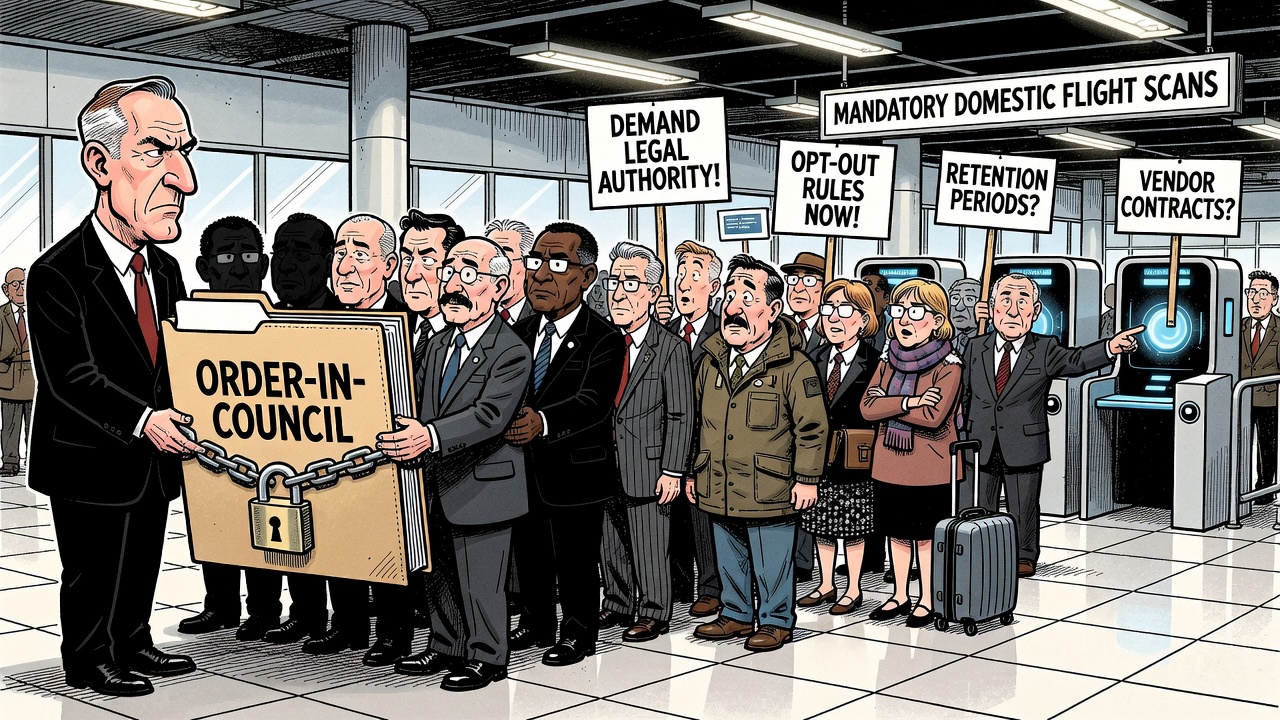
Blacklock’s Reporter says CATSA has put the key accountability question where it belongs: if face or fingerprint scans become mandatory for domestic air passengers, that decision rests with federal cabinet. Blacklock’s also reports the agency is looking toward biometric scanning on local flights by 2031. That timeline sounds distant until the infrastructure, contracts and habits are already in place.
CATSA’s own annual report says the Boarding Pass Security System biometrics trial is already underway with Transport Canada and CATSA partners. The trial lets passengers present their faces at checkpoints for a biometric scan instead of a boarding pass. That may be marketed as convenience, but a pilot at an airport checkpoint is not the same as a durable legal framework approved in public by Parliament.
The warning is not hypothetical. CATSA already uses biometric systems in restricted airport areas. Its operating records say the Restricted Area Identity Card program uses biometric scanners and that newer mobile readers can verify fingerprints or irises for non-passengers. Once a security agency builds and normalizes biometric infrastructure for one class of people, expanding the model to travellers becomes a policy choice, not a science-fiction leap.
Current passenger rules show why the line matters. CATSA says boarding-pass scanning is mandatory where its Boarding Pass Security System is deployed: refuse the scan and you are not screened, which means you do not board. The agency says the scanner captures information such as name, flight number, flight date and gate, stores routine data for 30 days, and may keep incident-related data for two years. That is for boarding-pass data. Biometric data is more sensitive, harder to replace after a breach, and easier to repurpose if the rules are vague.
Federal regulations for domestic boarding still speak in the language of identity documents. The Secure Air Travel Regulations require air carriers to verify adult passengers using government-issued photo ID, accepted foreign documents, two valid Canadian government-issued IDs, or a restricted area identity card. That is not the same as a universal facial-recognition checkpoint controlled by a cabinet order.
So publish the order before the machinery hardens. Canadians should see the legal authority, the privacy impact assessment, the opt-out path, the human-review process, the false-match testing, the vendor contracts, the cybersecurity audit, the retention schedule, the sharing rules with police and foreign agencies, and the parliamentary approval path. If the government believes mandatory biometrics are necessary, it should defend that case openly.
Conservatives should not accept a false choice between safe airports and accountable government. The right standard is simple: secure travel, yes; a biometric black box for domestic flights, no.
- Blacklock’s Reporter: “Mandatory Scans Up To Feds,” September 21, 2026
- CATSA 2025 Annual Report: BPSS Biometrics trial
- CATSA: Restricted Area Identity Card biometric readers
- CATSA: Boarding Pass Security System rules and retention
- Justice Laws Website: Secure Air Travel Regulations, section 3
This article argues for disclosure before any domestic passenger biometric mandate. It does not claim CATSA’s current passenger trial is itself a universal mandate.