Ottawa’s Third Child-Welfare Court Challenge Needs a Litigation Ledger
If the government says reconciliation and reform are on track, it should show the court-cost, delay-risk and delivery receipts.
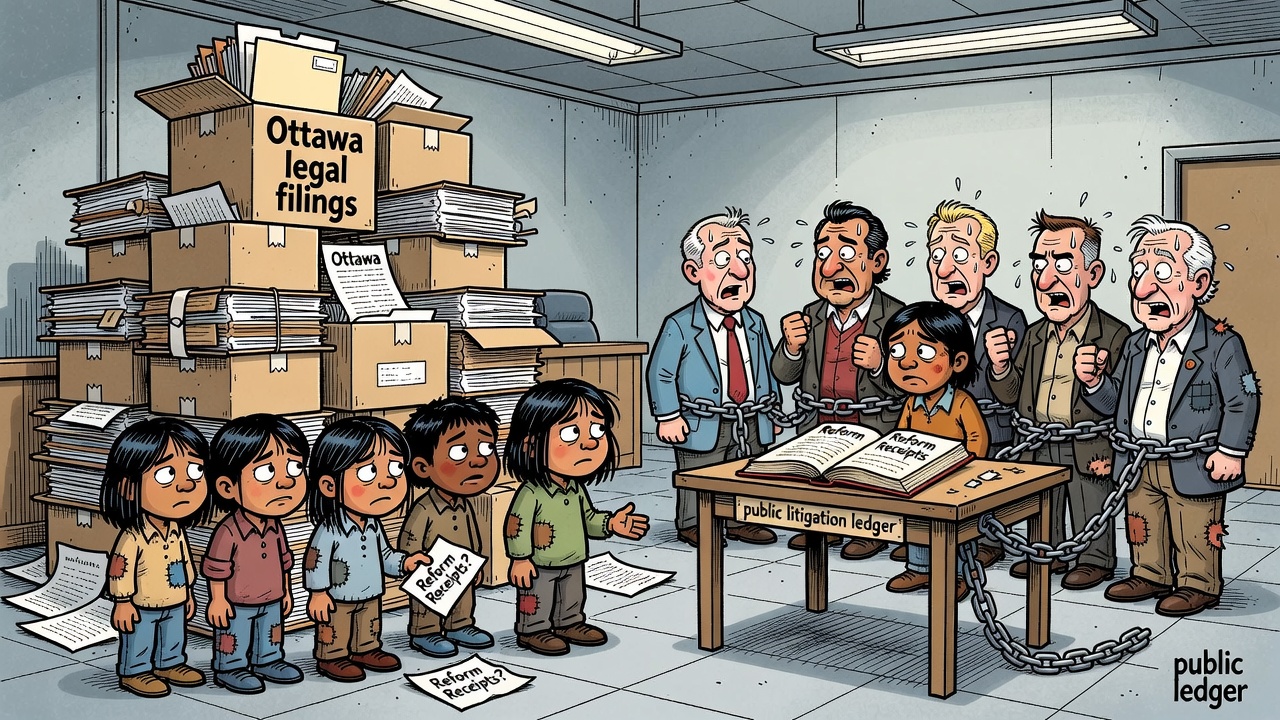
CBC reports the Carney government has filed its third court challenge in a year in the long-running First Nations child and family services case. The latest Federal Court application challenges the Canadian Human Rights Tribunal’s August 18, 2026 refusal to reconfigure the tribunal panel hearing the file. The First Nations Child & Family Caring Society’s case timeline lists Canada’s notice of application for judicial review as filed on September 17, 2026.
This is not a small procedural fight in an ordinary program dispute. The original human-rights complaint dates back to 2007. In 2016, the tribunal upheld the complaint, finding Canada discriminated against First Nations children through underfunded child and family services and failures connected to Jordan’s Principle. A decade after that ruling, the country is still arguing over reform machinery while families wait for durable services.
There are complicated facts here, and Ottawa is entitled to seek legal clarity when a tribunal process genuinely needs it. But legal clarity is not the same as a blank cheque for endless litigation. When a government says it is committed to reconciliation, then repeatedly asks courts to intervene in the forum supervising reform, Parliament and taxpayers deserve a public ledger.
That ledger should begin with costs. How much has Canada spent on outside counsel, Department of Justice time, expert reports, transcripts, travel and related litigation support in this file since 2016? How much has been spent in the past year alone? What internal test decides whether another judicial review is worth the delay risk?
It should also include delivery. CBC reports the tribunal is still weighing long-term reform after chiefs rejected a 10-year, $47.8 billion proposal in 2024. Ottawa and Ontario First Nations separately reached an $8.5 billion Ontario agreement that Indigenous Services Canada said the tribunal approved in March 2026. Canadians should be able to see which reforms are funded, which are delayed, which are disputed and which children or agencies are affected while lawyers keep fighting over process.
Conservatives should be careful not to turn vulnerable children into a slogan. The accountability question is not whether First Nations children deserve properly funded, measurable services. They do. The question is whether Liberal governments can keep promising historic reconciliation while running a litigation strategy that the public cannot cost, measure or judge.
If Ottawa’s position is that the latest court filing will speed reform, publish the analysis. If the position is that the tribunal structure is legally flawed, publish the practical effect on service delivery. If the government expects taxpayers to fund both compensation, reform and continued courtroom battles, then the minimum standard is transparency.
Reconciliation without receipts becomes another Ottawa branding exercise. The Carney government should publish the child-welfare litigation ledger: legal costs, instructions, risk assessments, settlement options, reform milestones, missed deadlines and expected effects on First Nations children and agencies. Canadians do not need spin. They need to know whether the money and the lawyers are moving the file toward justice, or simply moving the deadline again.
- CBC News via Yahoo News: Carney government files 3rd court challenge in First Nations child-welfare case
- First Nations Child & Family Caring Society: I Am a Witness — Tribunal Timeline
- APTN News: Tribunal rejects federal government’s request to add panelists
- Indigenous Services Canada: Tribunal approves agreement to reform Ontario First Nations child and family services
- First Nations Child & Family Caring Society: I Am a Witness campaign and case background
This article argues for aggregate litigation and reform-disclosure records, not publication of private child, family or agency case files.