CRA Penalty Powers Need a Taxpayer-Rights Ledger
Ottawa should not turn document disputes into penalty traps without showing taxpayers the safeguards first.
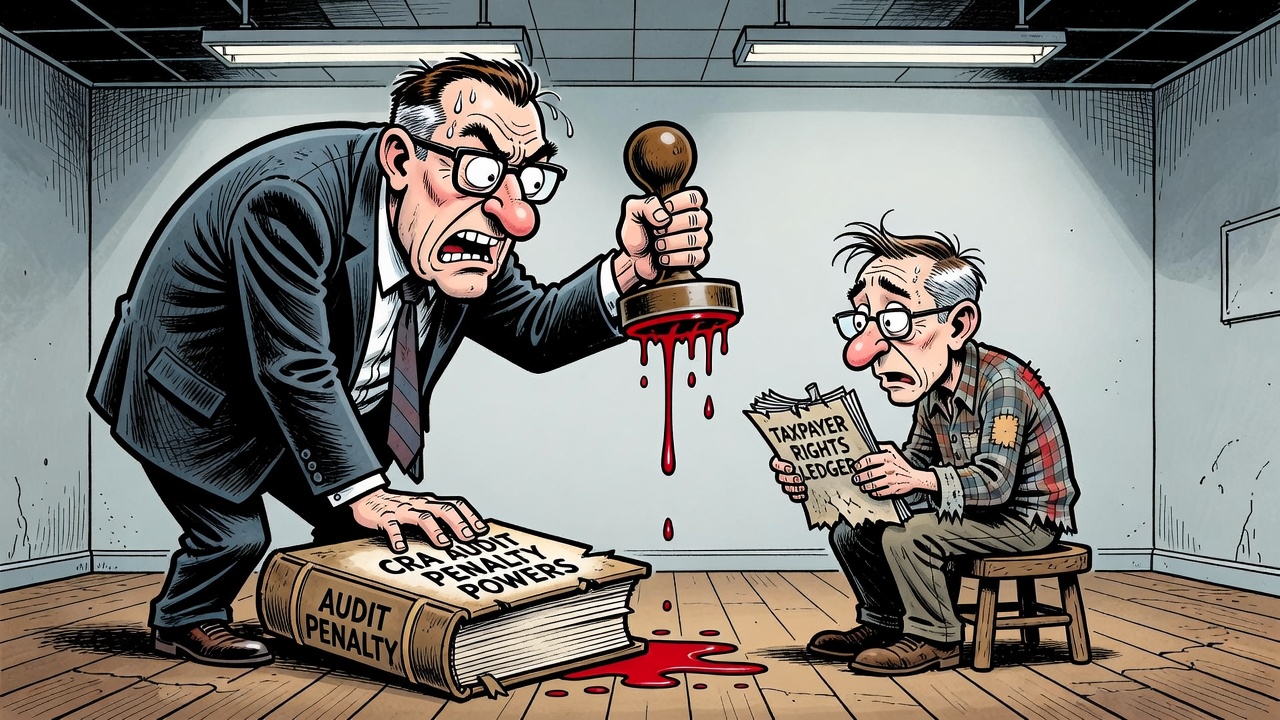
Bill C-31 is being sold as budget implementation, but buried inside is a major taxpayer-rights question: how much power should Canada Revenue Agency officials have to punish people during document fights before the underlying tax dispute is even settled?
Tax Executives Institute says its June 11 submission to House and Senate finance committees warned that Bill C-31 would significantly expand CRA audit powers, affect both corporate and individual taxpayers, and could violate the Charter of Rights and Freedoms. Blacklock’s Reporter also reported that tax experts told MPs the proposed document-demand penalties were needlessly harsh, citing an example in which a single parent in a $750 tax dispute could face $1,500 in penalties.
The government’s own Charter Statement confirms the stakes. Justice Canada says Part 1 of Bill C-31 would update CRA information-gathering powers, create a notice-of-non-compliance penalty of $50 per day up to $25,000, and add a separate compliance-order penalty equal to 10 per cent of aggregate tax payable where tax owing for at least one year exceeds $50,000. The statement also acknowledges that audit powers engage privacy rights under section 8 of the Charter and that substantial penalties could be perceived as “true penal consequences,” while arguing the regime remains administrative and Charter-consistent.
That is exactly why Parliament should slow down. Conservatives do not need to defend tax cheats to defend due process. A self-assessment tax system requires audits, records and consequences for deliberate obstruction. But ordinary Canadians also know how intimidating a CRA letter can be, especially for families, small businesses, seniors and people who cannot afford a tax lawyer every time Ottawa demands another document.
Before the Carney government hands auditors a bigger stick, it should publish a taxpayer-rights ledger. Show MPs the real-world scenarios: small-dollar disputes, missing third-party records, good-faith mistakes, language barriers, bank-record delays, accountant errors, privilege claims and cases where CRA demands turn out to be overbroad. Show the waiver rules, internal approval levels, appeal timelines, hardship safeguards and expected number of annual penalties. Show how many notices of non-compliance CRA expects to issue and how often Federal Court review will realistically be affordable.
Bill C-31 has already passed second reading and is before the House finance committee. That means the question is no longer theoretical. If Liberals believe the new powers are narrow, fair and necessary, they should welcome disclosure. If the penalties are truly administrative, publish the operating manual. If disproportionate penalties can be waived, publish the waiver criteria. If small taxpayers are protected, show the protection in writing.
Tax enforcement should be firm, but it should not be a black box. Canadians should pay what they owe. Ottawa should prove what it claims. And before CRA gets new penalty powers, taxpayers deserve the receipts.
- Tax Executives Institute: TEI comments to Canadian finance committees regarding CRA audit powers
- Department of Justice Canada: Charter Statement — Bill C-31
- Parliament of Canada LEGISinfo: Bill C-31 status and legislative history
- Blacklock’s Reporter: Tell MPs Tax Bill’s Too Harsh
- Canada Revenue Agency: Obtaining information during compliance activities
This article argues for aggregate rules, scenarios and safeguards. It does not oppose legitimate CRA audits or the collection of taxes lawfully owed.