One Uncounted Vote Was Enough to Break Terrebonne’s Result
This is not a claim of Liberal fraud. It is a warning that election administration must be precise enough to survive a one-vote race.
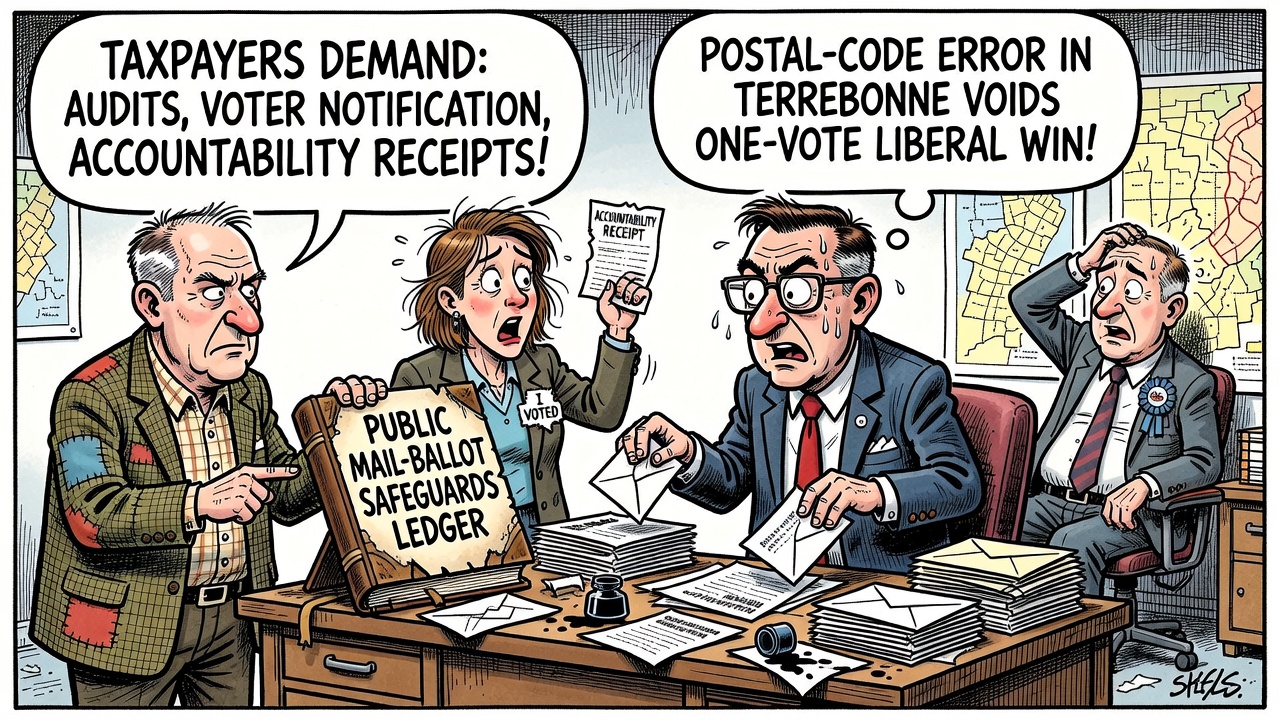
The Supreme Court of Canada’s reasons in Sinclair-Desgagné v. Chief Electoral Officer should be read as a basic accountability lesson: one wrongly lost vote can be enough to void an election when the margin is one. In Terrebonne, Quebec, Liberal candidate Tatiana Auguste was initially declared elected in the 2025 federal election by a single vote over Bloc Québécois incumbent Nathalie Sinclair-Desgagné. That result could not stand once the courts found that an Elections Canada administrative error kept a valid special ballot from being counted.
The facts are narrow but serious. Elections Canada gave some voters prepaid return envelopes for special ballots with the wrong postal code. One affected voter mailed the ballot before election day. Canada Post returned it after election day. Because Elections Canada never received it, the ballot was not counted. In an ordinary landslide, that error might not change the result. In a one-vote contest, it plainly could.
That is why conservatives should resist the temptation to inflate the story beyond the evidence. The Supreme Court did not find a Liberal conspiracy, ballot stuffing or partisan misconduct. It found an administrative failure that affected the result. That distinction matters. Election integrity is strongest when criticism is factual, not theatrical.
But “administrative error” is not a magic phrase that makes accountability disappear. Mail-in voting depends on chain-of-custody confidence: correct envelopes, clear instructions, trackable processes, timely voter notice and rapid escalation when a known addressing problem emerges. If the system can send voters the wrong return address and discover the problem only after a close result is challenged, Parliament should ask what safeguards failed before election day — not after the court case.
The Carney government and Elections Canada should now publish a non-partisan mail-ballot error ledger. Canadians do not need private voter information. They do need aggregate numbers: how many incorrect envelopes were issued, in which programs or batches, when the problem was discovered, who was notified, whether replacement packages were offered, what Canada Post coordination existed, and what audit controls have changed for the next federal contest. The Chief Electoral Officer should also explain what threshold triggers public notice in a riding when ballot-return materials are defective.
This is especially important because the initial beneficiary of the one-vote declaration was a Liberal candidate. Again, that does not prove Liberal wrongdoing. It does mean the governing party has an added duty to avoid looking comfortable with a broken process that temporarily helped its side. Public trust requires losers to accept valid results and winners to accept scrutiny when the machinery fails.
The Supreme Court’s message was simple: Canadians must know election errors will be corrected. Ottawa’s next step should be just as simple: publish the receipts before the next close riding is decided by an envelope.
- Supreme Court of Canada: Reasons for judgment on appeal — September 18, 2026
- Supreme Court of Canada: Case in Brief — Elections Canada administrative error and annulled result
- CanLII: Full reasons, 2026 SCC 31
- Elections Canada: Statement following the Supreme Court decision
- Elections Canada: Review of Special Ballot System
- Canadian Lawyer: Report on Supreme Court reasons
This article does not allege partisan misconduct. It argues for public, non-personal disclosure of mail-ballot safeguards after an acknowledged administrative error affected a one-vote result.