Ottawa’s $30M Conifex Tariff Loan Needs a Public Ledger
A tariff bridge loan may be defensible. A quiet corporate rescue with missing taxpayer-protection receipts is not.
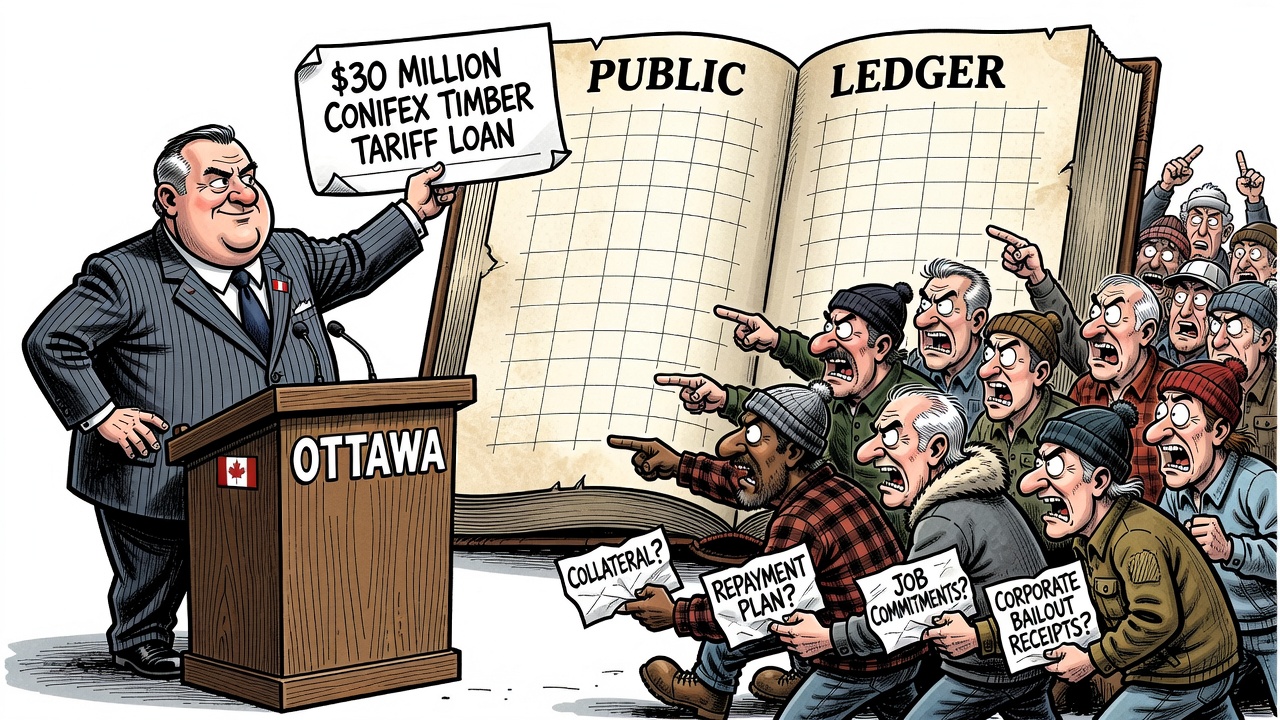
Ottawa’s September 18 announcement of a $30-million loan to Conifex Timber Inc. is exactly the kind of file that should come with a public ledger on day one. Finance Canada says the money will flow through the Large Enterprise Tariff Loan facility, support workers, and help stabilize Mackenzie, British Columbia, where Conifex operates a sawmill and bioenergy plant.
Those are real considerations. Softwood lumber communities have been hit by U.S. trade actions, volatile markets and mill closures. Conifex supports 260 direct jobs, according to the government, and a mill town cannot treat that number as abstract. Conservatives should not sneer at workers caught in a tariff fight they did not start.
But compassion for workers is not a blank cheque for corporate management. The federal release does not tell taxpayers the interest rate, collateral, risk rating, repayment schedule, draw conditions, executive-compensation limits, lobbying contacts or job-retention commitments attached to this loan. It also does not publish the company’s application, the government’s due-diligence summary or the alternatives Ottawa considered before choosing a company-specific rescue.
That matters because the LETL facility is not a routine grant program. CEEFC describes it as support for otherwise viable large enterprises facing tariff-related liquidity pressure after exhausting traditional market financing. Its factsheet says borrowers may face restrictions on dividends, capital distributions, share repurchases and executive compensation, and must provide an employment plan. If those protections are real, publish the Conifex version. If they are flexible talking points, say that plainly.
The program’s own logic also creates a fairness problem. A company with federal access and enough scale to qualify for a large-enterprise facility may receive tailored liquidity, while smaller suppliers, contractors and local businesses face the same tariff shock without the same Ottawa doorway. Taxpayers deserve to know whether this loan protects an ecosystem of Canadian jobs or merely postpones hard decisions at one firm.
The Carney government is trying to sell itself as disciplined, pro-investment and serious about productivity. Good. Then it should apply a private-sector standard to public money: disclose the risk, disclose the security, disclose the milestones and disclose what happens if the borrower misses them. No bank would accept a slogan in place of a credit file. Canadians should not either.
A defensible tariff loan can survive sunlight. The government should publish the Conifex tariff-loan ledger now: application date, decision-makers, lobbying and ministerial contacts, amount requested, amount approved, security package, interest formula, repayment schedule, employment plan, Buy Canadian commitments, executive-pay restrictions, default triggers and any taxpayer upside such as warrants or fees.
If Ottawa’s answer is that all of this is commercially sensitive, then the public should hear a simpler truth: taxpayers are being asked to carry the risk while the receipts stay private. That is not accountability. That is how temporary crisis lending becomes permanent corporate dependency.
- Department of Finance Canada: Government of Canada commits financial support to Conifex Timber Inc.
- Canada Enterprise Emergency Funding Corporation: CEEFC September 18 announcement on Conifex loan
- Canada Enterprise Emergency Funding Corporation: Large Enterprise Tariff Loan overview
- Canada Enterprise Emergency Funding Corporation: LETL factsheet and borrower conditions
This article does not argue that Conifex workers should be abandoned. It argues that company-specific federal lending must come with public taxpayer-protection receipts.