IRCC Ended a Family-Sponsorship Exemption Over “Integrity Concerns.” Show the Evidence.
If Ottawa cancelled an immigration exemption because the integrity risk changed, it should publish the evidence — not just the slogan.
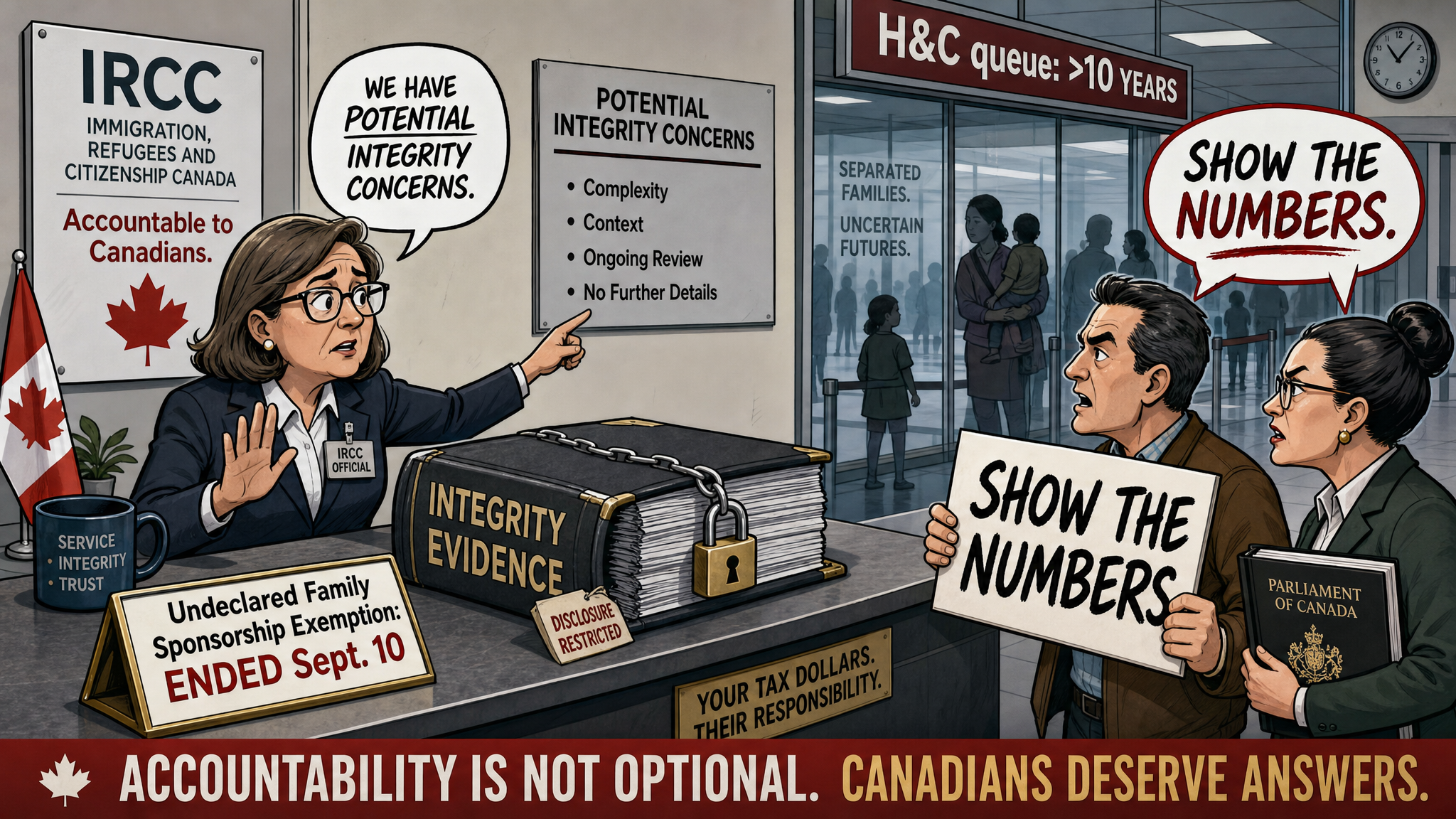
IRCC has ended a refugee family-sponsorship exemption with a familiar Ottawa phrase: “potential integrity concerns.” Canadian Press reported that the department let the public policy expire on September 10, 2026, after years of allowing certain refugees and permanent residents to sponsor qualifying family members who had not been declared or examined during the original immigration process.
That policy was not a minor footnote. Canada’s normal immigration rules can permanently block sponsorship of a spouse, partner or child who was not declared and examined before the sponsor became a permanent resident. The 2019 public policy created an exception for some cases, recognizing that refugees and vulnerable applicants can face messy, dangerous and incomplete paperwork realities.
So what changed?
According to Canadian Press, a prior ministerial memo said the exemption posed “minimal risk” to program integrity. The same reporting said roughly 2,000 applications had been received and about 90 per cent had been approved. Now IRCC says it ended the exemption because of unspecified potential integrity concerns. That is not enough disclosure for a department already facing public pressure over backlogs, fraud controls and inconsistent service.
Conservatives should take program integrity seriously. Family reunification cannot become a loophole for identity fraud, inadmissibility problems, document abuse or skipped screening. But integrity by press release is not accountability. Canadian Press reported Wednesday that IRCC would not say whether anyone actually misused the now-defunct policy. If there were misuse cases, publish the number. If screening gaps were found, identify the gap. If officials warned the minister, release the dated briefing note. If the approval rate became a problem, show the trend. If a narrower safeguarded exemption was rejected, explain why.
IRCC’s own page now marks the undeclared-family-member public policy as expired, and the Refugee Sponsorship Training Program’s notice says the policy ended on September 10. Affected people may still try humanitarian-and-compassionate requests, but that is hardly a clean substitute when IRCC’s April 2026 parliamentary data package listed baseline humanitarian-and-compassionate processing at more than 10 years.
The public ledger should be simple: applications received, approvals, refusals, withdrawn files, suspected misrepresentation cases, security or medical-screening failures, country and category breakdowns, processing times, consultation records, legal-risk analysis, ministerial memos and the estimated number of families pushed into the H&C queue.
If the evidence is strong, publish it and defend the decision. If the evidence is thin, Ottawa should say so and design a narrower rule with real verification safeguards. Either way, Canadians deserve more than a locked binder labelled “integrity concerns.”
- Canadian Press via CityNews: Ottawa says it ended refugee residency sponsor exemption over integrity concerns
- Canadian Press via 980 CJME: Ottawa won’t say if people misused the now-defunct policy
- iPolitics / Canadian Press: Ottawa says it ended refugee residency sponsor exemption over integrity concerns
- IRCC: Public policy for undeclared family members — expired
- Refugee Sponsorship Training Program: Expiry of public policy for undeclared family members
- IRCC parliamentary data: CIMM comprehensive data package, April 20, 2026
This article argues for transparent integrity evidence and secure processing. It does not argue for bypassing identity, medical, security or admissibility screening.