Banff Cabinet Insider Access Needs a Public Ledger
Closed-door cabinet planning may be normal. Connected private briefings still need attendee, conflict-screen, payment and policy-request receipts.
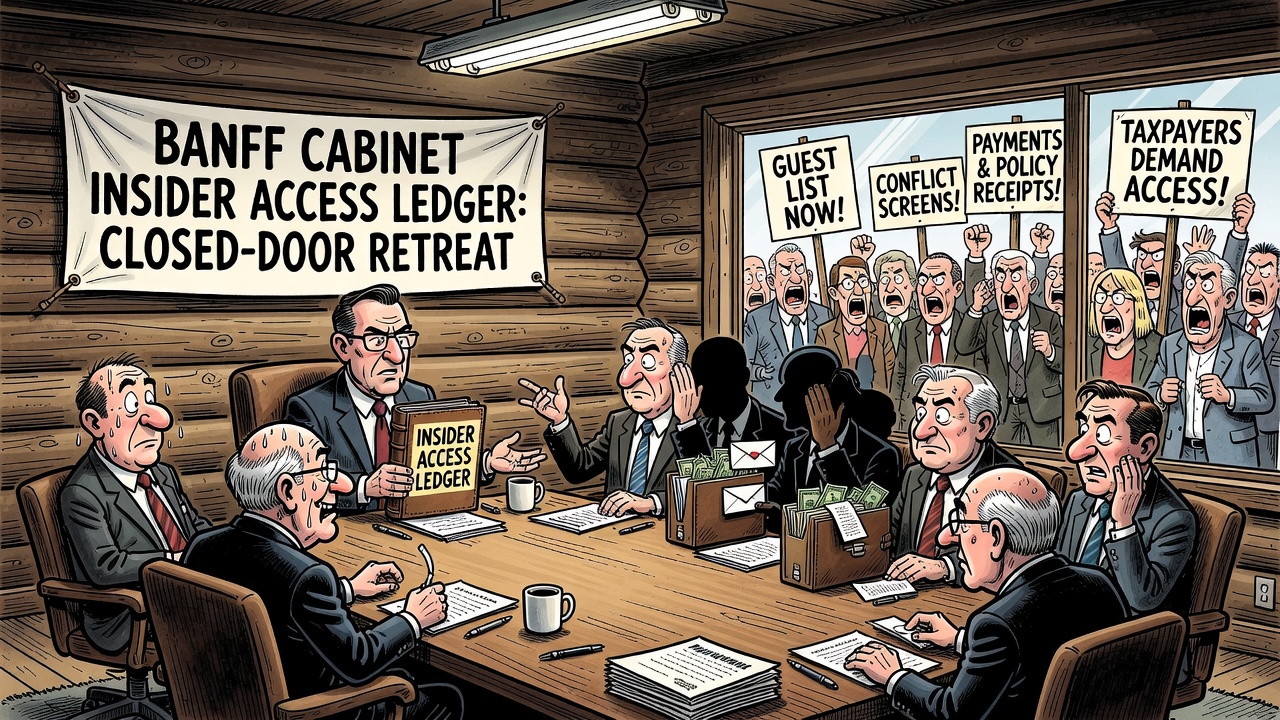
Prime Minister Mark Carney’s cabinet went to Banff for a two-day fall planning forum from September 10 to 11. The Prime Minister’s Office said ministers and secretaries of state would take stock of progress, plan next actions and hear from outside experts on the economy, Indigenous partnerships and global affairs.
There is nothing inherently wrong with cabinet hearing expert advice. A serious government should test assumptions before Parliament returns. But when the meetings are closed-door, the experts are hand-picked, and the policy stakes include trade, Alberta unity, major projects and the fall agenda, Canadians are owed more than a scenic backdrop and a few hallway scrums.
The Canadian Press reported that Ian Bremmer, founder of the Eurasia Group geopolitical consultancy, was among the guests called to present to cabinet. CP also reported several relevant ties around that firm: Diana Fox Carney still does some work for it, Gerry Butts chairs it, and Artificial Intelligence Minister Evan Solomon previously worked for a subsidiary before entering politics. Those facts do not prove misconduct. They do prove why the disclosure standard must be higher.
Carney’s central political pitch is competence. Competence includes clean process. If a connected consulting and risk-analysis network receives private access to cabinet, the public should see the safeguards: who invited whom, who attended, what topics were covered, whether anyone was paid, whether travel or accommodation was covered, and whether conflict screens or recusals were considered for ministers, staff, spouses, consultants and presenters.
This is especially important because cabinet retreats are not academic conferences. They shape government priorities. They can influence which files move first, which risks ministers take seriously, which industries receive attention, and which advice becomes embedded before MPs or the public ever see a proposal. A private briefing today can become a regulation, grant stream, procurement preference or diplomatic line tomorrow.
A conservative accountability test is simple: private advice can inform government, but it cannot become privileged government access without receipts. Publish the full presenter and attendee list. Publish the general agenda and session titles. Publish conflict-of-interest declarations and recusals. Publish any contracts, honoraria, reimbursements or hospitality. Publish lobbying registrations or policy asks tied to participating firms. Publish a post-retreat summary of what advice was accepted, rejected or sent for further review.
Ottawa does not need to reveal cabinet confidences to meet that standard. It can protect genuine deliberations while disclosing the access trail around them. If the process was clean, the ledger will show it. If the same well-connected networks keep getting the first word in the room, Canadians deserve to know that too.
The Banff retreat may produce parts of the fall agenda. Before that agenda is sold as national necessity, Canadians should see the access ledger behind it.
- CityNews / The Canadian Press: Carney’s cabinet huddles in Banff amid trade war, Alberta separatism push
- Prime Minister of Canada: Prime Minister Carney to hold fall Cabinet Planning Forum — September 7, 2026
- CPAC: Video archive entries from the Banff cabinet retreat
This article argues for transparency around outside access to cabinet. It does not allege unlawful conduct by any presenter, minister, spouse or firm.