The Indigenous Art Collection Needs a Recovery Ledger, Not Word Games
Publish the list, last-known locations, recovery steps, storage controls and ministerial deadline.
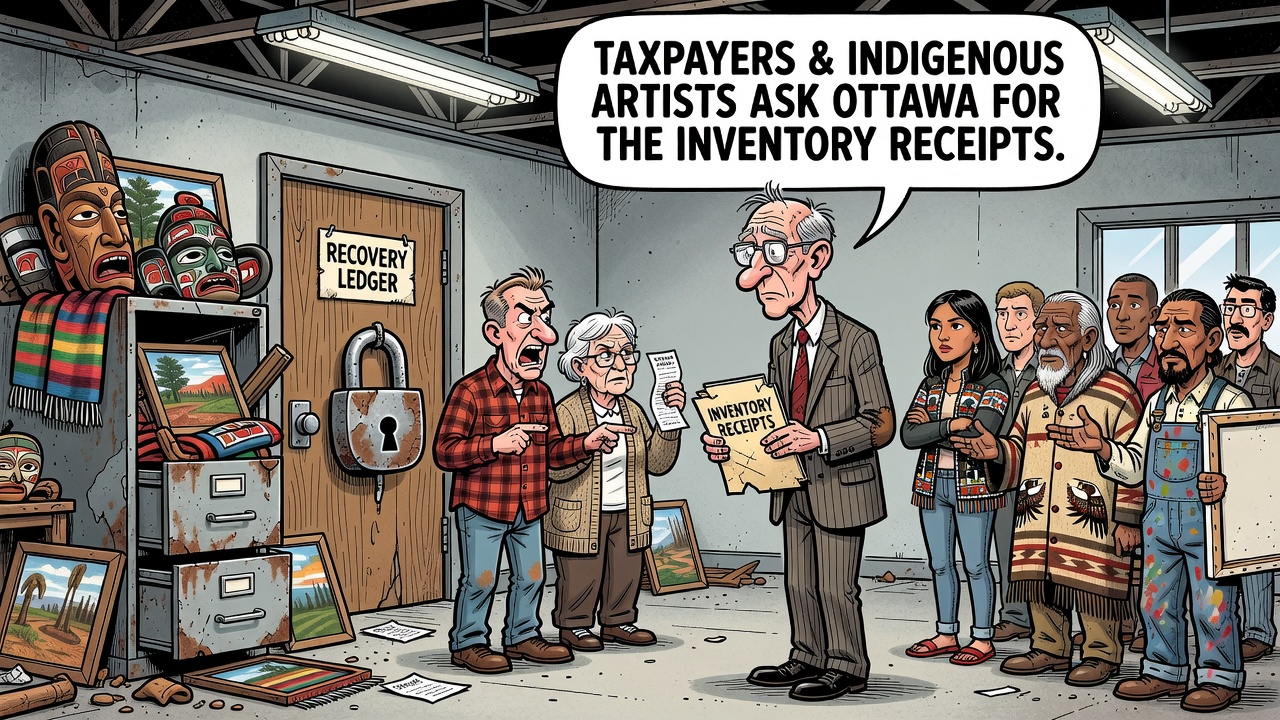
Ottawa’s first duty with the federal Indigenous Art Collection is simple: protect the art, respect the artists, and tell Canadians the truth in plain language. On that test, Crown-Indigenous Relations and Northern Affairs Canada has work to do.
CIRNAC’s own internal audit says the collection includes 5,176 works, valued at about $14.4 million, and represents First Nations, Inuit and Métis artists from across the country. This is not office décor. It is a federal heritage collection, built over decades, and tied directly to reconciliation, cultural memory and artist livelihoods.
The audit found “partial components” of a management control framework, but also a long list of gaps: outdated or draft policy instruments, unclear oversight roles, limited reporting to senior management, no up-to-date lifecycle plan, weak documentation for physical security and environmental controls, and third-party storage being used without a contract to manage safeguarding requirements.
Then comes the part taxpayers and artists will remember: 132 art pieces were identified as “works not accounted for.” CIRNAC’s committee materials stress there was no finding of theft or ill intent, and officials say the combined reported value of the unaccounted-for works is $48,878. They also say many of the pieces trace back to an old internal government office-loan program, halted in 2017, with 91 works linked to loans from the 1980s.
Fine. Don’t inflate the story. Don’t claim that the whole $14.4 million collection vanished. Don’t call it theft if the department says theft has not been found. But “not stolen” is not the same thing as “properly managed,” and “unaccounted for” is not a status that should sit comfortably inside a federal department.
The Canadian Press reported that officials told the heritage committee 12 pieces had been located and 20 were reproductions, while the department was still tracing inventory and reconciling cataloguing systems. Deputy minister Valerie Gideon said artists were not being notified because the pieces had not yet been formally deaccessioned or confirmed missing under heritage rules. That may be procedurally tidy, but it is politically tone-deaf. If Ottawa cannot locate works connected to Indigenous artists, artists and estates deserve more than bureaucratic vocabulary.
The control failures also matter. The audit noted security cameras were not yet functioning in the temporary storage facility at the time of audit work. It cited incomplete HVAC maintenance records and a March 2023 water leak that affected three unglazed paintings. It warned that weak monitoring increases the risk that theft, breaches or damage could go undetected.
A Conservative accountability standard is not complicated: publish the ledger. Canadians should see the list of unaccounted-for works, last-known locations, loan dates, borrower offices, artist or estate notification status, recovery actions, police/referral rationale, insurance position, and monthly reconciliation progress. The department should also publish the storage contracts, camera status, inspection records, water-damage remediation and a ministerial deadline for closing every audit recommendation.
Indigenous art should not disappear into Ottawa’s filing-cabinet fog. If the government wants credit for reconciliation, it can start with receipts.
- Crown-Indigenous Relations and Northern Affairs Canada: Audit of the Indigenous Art Collection
- Crown-Indigenous Relations and Northern Affairs Canada: Appearance before Standing Committee on Canadian Heritage — Indigenous Art Centre Audit
- Yahoo News / The Canadian Press: Federal Indigenous Art Collection has over 100 artworks 'not accounted for'
This article distinguishes unaccounted-for works from confirmed theft and focuses on public inventory, recovery and control disclosure.