Carney’s Energy Fast Track Is Now Regulation — Show the Receipts
Faster approvals cannot become regulatory fog. Publish the submissions, consultation record, legal-risk analysis and project dashboard.
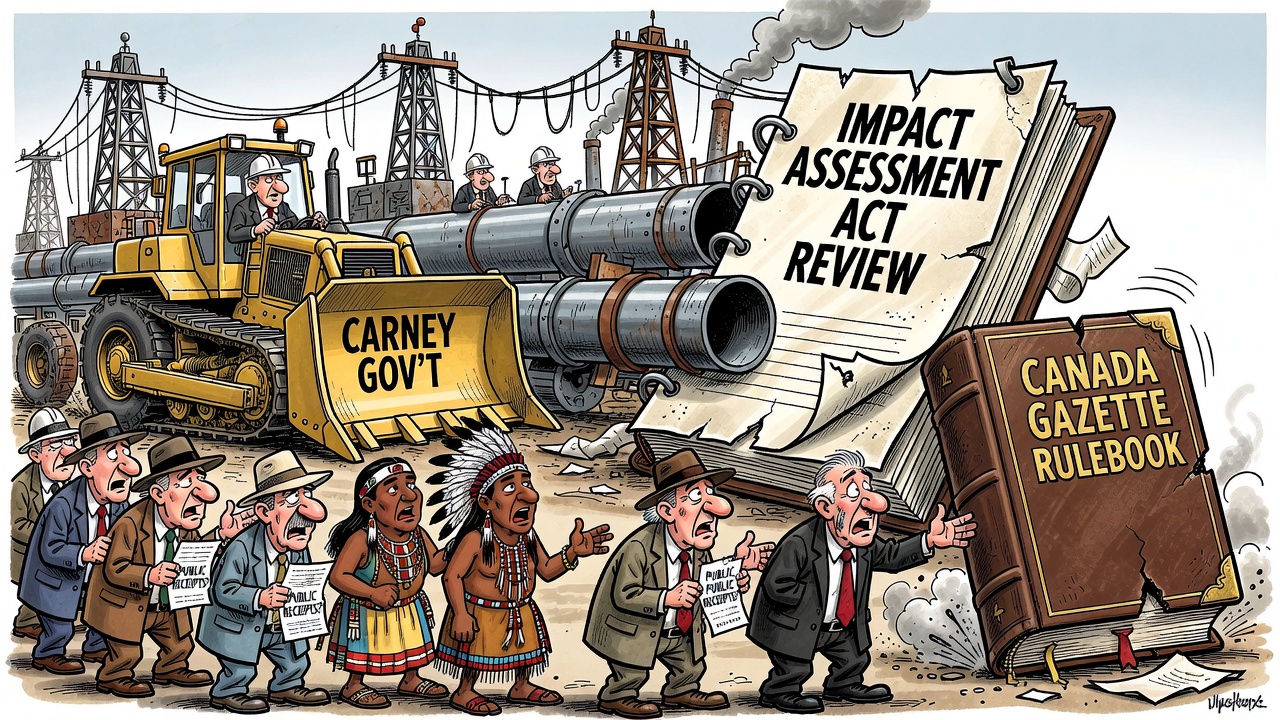
The Carney government has moved from consultation paper to binding regulation. The receipt is in the Canada Gazette: SOR/2026-185, registered September 3, amends the Physical Activities Regulations under the Impact Assessment Act and removes a series of major energy project categories from that project list when they fall under the Canadian Energy Regulator framework.
Ottawa’s stated objective is to “simplify the project decision process” and assign review responsibility to a single federal regulator. That is not automatically wrong. Canada needs to build faster, and duplicative review can become a national weakness when pipelines, transmission lines, ports, mines and power projects take years to clear procedural fog.
But speed is not a substitute for disclosure. The regulation removes international and interprovincial pipelines, international and interprovincial electrical transmission lines, CER-regulated offshore renewable energy projects, certain oil and gas facilities, in situ oil sands extraction facilities above a production threshold in provinces without provincial greenhouse-gas limits, and fossil-fuel-fired power generating facilities from Impact Assessment Act coverage. Those are not minor filing changes. They are exactly the kinds of projects where environmental effects, Indigenous rights, regional impacts and public confidence matter most.
The Gazette’s own regulatory analysis says industry stakeholders strongly supported exclusive CER review for pipelines because it would improve certainty, reduce duplication and streamline approvals. It also records concerns about implementation details, public participation, timelines, Indigenous consultation and modern treaty implications. In other words, the government already knows the pressure points. It should not pretend the only question is whether Canada can cut red tape.
A conservative accountability standard is not “block everything.” It is “build with receipts.” If cabinet believes the CER can do this job better, publish the evidence. Show Canadians the submission summary, the department-by-department analysis, the Indigenous-consultation record, the modern-treaty risk review, the legal advice summary that can be disclosed, and the transition plan from the Impact Assessment Agency to the CER.
Then publish a project dashboard. For every project using the new path, taxpayers should see the proponent, project category, regulator, consultation status, federal permits still required, public-comment windows, conditions imposed, enforcement lead, missed deadlines and reasons for any cabinet intervention. If the new system is more efficient and equally rigorous, the dashboard will prove it. If it simply hides decisions in a narrower process, Canadians will see that too.
This also lands days before Ottawa’s Canada Investment Summit pitch. The Prime Minister wants global capital to believe Canada can approve major projects again. Fine. But investor confidence built on public distrust will not last. A fast-track that collapses in court, alienates communities or conceals tradeoffs is not competence; it is another Liberal shortcut with a press release attached.
Carney asked Canadians to accept him as the serious manager. Serious managers keep records. The energy fast track is now real. Now show the receipts.
- Canada Gazette: Regulations Amending the Physical Activities Regulations, SOR/2026-185
- Government of Canada: Getting Major Projects Built in Canada — discussion paper
- CTV News: Carney government scales back federal reviews for major energy projects
This article supports faster project decisions only with transparent consultation, legal, environmental and enforcement records.