Canada’s China Defence Dialogue Needs a Public Receipt
Talking is not the scandal. Letting Beijing provide more public disclosure than Ottawa is the problem.
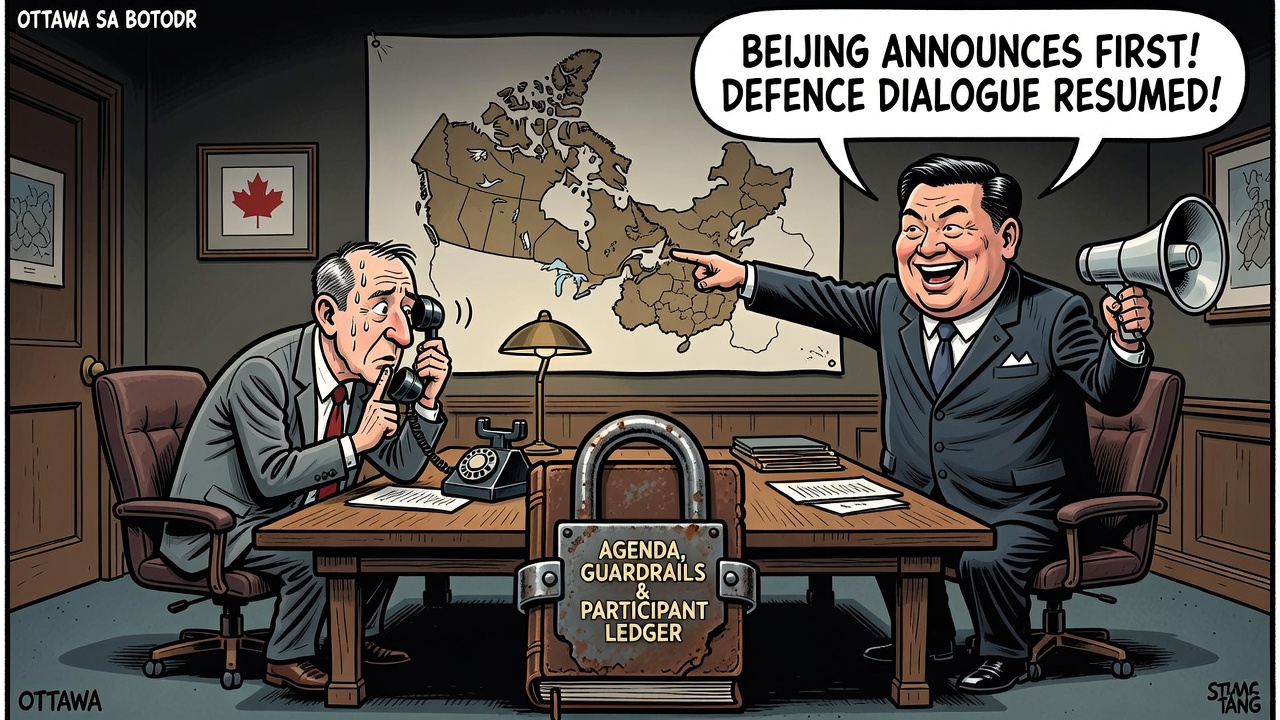
Canada has reopened a defence coordination channel with China after more than eight years. The reported meeting took place on September 4, 2026, and the first public notice came not from Ottawa, but from China’s Ministry of National Defense.
That distinction matters. A working-level military-to-military meeting is not automatically improper. Countries maintain channels with adversaries and competitors to avoid accidents, manage risk and communicate red lines. But when the file involves the People’s Liberation Army, foreign interference concerns, Taiwan, the Arctic, cyber threats and Indo-Pacific security, Canadians deserve more than a foreign-government readout.
Beijing’s statement said the fifth China-Canada Defence Coordination Dialogue was held in Canada and described a candid exchange on international and regional issues, plus willingness to strengthen practical exchanges and cooperation between the two militaries. Canadian reporting says National Defence later confirmed the meeting as an officials-level dialogue supporting functional military communications. That may be true. It is also not enough.
The accountability problem is simple: the public still lacks the Canadian version of the receipt. Who attended, at what rank and from which departments? What was on the agenda? Were Taiwan, Arctic security, cyber activity, foreign interference, unsafe intercepts, military training, sanctions, intelligence risks or procurement security discussed? What topics were explicitly off limits? What instructions did ministers approve before the meeting? What, if anything, did Canada agree to afterward?
Carney’s government cannot ask Canadians to trust a revived defence channel simply because officials call it “working-level.” The phrase may describe the format, but it does not settle the public-interest question. A meeting can be working-level and still be strategically sensitive. A file can be diplomatic and still require democratic oversight.
The secrecy is especially hard to defend because the dialogue was dormant since 2018. If Ottawa decided conditions had changed enough to reopen it, Ottawa should explain what changed. If the meeting was purely for risk reduction, say so. If it was part of a broader thaw with Beijing, say that too. Conservatives should not oppose every contact with China as a reflex. They should oppose contact that arrives without guardrails, minutes or ministerial accountability.
The fix is modest and defensible. Publish a Canadian readout. Release the participant list by department and rank, the agenda headings, Canada’s opening position, the list of prohibited cooperation areas, any follow-up actions, and the ministerial sign-off chain. Table it at the defence and foreign-affairs committees if necessary, with classified details protected through proper channels.
Canada can talk to China without taking instructions from China. But Canadians should never have to learn about a revived military channel first from Beijing. On national security, the Carney government owes the country its own receipt.
- China Ministry of National Defense: China-Canada Defence Coordination Dialogue notice
- The Receipts: China Says Military Talks With Canada Resumed After Eight Years. It Was Not a Joint Announcement.
- The Bureau: Canada Has Reopened Military Channel to Beijing After Eight Years
- Global News Canada / Globe and Mail repost: Canada holds first defence co-ordination talks with China in more than eight years
This article argues for public disclosure and parliamentary accountability. It does not allege that Canadian officials, Chinese officials, National Defence, Global Affairs Canada or the Canadian Armed Forces acted unlawfully.