Before the Counter-Tariffs Hit, Publish the Cost Ledger
Standing up to Washington does not mean giving Ottawa a blank cheque.
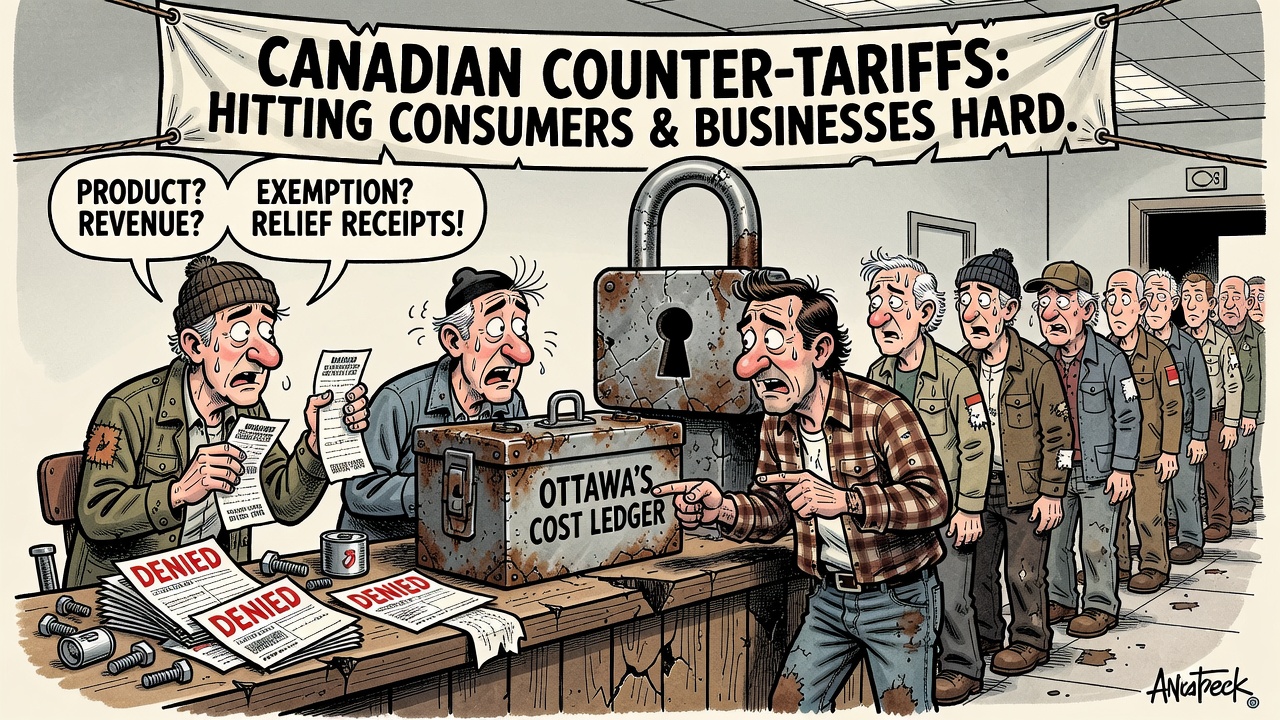
Canada’s newest counter-tariffs are scheduled to take effect at 12:01 a.m. on September 8, covering $27.6 billion in U.S. imports after Washington imposed a 50 per cent tariff on $27.6 billion of Canadian goods. Finance Canada says the response is dollar-for-dollar and rate-for-rate, with duties of 15, 25 and 50 per cent across sectors including steel and aluminum, dairy, appliances, agricultural equipment, pulp and paper, plastics and electronics.
That may be a defensible negotiating response. No serious country should simply absorb punitive tariffs on its workers and strategic industries. But a serious country also tells its own citizens what the response will cost. Conservative Leader Pierre Poilievre is right to demand a cost breakdown before the new measures hit consumers and employers. Tariffs are taxes at the border. Some are paid by foreign exporters, some by importers, and some by Canadian families and businesses through higher prices, delayed orders or thinner margins. Canadians deserve to know which is which.
The Carney government has already announced a $7.5 billion package of new and enhanced supports for workers and businesses, on top of nearly $25 billion in previously announced support tied to U.S. tariffs. That is real money. If Ottawa is collecting new surtax revenue with one hand and sending relief cheques with the other, Parliament should see the full ledger: expected tariff revenue, expected consumer and business pass-through, eligibility rules, departmental delivery costs, application volumes, approval times and regional results.
The product list is public, and that is useful. It is not enough. A line item showing a 50 per cent tariff on steel or aluminum products does not tell a machine shop whether its input costs will spike next month. A 25 per cent tariff on appliances or dairy products does not tell a family whether the grocery or repair bill is about to rise. A remission framework does not tell taxpayers who gets relief, who is denied and why.
Publish the counter-tariff cost ledger. For every product category, show the tariff rate, import value, estimated price impact, affected industries, expected revenue, available exemptions, remission decisions, and the support program meant to offset the damage. Add a monthly update until the dispute ends. If the policy is necessary, the numbers will defend it. If the numbers are ugly, Canadians should see them before the government asks for more patience, more borrowing and more trust.
Retaliation may be unavoidable. Secrecy is not. A government that says it is protecting workers should be willing to prove, in public, that workers and consumers are not just becoming collateral damage in another Ottawa-managed trade war.
- Finance Canada: Complete list of U.S. products subject to counter tariffs
- Finance Canada: Canada announces targeted countermeasures and substantive support
- Prime Minister of Canada: Prime Minister Carney chairs First Ministers’ Meeting
- Global News: Trump threatens Bombardier, Canadian dollar as counter-tariffs set to roll out
- CityNews: Poilievre calls for more transparency from Carney as counter tariffs set for Tuesday
- AP News: Canadian leader Carney pushes back against Trump administration
This article does not argue that Canada should refuse all retaliation. It argues that tariff retaliation should come with public cost, revenue, exemption and relief receipts.