The Buy Canadian Promise Needs a Contract Ledger
Buy Canadian is not a slogan. It is a testable procurement claim.
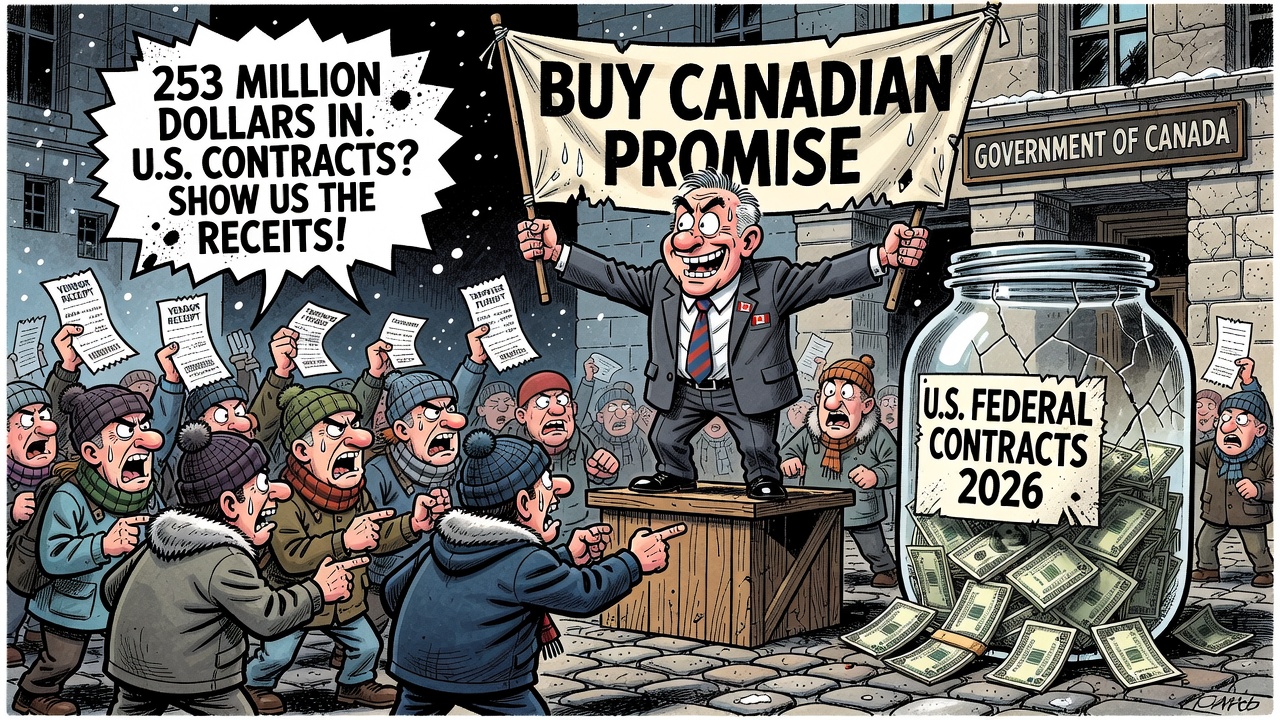
The Hill Times reported September 2 that the federal government has spent nearly $253 million on contracts with American suppliers so far in 2026, leaving the United States as Canada’s top foreign supplier even as Ottawa talks about reducing reliance on the U.S. during the trade fight. That number does not automatically prove wrongdoing. Canada has defence, technology, health, emergency and legacy-system needs that can make some foreign sourcing unavoidable. But it does prove one thing: the Carney government’s “Buy Canadian” message now needs a public contract ledger, not another podium line.
Ottawa announced in August that it was moving to favour Canadian suppliers in federal procurement. The government said major contracts would require suppliers to obtain materials and subcontracting from Canadian companies where possible, and that access to federal opportunities in some sensitive sectors would be restricted to Canadian suppliers. That sounds like a clear policy direction. The problem is that Canadians cannot judge whether it is real unless the exemptions, vendors and contract categories are published in a form ordinary taxpayers can read.
A conservative accountability standard starts with the receipts. Which departments issued the U.S.-supplier contracts? Were they defence, software, consulting, infrastructure, professional services or commodity purchases? Which contracts were grandfathered under older arrangements? Which were covered by trade obligations? Which were emergency or sole-source awards? Which included a Canadian-content test, and who signed off when Canadian suppliers were passed over?
This matters because procurement policy can become political theatre very quickly. A government can promise to “build Canada strong at home” while the actual cheques keep flowing through the same foreign vendor channels. It can announce restrictions in sensitive sectors while quietly carving out exceptions. It can describe a purchase as necessary while refusing to publish the market scan showing no Canadian option was available. None of that is good enough when taxpayers are being asked to fund a nationalist procurement promise.
The answer is not reckless protectionism or pretending Canada can build every input overnight. The answer is disclosure. Publish a year-to-date foreign-supplier table by country, department, vendor, contract value, procurement method and exemption reason. Add a Canadian-content column. Add subcontractor data where contracts rely on Canadian work. Add a quarterly comparison showing whether the policy is changing behaviour or merely changing press releases.
If nearly $253 million in 2026 American-supplier contracts is justified, Ottawa should be able to show why. If it is not, Canadians deserve to know which departments are ignoring the new direction. Either way, the Buy Canadian promise should be audited in public. The contract ledger is the receipt.
- The Hill Times: U.S. remains top foreign supplier to Canada with $253-million secured in federal contracts in 2026 so far
- Government of Canada: Canada’s new government is buying Canadian
- Government of Canada: Government of Canada announces reciprocal procurement measures
This article argues for transparent procurement accounting. It does not claim every U.S.-supplier contract is improper; it asks Ottawa to publish the evidence behind each exception and Canadian-content decision.