A Poll Is Not a Trade-Deal Receipt
Canadians can support rejecting a U.S. trade deal and still demand the rejected text, tariff modelling and taxpayer-cost ledger.
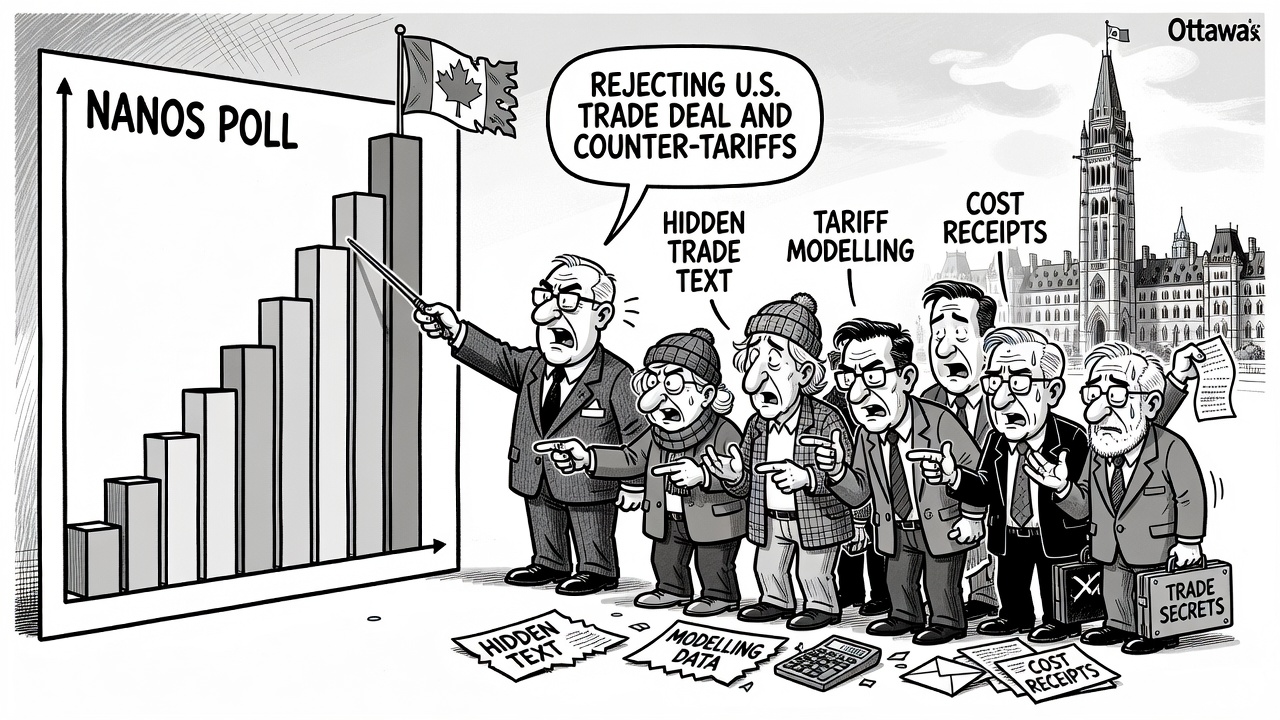
Prime Minister Mark Carney got a useful headline this weekend: Canadians are largely willing to back him against Washington. That is politically convenient. It is not the same thing as accountability.
A new Nanos survey conducted for CTV News and The Globe and Mail asked Canadians whether they supported the federal government turning down a trade deal proposed by the United States. The numbers were strong for Carney: 75 percent said they supported the refusal and another 10 percent somewhat supported it. On counter-tariffs, 59 percent supported continuing them and 21 percent somewhat supported continuing them.
But the same poll also showed why Ottawa should not treat public support as a blank cheque. Nanos found 23 percent of respondents were concerned and 45 percent somewhat concerned about the impact of U.S. tariffs. Only 38 percent said they were willing, and 31 percent somewhat willing, to buy Canadian goods even if they cost more than American alternatives. In plain English: Canadians may support standing firm, but they know somebody will pay.
That is where the Carney government still owes receipts. Public backing for rejecting a U.S. proposal does not reveal what was in the proposal, what Canada offered in return, which concessions were rejected, what the counter-tariffs will cost consumers, or how Ottawa will decide who receives support. A patriotic poll cannot substitute for a trade ledger.
Finance Canada has already announced targeted countermeasures and a support package for workers and businesses. Those decisions create real winners and losers. A counter-tariff can protect one factory while raising costs for another firm that needs American inputs. A remission rule can prevent genuine harm, or become a quiet favour for well-connected lobbyists. A business-support program can save jobs, or turn into another insider-administered bailout.
The conservative test here is simple: defend Canadian workers without hiding the bill from Canadian taxpayers. If the U.S. offer was unacceptable, release a redacted version of the rejected text. If tariffs are necessary, publish the product-by-product rationale and consumer-price modelling. If support is justified, publish eligibility rules, approval criteria, recipient totals and regional results. If ministers are heading into a cabinet retreat with internal progress binders, Canadians should see the public version of those binders too.
Carney should not confuse consent with trust. Canadians can support a tough negotiating stance and still demand proof that the government is competent, honest and fair. In fact, that is exactly what mature self-government requires.
The Liberals will be tempted to wave the Nanos numbers like a permission slip: voters are with us, stop asking questions. No. Voters are saying they want Canada to stand up for itself. They are not saying Ottawa gets to keep the rejected deal, tariff model, remission rules and support ledger locked away.
Publish the receipts. If Carney’s decision was as strong as the poll suggests, the evidence should make the case stronger. If the evidence is too awkward to show, then Canadians deserve to know that before they get the invoice.
- Nanos Research: nanos.co/canadians-back-rejection-of-the-recent-us-trade-deal-most-are-willing-to-pay-higher-prices-and-support-counter-tariffs-ctv-news-and-the-globe-and-mail-nanos/
- CTV News: www.ctvnews.ca/politics/article/canadians-back-turning-down-us-trade-deal-most-support-counter-tariffs-nanos-survey/
- Department of Finance Canada: www.canada.ca/en/department-finance/news/2026/08/canada-announces-targeted-countermeasures-and-substantive-support-for-workers-and-businesses-in-response-to-us-tariffs.html
- CTV News: www.ctvnews.ca/politics/article/ministers-asked-to-prove-progress-ahead-of-cabinet-retreat-sources/
This article relies on public polling, CTV reporting and federal tariff/support announcements. It argues for trade transparency and taxpayer accountability; it does not endorse U.S. tariffs.