Publish the Investment Summit Guest List and Benefits Ledger
If Ottawa is courting private capital in Canadians' name, Canadians deserve to know who gets access and who benefits.
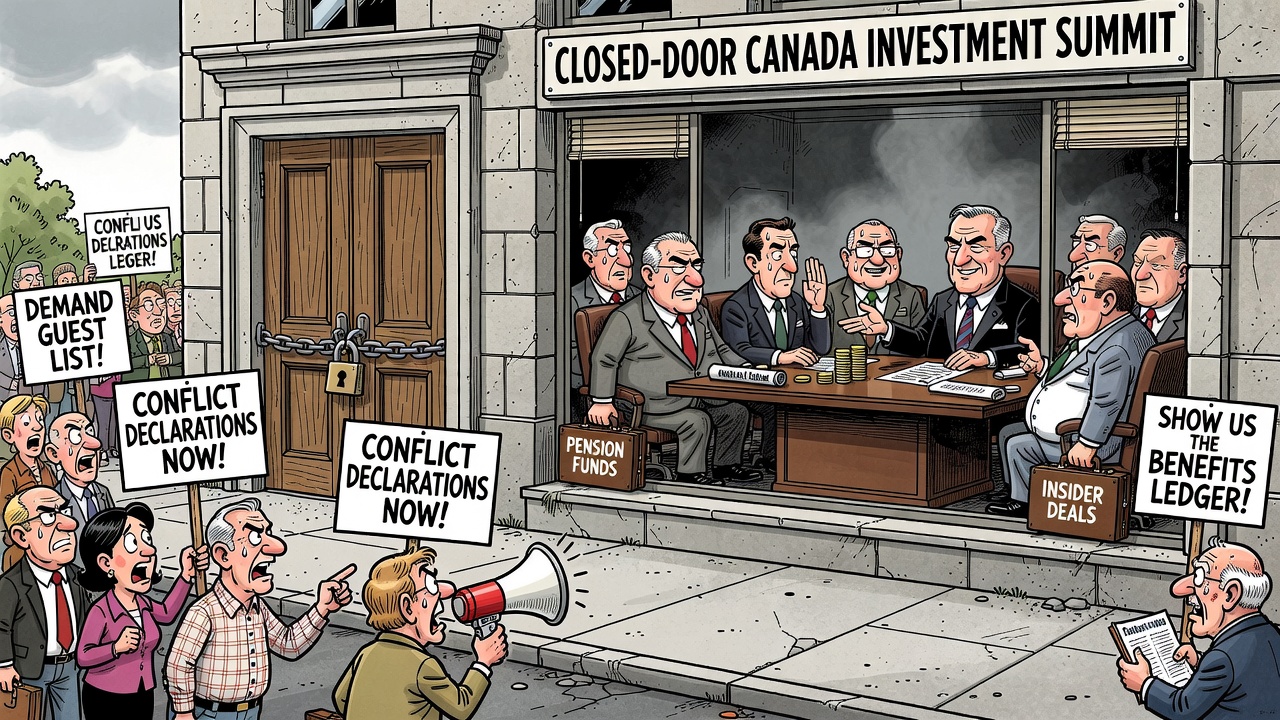
Prime Minister Mark Carney wants Canadians to see the Canada Investment Summit as a growth machine: private capital, major projects, pension money, infrastructure, energy, mining, housing and artificial intelligence gathered under one national banner. That may sound impressive. It is also exactly the kind of room where public accountability must arrive before the lobbyists do.
The Prime Minister's Office announced the first Canada Investment Summit in April, saying it would be hosted by Carney and delivered with the C.D. Howe Institute. The government described the goal as attracting new investment and advancing major projects. In September, the PMO added another piece: Dominic Barton would chair Invest Canada, a new special operating agency meant to attract investment and speed project approvals.
That combination deserves scrutiny. A prime minister with deep finance-world relationships is convening powerful investors. A new federal agency is being built to move projects faster. A former McKinsey global managing partner and former ambassador to China is being placed at the centre of the investment-promotion machine. None of that proves wrongdoing. All of it requires daylight.
Closed-door economic diplomacy can be useful. Governments routinely meet investors, pension funds and executives. But when private actors are invited into privileged rooms to discuss projects that may receive faster approvals, public guarantees, tax concessions, infrastructure support or regulatory help, Canadians are entitled to more than a podium photo and a slogan about growth.
The minimum standard should be a public summit ledger. Publish the full attendee list. Publish the meeting schedule. Publish the project shortlist and the criteria used to choose it. Publish conflict-of-interest declarations for ministers, senior officials, Invest Canada leadership, consultants, advisers and participating firms. Publish any public money, loan guarantees, tax measures, procurement preferences, land access, regulatory exemptions or fast-track approvals discussed.
That is not anti-investment. It is pro-clean investment. Serious builders should welcome rules that separate national interest from insider access. Pension beneficiaries should know whether their retirement capital is being steered toward projects on commercial merit or political pressure. Taxpayers should know whether the bill includes subsidies or hidden risk. Provinces and Indigenous communities should know what Ottawa is promising in their name before announcements become faits accomplis.
Carney's government cannot ask Canadians to trust a closed room simply because the guest list is powerful. The more consequential the summit, the stronger the disclosure standard should be. If the deals are good, publish the receipts. If the access is fair, publish the rules. If the public risk is limited, publish the ledger.
Growth is not a substitute for accountability. Canada needs investment, but it does not need another insider pipeline where benefits are announced and the costs are discovered later. Open the doors after the meetings. Show Canadians who was there, what was pitched, what was promised and who stands to profit.
- CTV News: Who's coming and what will be pitched at the Canada Investment Summit
- Prime Minister of Canada: Prime Minister Carney announces first-ever Canada Investment Summit — April 17, 2026
- Prime Minister of Canada: Prime Minister Carney announces Invest Canada and new chair — September 3, 2026
- C.D. Howe Institute: 2026 Canada Investment Summit event page
- Global News: Carney taps Dominic Barton to lead investment agency
This article argues for public disclosure around federal investment access, project selection and taxpayer risk. It does not allege that summit participants or officials have acted unlawfully.