Publish the Palestine Recognition Receipt
A major foreign-policy decision should not rest on a private letter Canadians cannot inspect.
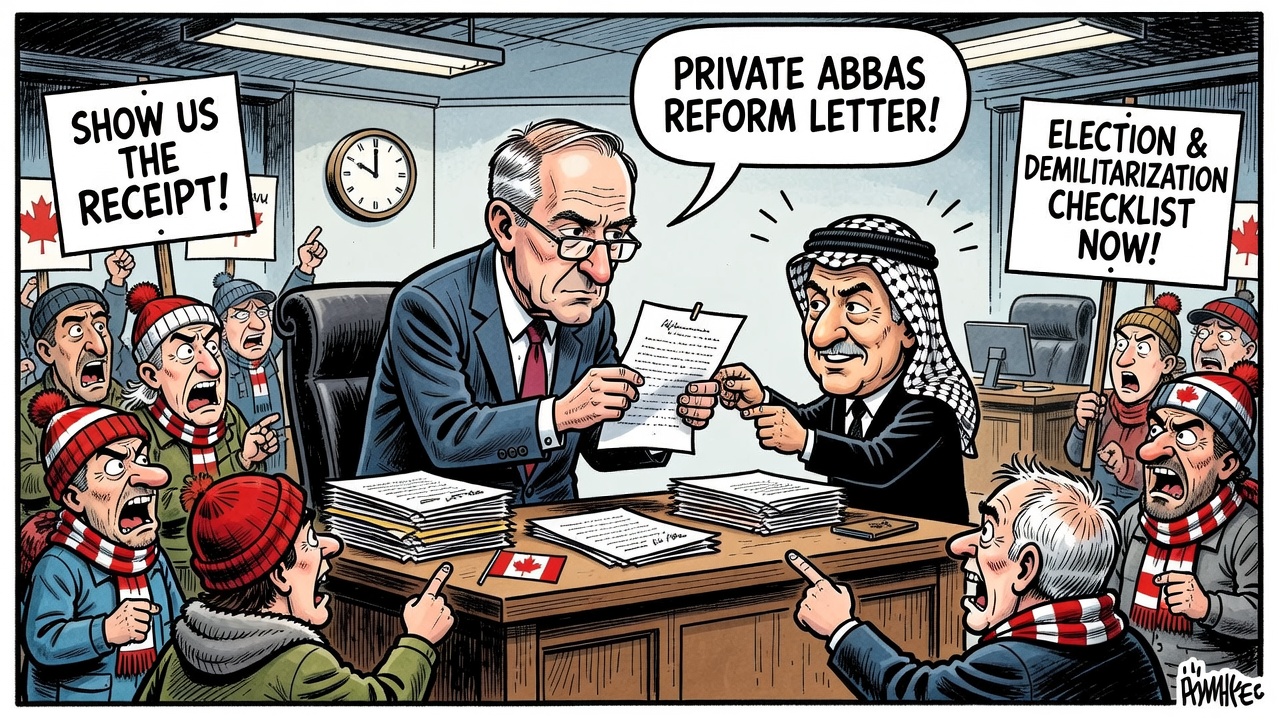
Foreign-policy choices can be argued on their merits. What should not be negotiable is the evidence used to justify them. Global News reported that Prime Minister Mark Carney tied Canada’s recognition of the State of Palestine to reform commitments from Palestinian Authority President Mahmoud Abbas, including a letter and a later phone call.
The problem is simple: Canadians have not been allowed to see the letter. According to the report, the Privy Council Office declined to release it, citing respect for international diplomatic relations. That may explain why officials prefer secrecy. It does not explain why a private foreign assurance should become the public foundation for a major Canadian decision without a public receipt.
The government’s own July statement said Canada’s intended recognition was predicated on Palestinian Authority commitments to reform governance, hold general elections in 2026 with Hamas excluded, and demilitarize a future Palestinian state. The September recognition statement then said Canada recognized the State of Palestine and again referenced those commitments.
That creates an accountability test, not just a diplomatic talking point. If recognition was conditional, what were the conditions? Who verified them? Which commitments had to be completed before recognition, and which were merely promises for later? What happens if elections do not occur, Hamas is not excluded, demilitarization does not happen, or governance reforms prove cosmetic?
Conservatives do not need to pretend every diplomatic document must be dumped online in full. There can be legitimate security and negotiating sensitivities. But that is not a blank cheque. At minimum, Ottawa should publish the non-sensitive portions of the Abbas letter, the full Canadian benchmark list, the departments and officials responsible for verification, and a redaction log explaining exactly what is being withheld and why.
The reform ledger should also include money. Canadians deserve to know what funding, technical assistance, diplomatic pressure or future aid is tied to Palestinian Authority compliance. If Canadian recognition is being used as leverage for better governance and security outcomes, then taxpayers should see the leverage points, the deadlines and the consequences for missed commitments.
This is especially important because the promises are difficult, contested and time-sensitive. Palestinians last held general elections in 2006. Demilitarization is not a slogan; it requires enforceable security arrangements. Textbook and governance reforms have been disputed for years. A government serious about accountability would not ask Canadians to accept all of that on trust.
Carney can defend his policy. But he should not be able to hide the receipt. Publish the Abbas letter where possible, publish the benchmarks in full, publish the verification record, and publish the follow-up clock. Recognition made in Canada’s name should come with evidence Canadians can inspect.
- Global News: Carney’s recognition of Palestine raises questions about Palestinian Authority reforms
- Prime Minister of Canada: Statement on Canada’s recognition of Palestinian state — July 30, 2025
- Prime Minister of Canada: Statement on Canada’s recognition of the State of Palestine — September 21, 2025
This article argues for public accountability around the evidence and benchmarks used to justify recognition. It does not allege that the Abbas letter is fraudulent or that officials knowingly misrepresented its contents.