Ottawa’s Iran-Connected Contractor File Needs a Security Ledger
When a contractor file touches national security, defence procurement and public trust, Canadians deserve more than silence from the departments that signed the cheques.
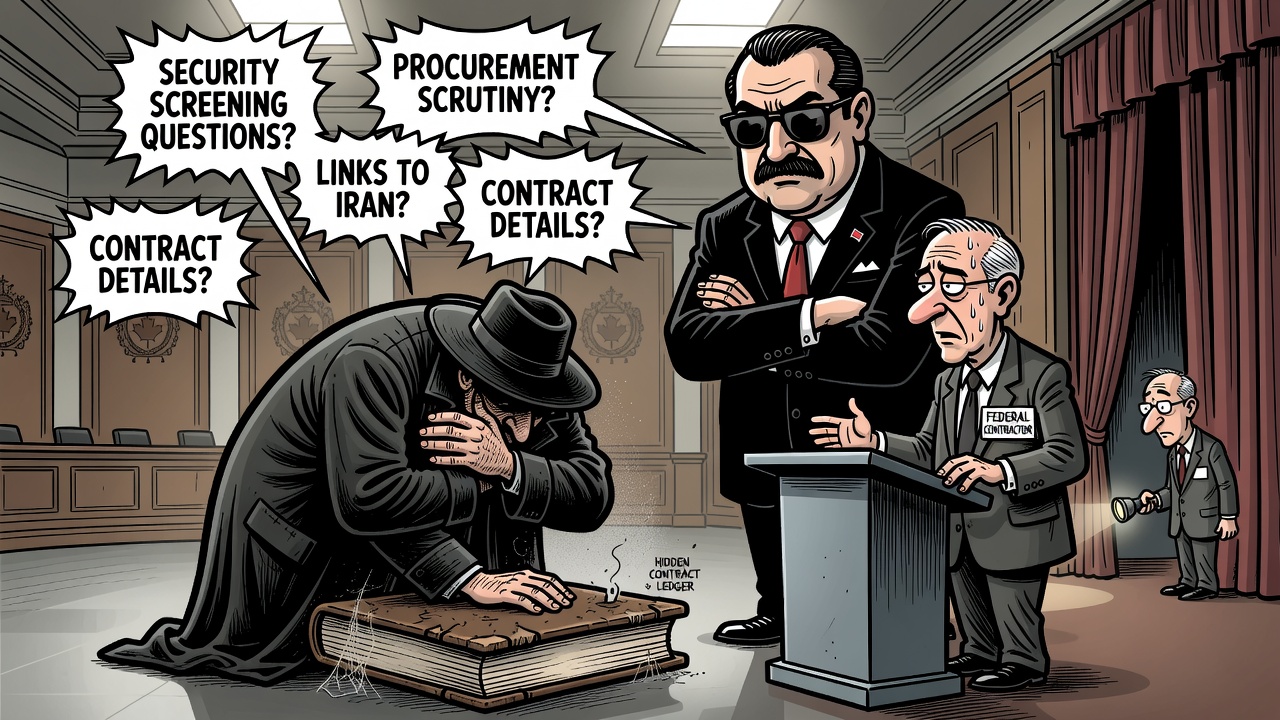
Global News reported September 2 that companies tied to Edmonton businessman Mohammad Reza Ghafouri Fard, who has done business in Canada as Sal Ghafouri, received more than $2 million in federal and provincial contracts while Canadian authorities were investigating allegations about his past work connected to Iran’s military programs. The report says contracts included federal agencies such as the RCMP and Department of National Defence.
The allegations must be handled carefully. Ghafouri, identified by Global as the son of former Iranian vice-president Hassan Ghafouri Fard, denies the accusations. His lawyer told Global that he has faced repeated security checks in Canada and will defend himself through legal channels. That matters. Due process is not optional, even when the political optics are explosive.
But due process for an individual is not a gag order on government accountability. The public question is not whether politicians should pronounce guilt from a podium. It is whether Ottawa’s procurement, immigration, intelligence and departmental contracting systems can talk to each other when obvious risk flags are present.
According to Global’s account of declassified CSIS material, Ghafouri had been under long-running scrutiny over alleged work tied to Iranian military technology and sanctions evasion. The report says he was flagged by immigration investigators for national-security reasons in 2017, that CSIS completed a screening report in 2023, and that Immigration, Refugees and Citizenship Canada moved in May 2026 to deny citizenship on security grounds. Yet the companies reportedly continued to benefit from public contracts, including after those earlier warning points.
That is the heart of the ledger problem. A federal government that can track Canadians through tax files, banking reports, travel records and procurement portals should be able to answer a basic question: before issuing sensitive contracts, did the responsible departments check whether the supplier, director, beneficial owner or named operator had active national-security concerns?
Public Services and Procurement Canada has long described a government-wide integrity regime meant to help ensure Ottawa does business with ethical suppliers. Good. Then Canadians should see how that regime performed here. Was the supplier screened only against conviction-based ineligibility lists? Did defence or policing contracts trigger deeper review? Were aliases and corporate-director names cross-checked? Were client departments warned? If not, who decided the risk was acceptable?
This is not an argument for blanket suspicion against Iranian Canadians. Many fled the regime and have been among its loudest critics. It is an argument for competence: Canada must be able to distinguish innocent diaspora entrepreneurs from serious security-risk files without hiding behind bureaucratic fog.
The Carney government should publish a contract-by-contract table listing departments, values, dates, goods supplied, security requirements, beneficial-ownership checks, integrity-screening results and any post-CSIS-review approvals. If disclosure must redact classified details, redact them narrowly and explain why.
When Ottawa asks Canadians to trust the system, the answer cannot be “trust us.” On procurement touching the RCMP, National Defence and alleged foreign military links, the answer has to be receipts.
- Global News: Canada gave contracts to Iran VP’s son while investigating role in regime missile program
- Iran International summary of Global reporting: Canada awarded contracts to Iran ex-VP’s son despite security probe
- Public Services and Procurement Canada: Integrity in federal procurement background
This article treats the reported allegations as allegations, recognizes the individual’s denial, and focuses on government procurement-screening accountability.