The No-Sanction Ethics Ledger
If a federal MP can breach the conflict code, repay after the issue is raised, and face no sanction, Canadians deserve the full expense trail.
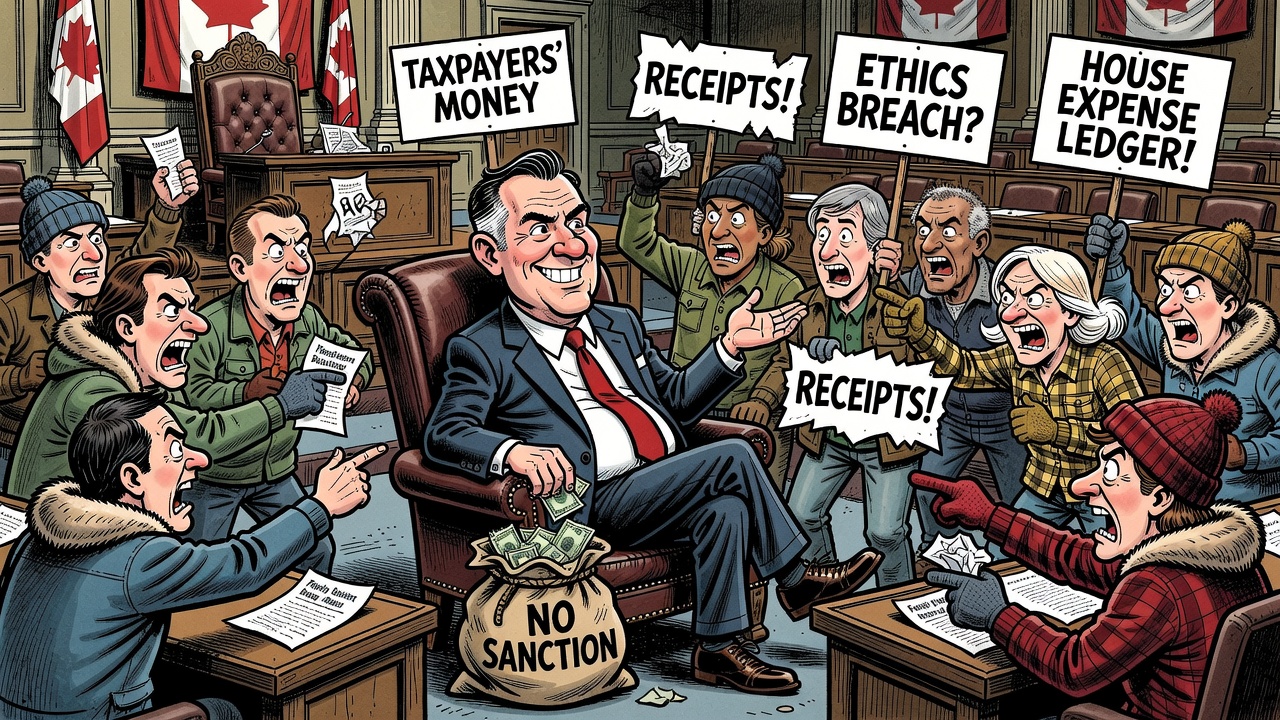
The latest ethics finding from Ottawa is not complicated. Conflict of Interest and Ethics Commissioner Konrad von Finckenstein reported on September 2 that Nunavut MP Lori Idlout contravened section 8 of the Conflict of Interest Code for Members of the House of Commons. That section bars MPs, while performing parliamentary duties, from acting in a way that furthers their own private interests or those of a family member.
The conduct at issue was not a vague appearance problem. According to the Commissioner, Idlout claimed reimbursement from her Member’s Office Budget for purchases made at a business she owns and at a business owned by her spouse. The official report says the expenses included five protocol gifts purchased from her own business and one accommodation stay at her spouse’s bed and breakfast while on official travel in her riding.
The Commissioner’s conclusion deserves to be quoted in plain English: public funds from an MP office budget flowed to businesses connected to the MP and her family, and that furthered private interests under the Code. That should matter to every taxpayer who is told Ottawa has strict ethics rules and careful controls over parliamentary spending.
To be fair, the Commissioner also accepted mitigating facts. The report says Idlout had not received income from her business in several years, was not involved in managing it, used the spouse-owned accommodation because of limited options, and reimbursed the claimed expenses immediately after concerns were brought to her attention. On that basis, von Finckenstein called the matter a good-faith error in judgment and recommended no sanction.
But “no sanction” cannot become “no accountability.” Idlout crossed from the NDP to the Liberals in March 2026, and she now sits with the governing caucus. When a government-side MP is found to have breached the Code, repayment after the fact is not enough public closure. It fixes the cheque. It does not answer whether the controls worked, who approved the claims, what staff knew, whether similar claims exist elsewhere, or why the problem needed to be raised externally before it was corrected.
The conservative accountability standard is simple: publish the ledger. Release the dates, amounts, vendors, reimbursement forms, approval path, repayment confirmations, prior ethics advice, and any caucus or House administration guidance issued after the finding. If the House rules allowed a conflicted claim to pass through routine review, Canadians should see exactly where the guardrail failed.
This is not about pretending a small reimbursement file is the biggest scandal in Ottawa. It is about refusing to normalize a culture where the official answer to an ethics breach is a shrug, a refund, and no consequence. Public money should never quietly circulate through an elected official’s family business interests without immediate disclosure and a clear paper trail.
Ethics rules only deter misconduct when they are visible, enforced and audited. If Parliament wants Canadians to trust the system, the response to the Idlout Report should be more sunlight, not less.
- Office of the Conflict of Interest and Ethics Commissioner: Commissioner finds MP contravened conflict of interest code — September 2, 2026
- Office of the Conflict of Interest and Ethics Commissioner: The Idlout Report
- CJME / The Canadian Press: MP contravened conflict of interest code, ethics commissioner says
This article relies on the Commissioner’s finding and does not allege criminal wrongdoing. It criticizes the sufficiency of public disclosure and sanctions after an official conflict-code contravention.